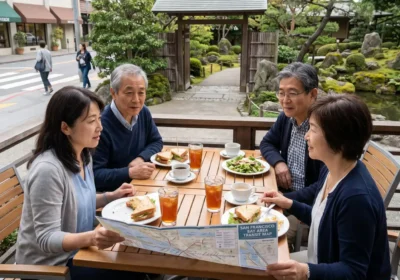
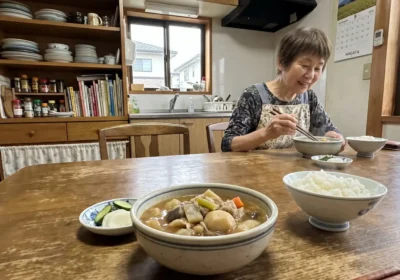
Plan a Japan Experience Around Your Actual Needs
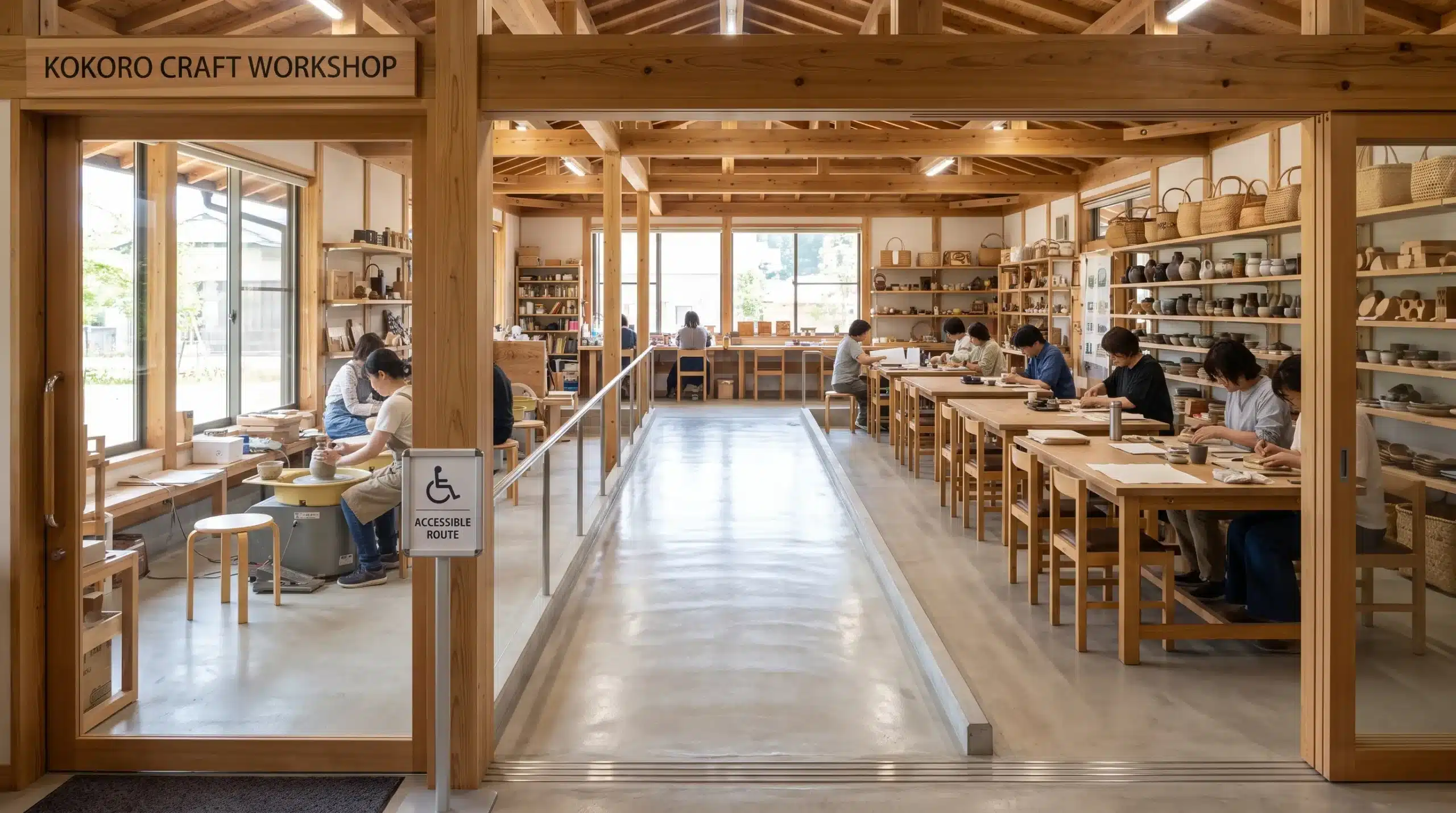
An activity can look suitable online yet fail on the details that matter: stairs, ingredients, seating, language or the journey back. Planning a Japan experience around your actual needs means checking those details before committing, rather than trying to solve them at the entrance.
Plan a Japan Experience Around Your Actual Needs
Start with what you want to do, then establish the conditions that would make it workable. A cooking session, cultural activity or rural visit should fit your circumstances, not require you to ignore them. This approach also helps you identify the specific tasks you can handle yourself and those for which local support would be useful.
Start with your non-negotiable needs
Separate essential requirements from preferences. Step-free access may be essential; a particular neighbourhood may be optional. A kitchen’s ability to avoid an allergen is a requirement, not something to trade against favourable reviews.
Write down your requirements in terms that a venue can answer directly.
| Requirement | Useful detail to establish |
|---|---|
| Mobility | Steps, lift access, walking distance, seating and accessible toilets |
| Food | Specific allergens, dietary restrictions and preparation requirements |
| Language | Language needed for instructions, explanations or safety information |
| Family arrangements | Children’s ages, participation rules, seating and supervision requirements |
| Timing | Fixed departure deadlines, activity duration and return transport |
| Sensory needs | Noise, crowding, lighting and opportunities to take a break |
Your Japan experience should satisfy these requirements before you compare optional extras. An unanswered question is still unresolved, even if the venue’s photographs look reassuring.
For families, distinguish what the parent or guardian needs from what each child can reasonably manage. For older travellers, discuss walking and standing directly rather than assuming that age alone determines suitability.
Match your Japan experience to a workable format
Choose the type of participation before selecting a destination. Watching a demonstration, joining a seated activity and completing a physically demanding session involve different requirements, even when they concern the same subject.
| Experience format | What to confirm before choosing |
|---|---|
| Tea ceremony or calligraphy | Floor seating versus chairs, posture requirements and instruction language |
| Home cooking or food discovery | Ingredients, shared equipment, dietary accommodation and standing time |
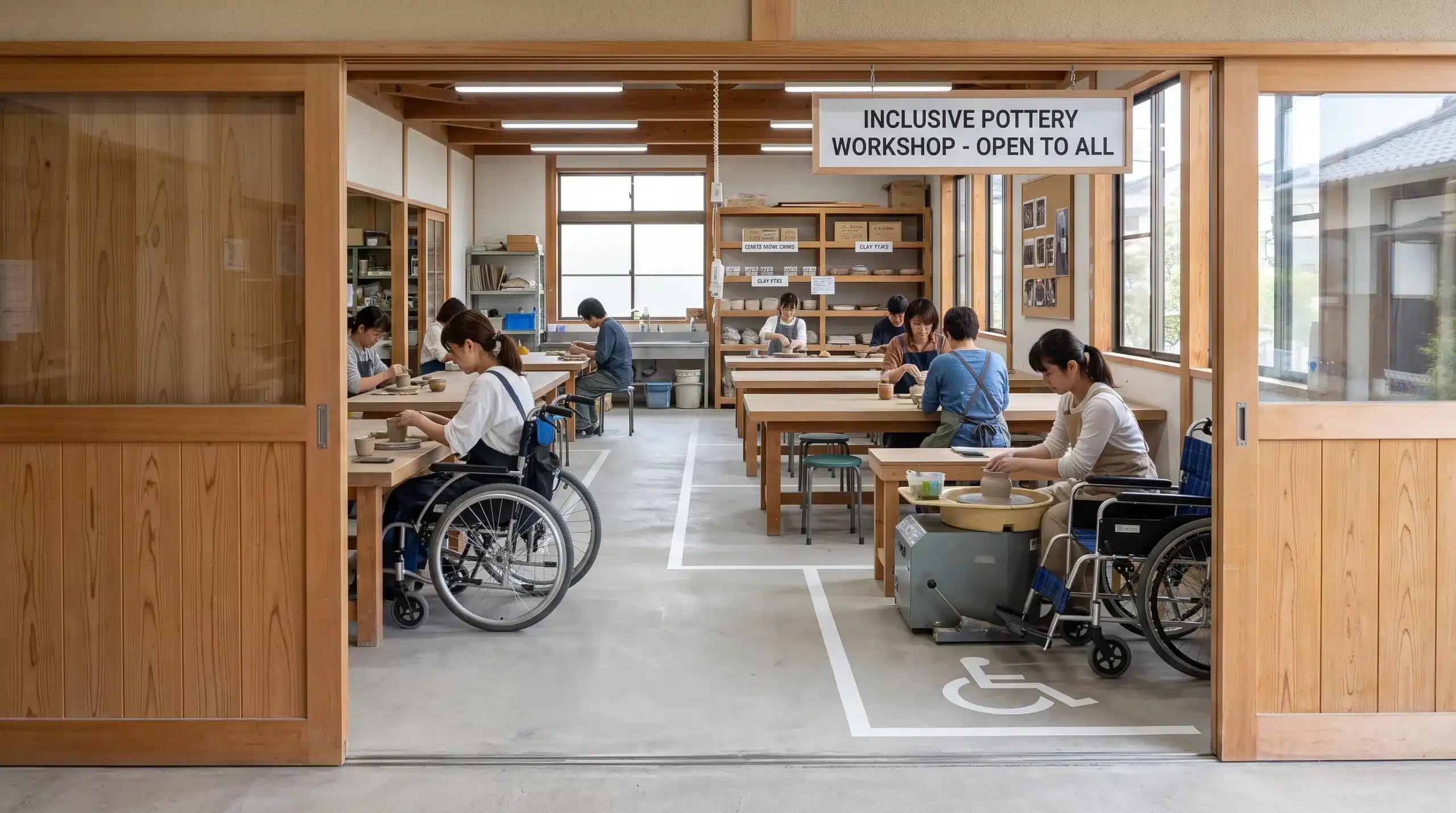
| Pottery or another craft activity | Workstation access, hand movements, duration and collection or delivery arrangements |
| Sake or whisky discovery | Alcohol participation, non-drinking options and transport afterwards |
| Farm, fishing port or island visit | Terrain, weather exposure, toilets and the final transport connection |
A shorter activity with clear arrangements may suit you better than a longer one with several uncertain components. Duration alone does not indicate value or suitability.
Choosing a Japan experience by format also gives you alternatives. If floor seating is unsuitable, ask about a chair-based activity rather than abandoning the subject entirely. If a food activity cannot accommodate an allergy, choose a non-food activity instead of relying on uncertain assurances.
Consider regional options without overlooking access
There is no need to restrict your search to Tokyo and Kyoto. Regional cities, small towns, islands and rural destinations offer different settings for food, crafts and cultural participation.
Check the complete journey, however. Reaching the nearest station does not establish that you can reach the workshop or return afterwards. Confirm the final connection, meeting point and practical alternatives if transport is disrupted.
Japan Hand operates nationwide, including regional airports and rural destinations. Support can be requested in a range of languages beyond English, with arrangements confirmed for the particular location and request.
Ask questions that produce usable answers
Broad questions often produce broad replies. “Is it accessible?” or “Can you accommodate dietary requirements?” may not establish what you need to know.
For a Japan experience involving specific access or food requirements, ask about the exact conditions rather than requesting a general assurance.
- Instead of “Is it wheelchair accessible?” Ask whether there are steps between the entrance, activity space and toilet, and whether the relevant doorways and routes accommodate your wheelchair.
- Instead of “Can you handle allergies?” Name the allergen and ask about ingredients, stocks, sauces, shared utensils and preparation surfaces.
- Instead of “Is it suitable for children?” Provide their ages and ask about participation rules, supervision and the activity’s physical demands.
- Instead of “Do you speak English?” Ask whether the person delivering the activity can explain the required instructions in your preferred language.
For food allergies, a translated card can support communication but cannot establish that a kitchen can prepare food safely. Japan Hand’s information on restaurant booking and allergy communication explains why questions about preparation matter as much as ingredient names.
Muslim travellers should likewise distinguish between food described as halal-certified, Muslim-friendly or simply free of pork. Ask about the ingredients and preparation practices relevant to your requirements. If prayer access matters during the day, establish a suitable location and access arrangements in advance rather than assuming the venue has facilities.
Confirm access before arranging the surrounding day
Once an activity appears suitable, establish what is actually confirmed. A requested reservation is not the same as an accepted booking. A helper’s ability to submit an application does not mean that an application-based venue will admit you.
Keep written confirmation of the location, date, participant details and any agreed accommodation. Record anything that remains unanswered separately.
Tickets and venue identity
Some activities and events involve lotteries, Japanese-language applications or telephone reservations. Check the current process with the venue or official seller, including identification requirements and any restrictions on transferring tickets.
For a ticket-dependent Japan experience, do not commit the rest of the day until admission is confirmed. Local help can assist with understanding a process, but cannot guarantee a lottery result or overcome a venue’s restrictions.
Check the exact venue name and address too. teamLab operates several distinct venues; they are not interchangeable branches of one attraction, and admission to one does not provide entry to another.
Luggage and transfer days
Avoid placing a fixed activity immediately after a demanding hotel change unless you have enough time to manage the transfer. Establish where luggage will go and whether the activity venue accepts it.
For multi-city stays, hotel-to-hotel luggage transfer may reduce what you need to carry, provided the collection, delivery and receiving arrangements fit your dates. Keep essential items with you and do not assume same-day delivery.
Several shinkansen routes require advance reservations for oversized luggage. Check the rules for your actual route and baggage before booking seats.
Use local help for a defined task
Local support is most useful when you can describe the problem it needs to resolve. That might be a Japanese telephone call to confirm seating, communication with a restaurant about ingredients or assistance between a station and a venue.
Japan Hand connects visitors with local helpers for practical, in-person support. Help is booked by time; it is not a sightseeing package. A request can cover a specific task or several related needs, subject to what can be arranged.
A helper can make a Japan experience more workable by clarifying requirements and assisting with access. They cannot change a building’s physical layout, guarantee safe food preparation or secure admission that a venue refuses.
You may not need help at all. If the venue provides clear information in your language, accepts direct bookings and meets your requirements, booking independently is reasonable. A translated message or the venue’s own support may also resolve a straightforward question without paid assistance.
Keep specialist decisions separate
Practical help is not a substitute for professional advice. Medical suitability belongs with a qualified clinician; legal questions belong with an appropriately qualified lawyer.
If family circumstances raise questions about consent for international travel, resolve them before making commitments. For matters governed by Dutch law, Janssen Van den Biezenbos Advocaten in Eindhoven provides legal assistance including family law. That is separate from practical support in Japan and does not establish expertise in Japanese law.
A helper can assist with communication or documents, but cannot make those professional decisions for you.
Turn your requirements into a clear request
Describe the outcome you need, not just the activity’s name. “Help arranging a chair-based cultural activity with instructions in French” gives more useful information than “something cultural”.
When requesting support for a Japan experience, include the location, possible dates, preferred language, participants’ relevant requirements and any fixed deadlines. State what you have already booked and which questions remain unresolved.
Distinguish essential conditions from flexible preferences. If the exact activity cannot be arranged, this allows a suitable alternative to be considered without compromising a requirement such as step-free access or dietary safety.
Do not send unnecessary sensitive information in an initial enquiry. Explain the practical requirement first and ask what further details are needed to assess the request.
Frequently asked questions
Do I need a helper for every activity? No. Direct booking is often sufficient when the venue provides clear information, communicates in your preferred language and meets your requirements. Use help for a defined difficulty rather than adding it automatically.
Can a helper guarantee tickets or restaurant access? No. Lottery results, availability and venue restrictions remain outside a helper’s control. Assistance can clarify requirements and support an application or reservation request, not guarantee acceptance.
Can I request support outside major cities or in a language other than English? Yes. Japan Hand operates nationwide and offers multilingual support. Include the destination and preferred language so the specific arrangements can be confirmed.
What if an essential requirement cannot be met? Choose another activity or change the plan. An unresolved access barrier or food safety concern should not be treated as acceptable simply because arrangements are otherwise convenient.
Request support for the parts that need it
For restaurant booking help, mobility support or assistance reaching an activity, describe your needs through the contact form on Japan Hand. The price depends on the specifics. Every request receives a quote before anything is agreed, with no obligation, and you can ask about a suitable alternative if the original request cannot be arranged.