How to Find Authentic Local Food With Dietary Requirements
Finding authentic local food in Japan becomes more difficult when a promising restaurant cannot confirm ingredients, preparation methods or suitable alternatives. Photographs and translated menus can help you choose what looks appealing, but they cannot establish whether a meal meets an allergy, religious requirement or medically prescribed diet.
Finding authentic local food that fits your requirements
The practical approach is to search for a regional food tradition first, then identify a kitchen that can explain what it serves. A modest neighbourhood restaurant, a department-store food counter or a specialist vegetarian kitchen may suit your needs better than a restaurant promoted as a definitive local experience.
Define what the kitchen needs to know
Before searching, write down your requirements in terms a kitchen can act on. “Dietary restrictions” is too broad. Distinguish ingredients you cannot consume from preferences, and explain whether shared equipment or accidental contact presents a concern.
For allergies, coeliac disease or other medical restrictions, base this information on advice from your treating clinician. A restaurant or helper can obtain information, but cannot determine your medical risk.
A useful written brief covers:
- Excluded ingredients: Name the specific foods and relevant derivatives, rather than relying only on a dietary label.
- Preparation requirements: Explain any restrictions involving shared fryers, utensils, cooking surfaces or serving equipment.
- Acceptable alternatives: State what substitutions you can accept and what must not be changed without asking you.
- Other practical needs: Include seating, step-free access, children’s meals or texture requirements where relevant.
Have the brief translated carefully into Japanese. An allergy card supports communication, but it does not establish that a restaurant can accommodate you. Staff must still understand the request and assess their kitchen’s capabilities.
Where to look for authentic local food
Start with municipal tourism websites, regional tourism associations and local food producers to identify dishes connected to your destination. Then investigate individual restaurants. These sources can explain regional food culture, but a recommendation is not confirmation of dietary suitability.
Search using the town or prefecture name, the dish and your requirement. Japanese search terms such as ベジタリアン (vegetarian), ヴィーガン (vegan) or ハラール (halal) may reveal additional options. Treat these labels as starting points for questions, not guarantees.
The following examples show how a regional speciality can become a useful lead without being assumed suitable:
| Regional food lead | What to investigate | What not to assume |
|---|---|---|
| Kyoto yudofu, or simmered tofu | Broth ingredients, dipping sauce and accompanying dishes | A tofu-centred meal is entirely plant-based |
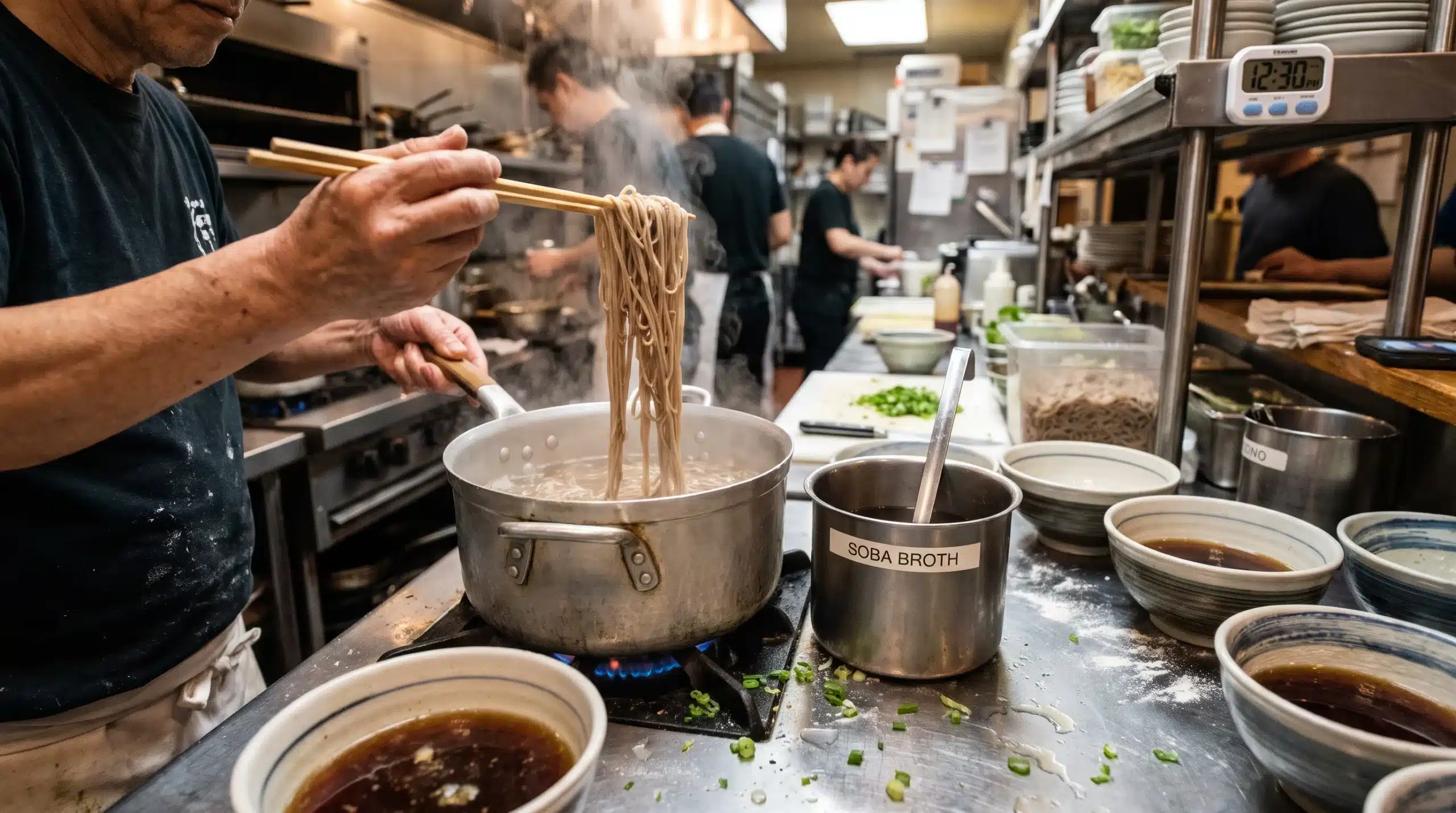
| Nagano soba | Wheat content, dipping broth and shared preparation equipment | All soba is made entirely from buckwheat |
| Okinawan tofu dishes | Use of bonito stock, pork ingredients and sauces | A dish described as tofu or vegetables contains no animal ingredients |
| Coastal grilled fish | Marinades, cooking alcohol, sauces and side dishes | Simply presented fish has no additional ingredients |
Finding authentic local food does not require ordering a region’s most complicated signature meal. A simpler preparation may preserve the local ingredient or cooking tradition while making the kitchen’s explanation more straightforward.
Choose a kitchen that can answer specific questions
A short menu can make verification easier, but a small restaurant is not automatically more accommodating. Some kitchens prepare everything in advance, use shared equipment throughout or cannot change a set meal.
Look for a clear explanation rather than a quick assurance. Useful responses identify the stock, sauce or cooking process involved. “We can omit the garnish, but the broth already contains fish” is more informative than an unexplained “no problem”.
Food halls and markets offer access to local produce and prepared foods, although the seller may not be the person who made them. Packaged products may have ingredient information; unpackaged food can require questions that counter staff cannot answer. Our explanation of food-hall and morning-market etiquette covers the practical differences between browsing, buying and eating on site.
When assessing authentic local food, prioritise a kitchen’s ability to explain its preparation over its popularity online. If the answers remain unclear, choose another establishment rather than interpreting uncertainty as agreement.
Confirm the meal before confirming the reservation
Contact the restaurant before committing to a booking, particularly for set menus, small establishments and accommodation serving dinner. Explain the requirements at the enquiry stage, not after the kitchen has purchased ingredients or prepared the meal.
Ask about the complete meal, including stock, sauces, garnishes, pickles, desserts and drinks. Removing a visible ingredient may leave the same ingredient in a broth or seasoning. Also establish whether the proposed alternative is available on your intended date.
A useful enquiry identifies the exact exclusion, asks whether the kitchen can accommodate it and requests an explanation of any limitations. For example, asking whether soup stock contains fish is more useful than asking whether a vegetable soup is vegetarian.
Keep the restaurant’s written response and show it again on arrival. If confirmation was given by telephone, record what was agreed, when the call took place and any limitations explained. Staff changes or misunderstandings can still occur, so reconfirm before ordering.
For medically significant allergies, our article on communicating with Japanese restaurants about allergies addresses ingredient checks and communication in more detail.
Advance confirmation makes authentic local food easier to assess, but it cannot eliminate uncertainty or guarantee that a kitchen can meet every requirement.
Adapt the search to your dietary requirements
Vegetarian and vegan meals
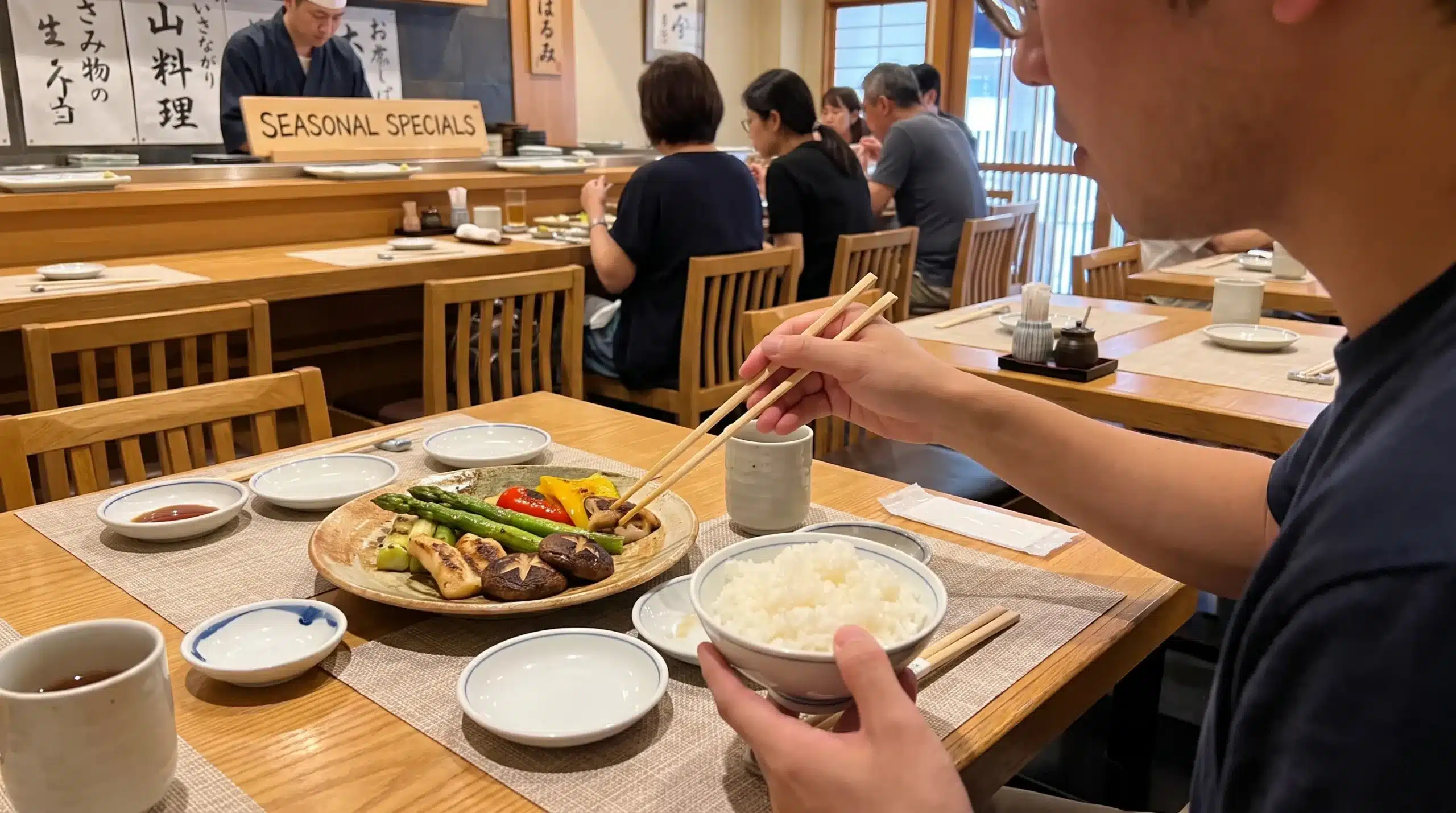
Look beyond the main ingredient. Dashi may contain bonito or other fish, and vegetable dishes can contain meat stock or animal-derived seasonings. Ask about the full preparation rather than requesting that meat be removed at the table.
Shojin ryori, the Buddhist vegetarian cooking tradition, can be a relevant starting point. Confirm the establishment’s actual ingredients and practices rather than assuming every meal using that description meets your requirements. A dedicated vegan restaurant can reduce the number of questions, but allergy and cross-contact checks remain separate.
Halal requirements
Distinguish halal-certified premises from restaurants describing particular dishes as Muslim-friendly or pork-free. These terms do not necessarily indicate the same sourcing or preparation practices.
Explain your requirements concerning meat sourcing, alcohol-containing ingredients, equipment and handling. Mirin, sake, sauces and marinades may need specific discussion. A seafood or vegetarian dish is not automatically suitable simply because it contains no pork.
Finding authentic local food may mean choosing a regional ingredient prepared differently from the usual recipe. Decide what you can accept before asking the restaurant to make changes, and do not expect a kitchen to establish religious suitability on your behalf.
Gluten-related requirements
Soba can contain wheat, and wheat may also appear in soy sauce, coatings, stocks and prepared seasonings. A dish without noodles or bread is not necessarily gluten-free.
State whether the requirement concerns coeliac disease, wheat allergy or another restriction, since these are not interchangeable. Ask about ingredients and preparation conditions according to your clinical advice. “We can remove the noodles” is not sufficient information about the rest of the meal.
Soft-food and texture requirements
Terms such as “soft” or “easy to eat” are subjective. Obtain specific instructions from your treating clinician or dentist, then ask the kitchen about the actual preparation. Restaurant staff cannot determine medical suitability.
For readers arranging dental care in Australia before departure, this checklist for choosing a dentist for quality local care explains how to assess communication and whether a practice fits your needs. It is not a directory of Japanese providers.
Keep a confirmed alternative within reach
Regional destinations often offer fewer dining choices within a practical distance. Before travelling to a small town, island or rural accommodation, check what food is available near where you will stay and along your onward route.
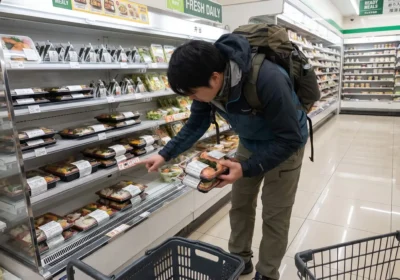
Keep an alternative that you have assessed against your requirements. Depending on the restriction, this might be a second restaurant, suitable packaged food or accommodation with usable cooking facilities. Do not assume a convenience store will provide an appropriate complete meal.
For authentic local food, flexibility about the venue can be more useful than flexibility about a firm dietary requirement. A suitable lunch may be easier to arrange than dinner, or a specialist shop may provide a regional ingredient you can prepare yourself.
If a restaurant already communicates clearly in a language you understand and can answer your questions, you may not need additional help. Local support is useful when telephone enquiries, Japanese-only information or several linked requirements prevent you from obtaining a reliable answer.
Frequently asked questions
Can every Japanese restaurant adapt its menu? No. Stocks, sauces and set meals may be prepared in advance, and shared equipment may prevent accommodation. A clear refusal is useful information, not a reason to press the kitchen.
Is an English menu enough to confirm suitability? No. It can help identify dishes, but may omit broth ingredients, seasonings and preparation details. Ask about the complete meal and any relevant handling requirements.
Can a helper guarantee that a meal is suitable? No. A helper can communicate your requirements, question the kitchen and relay its answers. The restaurant controls preparation, and unresolved uncertainty must not be presented as assurance.
Request focused dining support
Japan Hand provides restaurant booking, dining escort and dietary communication support nationwide, including regional cities, small towns, islands and rural destinations. Helpers are available in a range of languages beyond English, subject to confirmation for your request. Use the website’s contact form to provide your destination, dates and exact requirements. Every request receives a quote before anything is agreed, with no obligation.