How to Find Locals in Japan for Practical Travel Help
How to Find Locals in Japan for Practical Travel Help
You may need to find locals in Japan because a restaurant only accepts telephone reservations, a station transfer is difficult to understand or an accommodation problem requires a conversation in Japanese. The challenge is not simply meeting someone nearby. It is finding someone who can handle the specific task, communicate in your preferred language and explain their limits before you agree.
Start by separating a request for information from a request for someone to take responsibility for practical help. They require different sources and different checks.
Choose the right source for your problem
A transport employee, accommodation receptionist, community contact and booked helper serve different purposes. Use the simplest suitable option first.
| Source | Useful for | What to check |
|---|---|---|
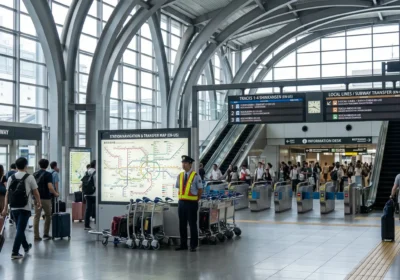
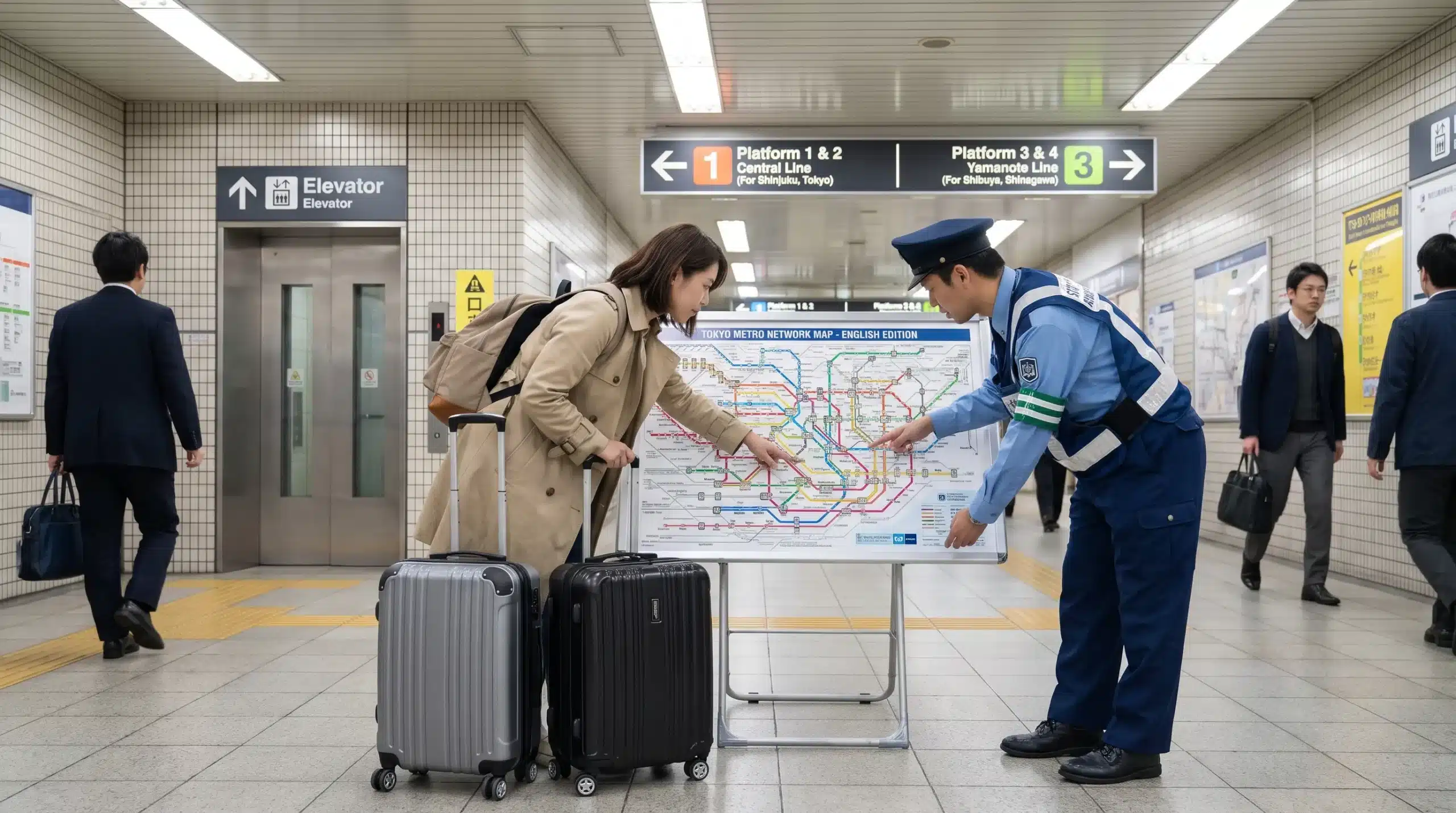
| Station or airport information counter | Directions, transport information and questions about the facility | Whether staff can address your particular question |
| Accommodation reception | Check-in questions, property facilities and local information | Whether assistance extends beyond the property |
| Municipal visitor information centre | Local transport, public facilities and destination information | Available languages and current opening arrangements |
| Community or language-exchange group | Social introductions and general recommendations | Whether practical requests are welcome |
| Booked local helper | Defined tasks requiring Japanese communication or in-person support | Location, language, scope and availability |
You do not need to find locals through a booking service for every unfamiliar task. A staffed counter may resolve a platform question without additional arrangements. A transport operator is also the appropriate source for an official answer about its own services.
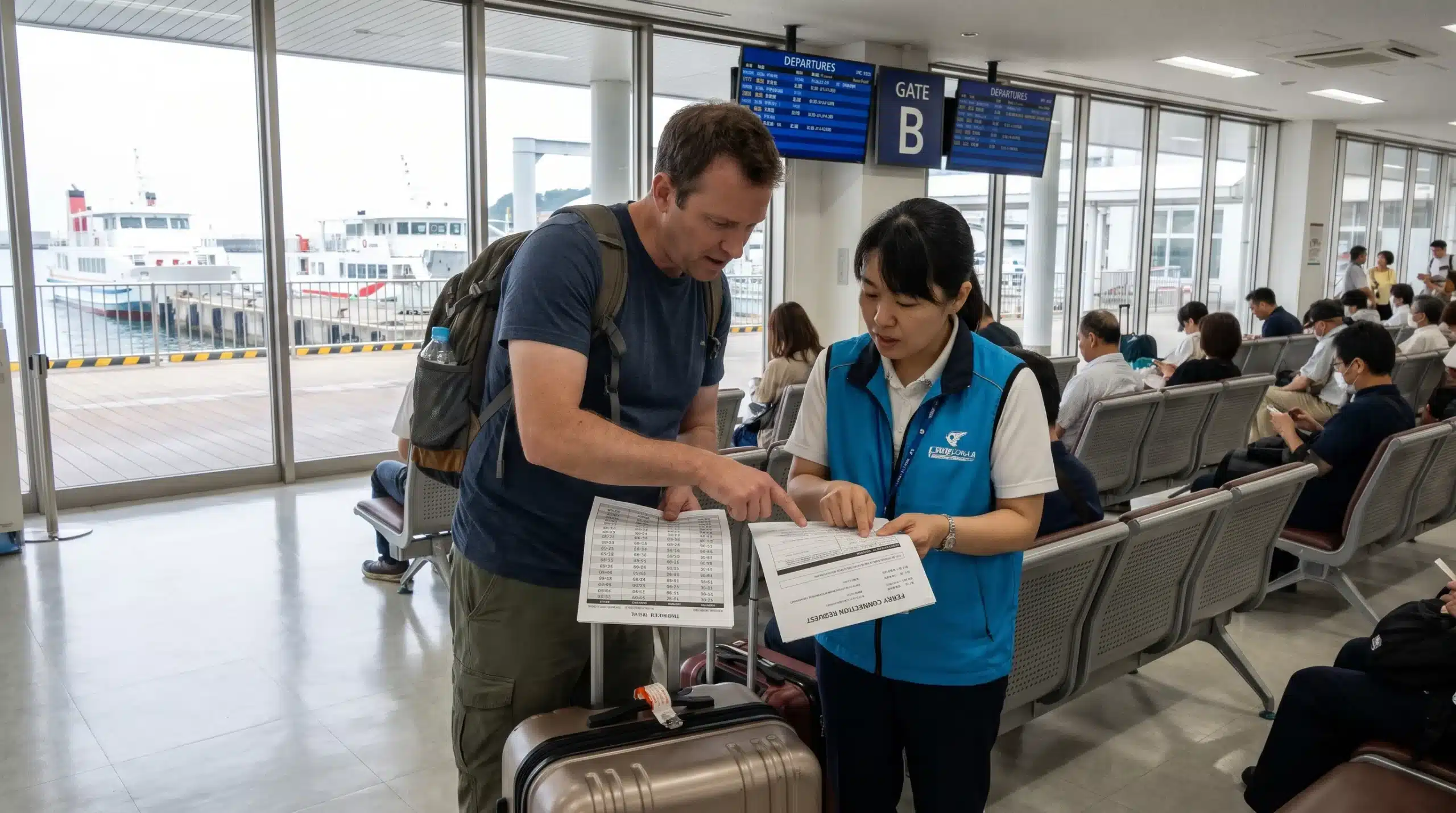
The distinction changes when you need someone to meet you, accompany you or make enquiries on your behalf. Japan Hand’s airport arrival support, for example, addresses a different need from asking airport staff where a train departs.
If your aim is conversation rather than practical assistance, use settings that welcome social participation. The advice on meeting local people in Japan respectfully explains that distinction. A social introduction should not carry an unspoken expectation of unpaid interpreting or errands.
How to find locals who fit the task
Check the source and the location
Search using the task, destination and language rather than a broad phrase such as “local friend Japan”. Useful combinations include station assistance in a named city, restaurant telephone support in Japanese or arrival help at a particular airport.
Check who operates the website or account and whether there is an identifiable enquiry process. For public information services, confirm details through the municipality, airport or transport operator’s own website rather than relying only on copied listings.
“Available in Japan” is not enough for an in-person request. Confirm the airport, station, port, accommodation or neighbourhood where assistance is needed. Regional airports and rural destinations can require additional arrangements, so give the actual location rather than the nearest well-known city.
Check language and task suitability separately
Someone who speaks your language may not be comfortable discussing allergies, explaining a document or navigating an unfamiliar station. Before you find locals through a community recommendation, check their suitability for the task rather than treating the recommendation as sufficient verification.
Ask which languages the helper can use and whether they can manage the required conversation in Japanese. State any terminology that matters, such as ingredients, mobility equipment or details of a lost item.
Japan Hand operates nationwide, including regional airports, small towns, islands and rural destinations. Helpers are available in a range of languages beyond English, but the location, language and timing still need confirmation for each request.
Write a request that can be answered
“Help us in Japan” leaves too much unresolved. A clear request allows the provider to assess the work and explain what is possible before you commit.
Include the following information in your initial enquiry:
- Location: Name the airport, station, port, property or municipality and include the address where relevant.
- Date and timing: Give the date, approximate meeting time and any fixed deadline, such as an onward departure.
- Required task: Explain the action needed, such as meeting you, making a Japanese telephone call or accompanying you to an appointment.
- Language and practical requirements: State your preferred language, luggage quantity, mobility requirements and whether children will be accompanying their parent or guardian.
- Desired outcome: Explain what would count as completing the task and identify any decision that depends on another organisation.
To find locals who can provide useful support, describe the difficult part rather than only naming the destination. A station meeting point, a step-free route and help communicating with railway staff are separate requirements, even if they arise during the same transfer.
Do not send passport copies, payment card details or complete medical records with a general enquiry. Begin with the information needed to assess the request. Ask why any sensitive document is required and how it should be shared before providing it.
Confirm access and practical limits
Stations, luggage and mobility
Ask where the helper will meet you and how you will recognise each other. A station name alone may leave several possible entrances, exits and levels.
For mobility support, describe the assistance required rather than relying on “accessible” as a complete specification. Confirm step-free access, realistic walking distances and whether help with luggage is included. Do not assume that a helper can provide lifting, personal care or specialised physical assistance.
Japan Hand’s station navigation help is relevant when you need practical support with a transfer rather than a general explanation of the rail network. The requested route and assistance should still be confirmed in advance.
Dining and restricted access
If you need to find locals to communicate dietary requirements, provide the exact ingredients or preparation issues that need checking. “Vegetarian”, “halal” and “allergy-friendly” do not answer every question about a particular kitchen.
A helper can ask questions and relay the response. The restaurant must confirm what it can accommodate, and the helper cannot guarantee the absence of cross-contact.
The same boundary applies to tickets and reservations. Someone can assist with a permitted application or telephone enquiry, but cannot guarantee a lottery result, create availability or override a venue’s restrictions.
Keep medical and dental decisions with clinicians
Practical assistance can be useful when contacting a clinic, explaining appointment arrangements or locating a pharmacy. It does not replace a clinician’s assessment or qualified medical interpreting where that is required.
If you have an unresolved dental concern before departure, consult your usual dentist rather than relying on finding help after arrival. For readers based in Geelong, Australia, Geelong Dental Centre is a local option for discussing care before travelling. Keep any relevant treatment information available if you may need follow-up abroad.
When seeking assistance in Japan, explain whether you need help contacting a clinic, attending an appointment or understanding administrative instructions. Confirm the helper’s role before discussing sensitive health information.
For an emergency, contact emergency services first rather than waiting for a marketplace response. Japan’s ambulance and fire emergency number is 119; the police emergency number is 110.
Agree on arrangements before meeting
The safest way to find locals for a defined task is to establish the arrangements through an identifiable service channel, then keep a written record of what has been agreed.
Confirm the meeting point, communication method, scope of assistance and procedure if either side is delayed. For an arrival request, explain how a flight delay could affect the meeting. For a cruise call, state the all-aboard deadline rather than only the ship’s departure time.
Ask what happens if the task cannot be completed. A closed counter, rejected application or unavailable restaurant table may prevent the desired outcome even when the helper has carried out the agreed work.
Keep account credentials under your control. If assistance involves a booking or online form, establish who will enter personal information and who will receive the confirmation. Support with an application does not necessarily make the helper the booking holder.
Japan Hand handles enquiries through a contact form and provides a quote before anything is agreed, with no obligation. The price depends on the specifics of the request. Availability and the proposed scope should be confirmed through that process rather than assumed from a general service description.
Frequently asked questions
Can I find locals who speak a language other than English? Yes. Japan Hand has helpers who speak a range of languages. Include your preferred language and the task in your enquiry so that suitability and availability can be checked together.
Is a local helper necessary for ordinary station directions? Often not. Start with station staff, signs and the transport operator’s information. A helper becomes more useful when you need an agreed meeting, accompaniment or assistance with several practical requirements.
Can someone make a Japanese telephone call for me? Japan Hand offers Japanese telephone support. Explain who needs to be contacted, what you need to ask and whether the organisation may require you to participate or verify your identity.
Can help be arranged outside major cities? Japan Hand operates nationwide, including rural destinations and islands. Provide the precise location and timing. Nationwide scope does not mean that every language and task can be accommodated immediately everywhere.
Request the support you need
If arrival is your main concern, outline the requirements for airport arrival support, including your airport, date, language and onward connection. Use the Japan Hand contact form to request a quote with no obligation. State the practical task clearly so that the response can explain what is possible and what remains outside the helper’s control.