Japan and Travel Planning for First-Time Visitors
Japan and Travel Planning for First-Time Visitors
For first-time visitors, Japan and travel planning can become difficult when accommodation, transport and practical needs are considered separately. A hotel may be convenient for sightseeing but awkward with luggage. A restaurant may accept reservations but be unable to accommodate an allergy. The useful starting point is to identify these dependencies before making bookings.
This article focuses on decisions that affect the whole visit, rather than only the arrival day: where to stay, what to reserve, how to move between regions and when local support is useful.
Start with the requirements that cannot change
Before choosing attractions, establish your dates, entry requirements and any needs that affect accommodation or transport. Check the Japanese Ministry of Foreign Affairs visa information for your nationality and circumstances. Do not assume that another traveller’s entry arrangements apply to you.
Write down the requirements that would make an otherwise suitable booking unusable. These might include step-free access, a particular sleeping arrangement, serious food allergies or space for mobility equipment.
| Requirement | What to confirm before booking |
|---|---|
| Mobility access | Entrance access, lifts, bathroom layout and the route from transport |
| Travelling with children | Occupancy rules, bedding arrangements and suitable meal options |
| Dietary requirements | Ingredients, preparation methods and the kitchen’s ability to accommodate them |
| Regional travel | Connections, accommodation access and transport at the destination |
| Large luggage | Train restrictions, storage and forwarding arrangements |
For Japan and travel planning, these requirements should shape the itinerary rather than become problems to solve after it is paid for.
Keep the details in one shared document. Parents or guardians should include the practical needs of children, while adults travelling together should agree on walking distances and the number of hotel changes they can comfortably manage.
Build a route around manageable transfers
Count hotel changes, not only destinations
Each move between hotels involves packing, reaching the station, finding the correct departure point and getting from the next station to your accommodation. The advertised train journey is only part of the transfer.
Choose a small number of bases and assess additional destinations from them. A longer stay in one place can be more practical than changing hotels to save a modest amount of travel time.
Avoid filling transfer days with fixed reservations. This is particularly useful for families, older travellers and anyone who needs assistance with luggage or station access.
Check the final connection
Regional cities, rural areas and islands require attention to the last stage of the journey. A railway station may be some distance from the accommodation, and a ferry or local bus may determine when you can arrive or leave.
Check the relevant operator’s timetable for your actual date. Allow for weather disruption where ferries or other exposed transport are involved, and confirm how you will reach the accommodation if the planned connection is unavailable.
Do not assume that a destination has frequent evening transport because a major city does. If accommodation offers a station collection service, confirm it directly rather than treating it as included.
Japan and travel planning: reserve the restrictive bookings first
Some bookings determine the rest of the itinerary. Others can wait until you know how much time and energy remain.
Prioritise accommodation during busy periods, date-specific events, restaurants with limited booking access and activities that require an application or lottery. Check the official venue or operator before arranging transport around a booking you do not yet hold.
Japanese ticket systems may require particular payment methods, a domestic telephone number or identity checks. A helper can assist with understanding requirements and eligible applications, but cannot guarantee a lottery result or bypass a venue’s conditions.
Record the exact venue name, location and entry conditions. teamLab operates several distinct venues, so booking one does not provide access to the others. Check the destination carefully before arranging the rest of that day.
For seasonal outdoor activities, confirm the current rules rather than relying on an older article. Mount Fuji’s climbing season runs from July to early September, and all four trails require an advance online reservation and a mandatory fee. Weather and operating conditions still affect access.
Keep some days lightly scheduled. A first visit does not benefit from having every available hour committed in advance.
Plan transport and luggage together
A useful approach to Japan and travel planning is to decide how your bags will move before selecting each intercity journey.
Several shinkansen routes require an advance reservation for oversized luggage. For the Tokaido, Sanyo and Kyushu shinkansen, consult the operator’s oversized-baggage information and check the current requirements for your train and bag dimensions.
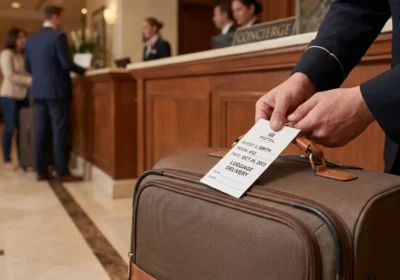
Luggage forwarding can reduce the amount you carry through stations. However, delivery is not necessarily same-day, and acceptance conditions depend on the carrier and destination. Confirm the receiving accommodation’s policy, allow sufficient delivery time and retain essentials in a smaller bag.
Keep medication, passports, valuables and anything needed before delivery with you. Do not forward all your belongings without a clear plan for the intervening nights.
Compare transport against your actual route
A nationwide rail pass is not automatically the best choice for a first visit. Compare the journeys you expect to take with individual tickets and any relevant regional passes. Check which operators and services are covered before purchasing.
For airport transfers, compare the available public transport with your arrival time, luggage and accommodation location. You may not need assistance if the journey is straightforward and you can manage it independently.
Japan Hand’s information on airport arrival support explains the practical tasks a helper can assist with when language, mobility or an unfamiliar transfer makes independent travel difficult.
Confirm food and accessibility requirements directly
Restaurant research needs more detail when a meal must meet an allergy, dietary or religious requirement. Menu descriptions and photographs do not establish how a kitchen handles ingredients or shared equipment.
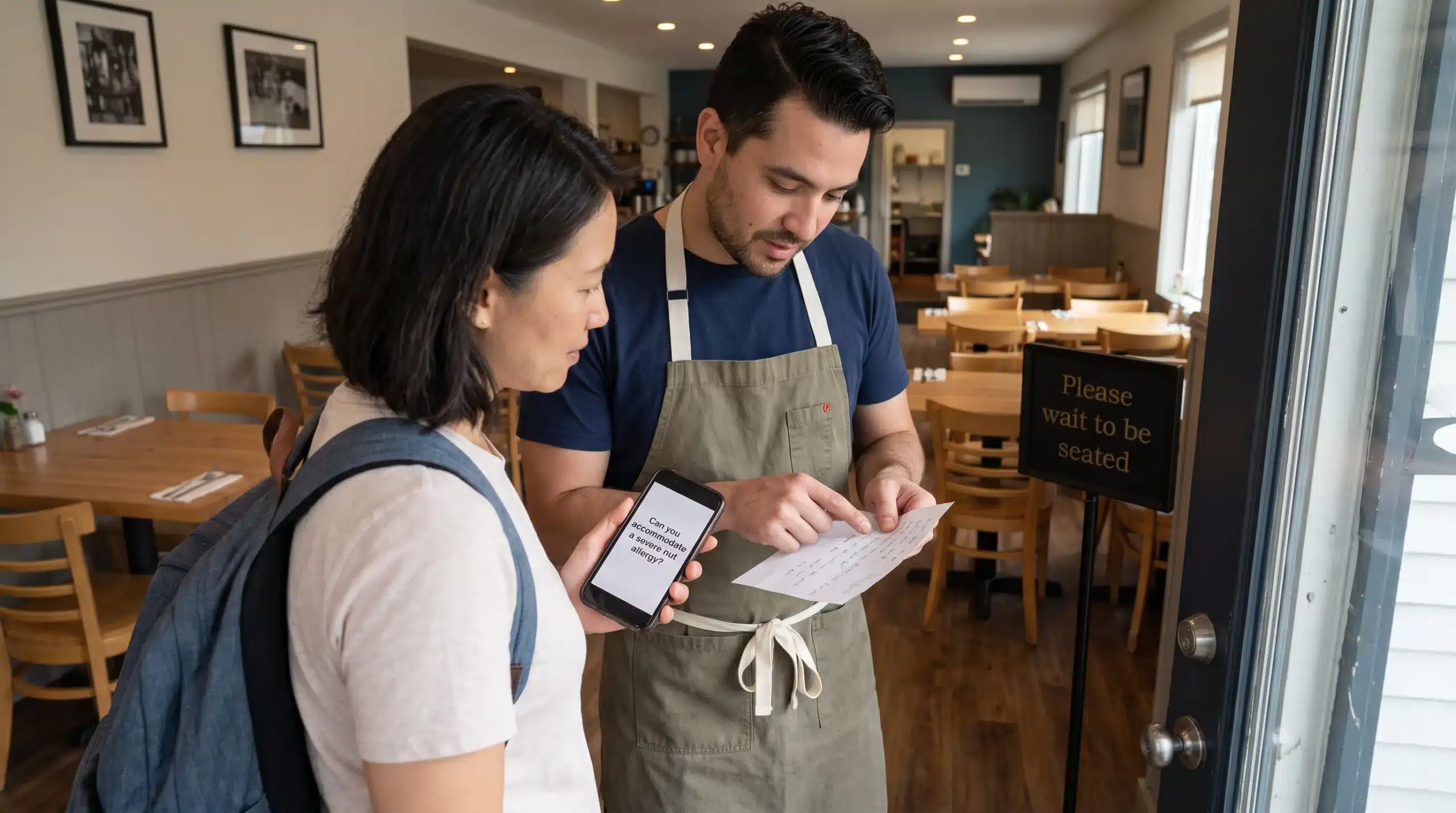
For Japan and travel planning involving food allergies, provide the restaurant with the specific ingredients that must be avoided and ask about preparation methods. A translated explanation can support the conversation, but it does not prove that a meal is safe.
Japan Hand’s article on restaurant communication for visitors with allergies explains why direct questions matter. A helper can facilitate communication; they cannot certify a kitchen or replace advice from a qualified medical professional.
Muslim travellers should distinguish between halal certification, a restaurant’s stated sourcing practices and a dish that simply appears to contain no pork. Ask about meat sourcing, alcohol in cooking and shared preparation equipment. Confirm prayer-space access separately, including whether it fits the day’s route.
Accessibility requires similar precision. “Near the station” does not establish a step-free route, and “accessible room” may not describe every bathroom feature you need.
Ask accommodation providers specific questions and request photographs where useful. Include station exits, street gradients, walking surfaces and opportunities to sit when assessing a day’s demands.
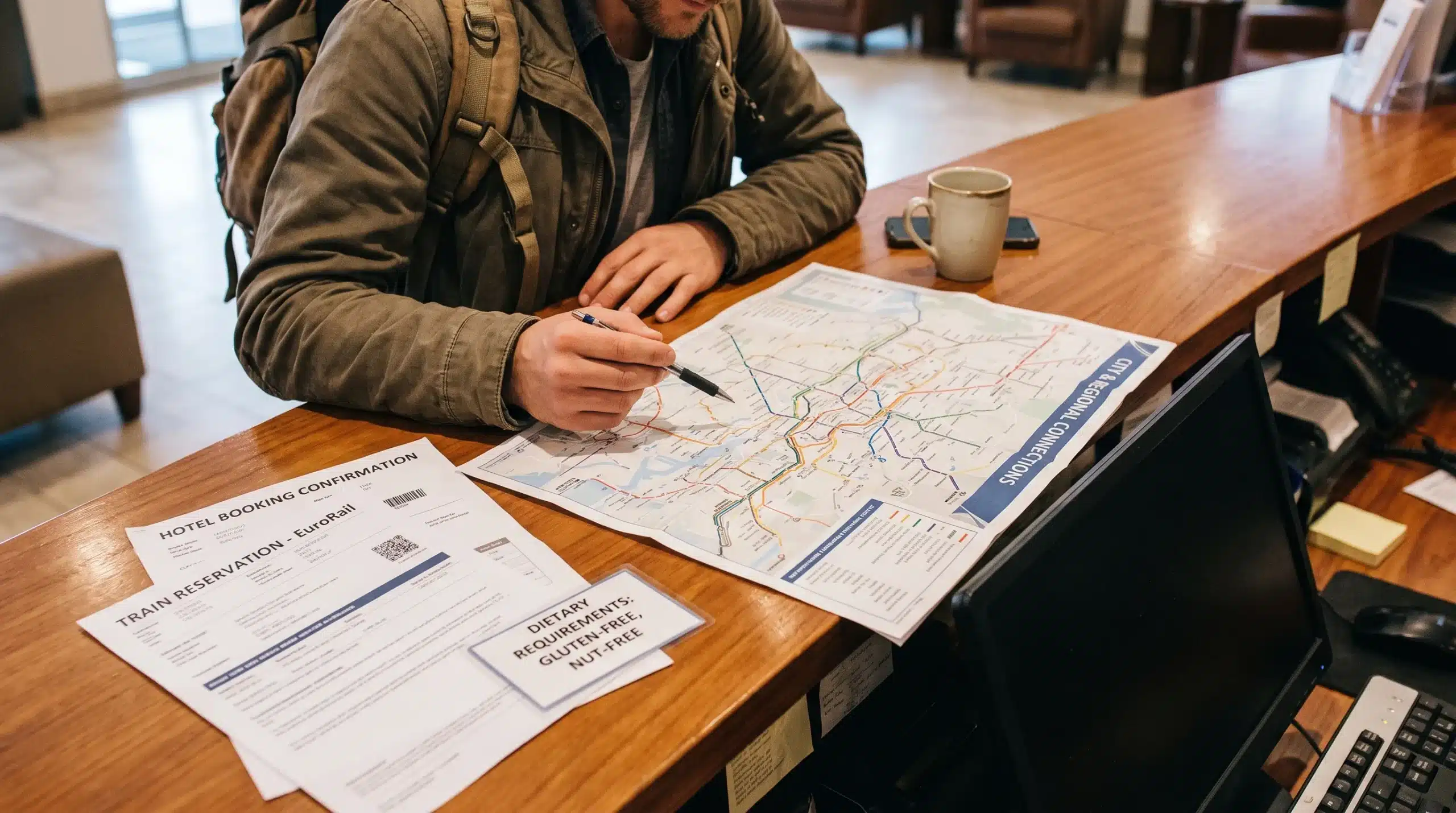
Prepare documents, connectivity and cabin baggage
Keep essential information available without an internet connection. Save accommodation names and addresses in Japanese, booking confirmations, important telephone numbers and the instructions for reaching your accommodation.
Before buying a SIM or eSIM, check device compatibility and whether the service provides data only or also a telephone number. A data connection can support navigation and messaging, but it does not necessarily satisfy a booking system’s requirement for a Japanese telephone number.
Cash access also deserves advance attention. Most Japanese bank branch ATMs cannot process foreign cards. Convenience store and post office ATMs can, although acceptance still depends on the card, network and machine. Confirm overseas use with your card issuer and keep an alternative payment method available.
The packing stage of Japan and travel planning should cover every flight, not just the outbound journey. Use the cabin liquid-rule checker for your complete route to compare airport restrictions, including transfers and the return flight. Confirm the applicable rules with the airports and follow the stricter 100 ml rule if uncertain.
For prescription medicines, check official Japanese import requirements before departure. Some medicines require additional procedures or are restricted. Ask the relevant authorities and your prescribing professional rather than assuming that a prescription from home is sufficient.
Decide when local help is useful
Independent travel is often entirely practical. Clear booking instructions, a manageable railway connection and accommodation that answers your questions may be all you need.
Local help becomes more useful when a task requires a Japanese telephone conversation, several parties need to coordinate or physical assistance is needed at a particular place and time. Examples include checking a restaurant’s conditions, accompanying a station transfer or communicating about an accommodation problem.
Japan Hand provides help booked by time and delivered by a real person. Requests can cover regional airports, small towns, islands and rural destinations as well as major cities. Helpers work in a range of languages beyond English; specify your language, location and date so the request can be assessed.
For Japan and travel planning, distinguish practical support from outcomes nobody can promise. A helper cannot guarantee admission through a lottery, clear weather or acceptance by a restaurant that restricts bookings.
Save your accommodation details and travel insurer’s assistance number before departure. In an emergency, contact the appropriate emergency service or qualified professional; local help is not a substitute for emergency response, medical treatment or legal advice.
Frequently asked questions
How far ahead should I plan a first visit? Start once your likely dates are known. Check entry requirements and date-dependent bookings first, then arrange transport and accommodation around confirmed plans. Booking windows vary, so consult each provider directly.
Do I need a helper for the whole visit? No. Many visitors travel independently and request help only for a specific task. A station connection, restaurant call or accommodation issue may be the only point where support is useful.
Should I book every restaurant before departure? No. Prioritise meals with restrictive booking arrangements or essential dietary requirements. Leave flexibility for other meals, while keeping suitable alternatives available where choice is limited.
Request help with a specific planning problem
For a difficult transfer or another practical task, consult Japan Hand’s local travel support information and submit the details through the Japan Hand contact form. Include the location, date, language and assistance required. The price depends on the specifics, and every request receives a quote with no obligation before anything is agreed.