Local Travel in Japan When You Need Practical Support
Local Travel in Japan When You Need Practical Support
Local travel in Japan can be very orderly and still become difficult when the task in front of you depends on language, local rules or timing. The problem is rarely that Japan lacks transport, restaurants or services. The problem is often knowing which counter to approach, what to say, what cannot be done and when a written English explanation is not enough.
Japan Hand provides practical human help for visitors and residents who need support on the ground. A helper can meet you in person, assist by time and deal with ordinary but stressful tasks such as transfers, Japanese phone calls, restaurant communication, ticket collection, luggage forwarding and urgent problem solving.
What local travel support means in practice
Japan Hand does not sell sightseeing packages. It provides help. That distinction matters, because many visitors do not need someone to explain a temple or plan a full day. They need someone to help them get from an airport to a hotel, speak to a station employee, confirm whether a meal is safe or handle a problem that is not documented in English.
Help with the work travellers cannot see
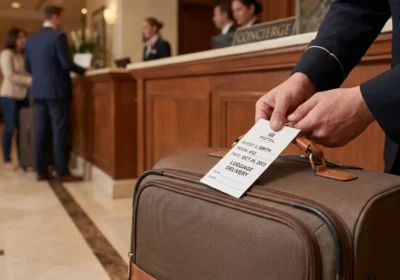
A great deal of travel friction in Japan happens before the visible task. A restaurant may need a telephone call in Japanese. A ticket system may require a domestic phone number. A luggage forwarding form may ask for the hotel name and address in a format that does not match your booking confirmation. A clinic may require registration before you can explain the problem.
A helper can reduce that gap by handling communication, accompanying you through a station or checking requirements in advance. This is especially useful for first-time visitors, families with children, older travellers, people with mobility requirements and anyone travelling outside areas with strong English-language infrastructure.
When a helper may not be necessary
There are also situations where you may not need paid help. If your hotel is beside a direct airport rail line, your luggage is manageable and your route is simple, Japan’s transport apps and station signs may be enough. If a restaurant accepts online booking in your language and you have no dietary restrictions, you may be able to handle it yourself.
Japan Hand’s approach is to say so when a cheaper or simpler alternative exists. Practical support is most useful when the risk of delay, misunderstanding or physical strain is higher than the value of doing the task alone.
Common local travel situations where support helps
The most useful support is often attached to a specific moment. It may last only part of a day, but it can prevent a small problem from affecting the rest of your plans.
Arrival and the first transfer
Airports in Japan are well organised, but arrival still involves immigration, baggage, money, connectivity and onward transport. Many travellers also arrive through regional airports, not only Haneda, Narita, Kansai or Chubu.
Japan Hand can arrange airport arrival support for travellers who want help after landing, including route confirmation, transport assistance, luggage questions and the practical steps needed before leaving the airport. This can be particularly useful for families, older travellers and visitors arriving in a city they do not know.
Stations, luggage and intercity movement
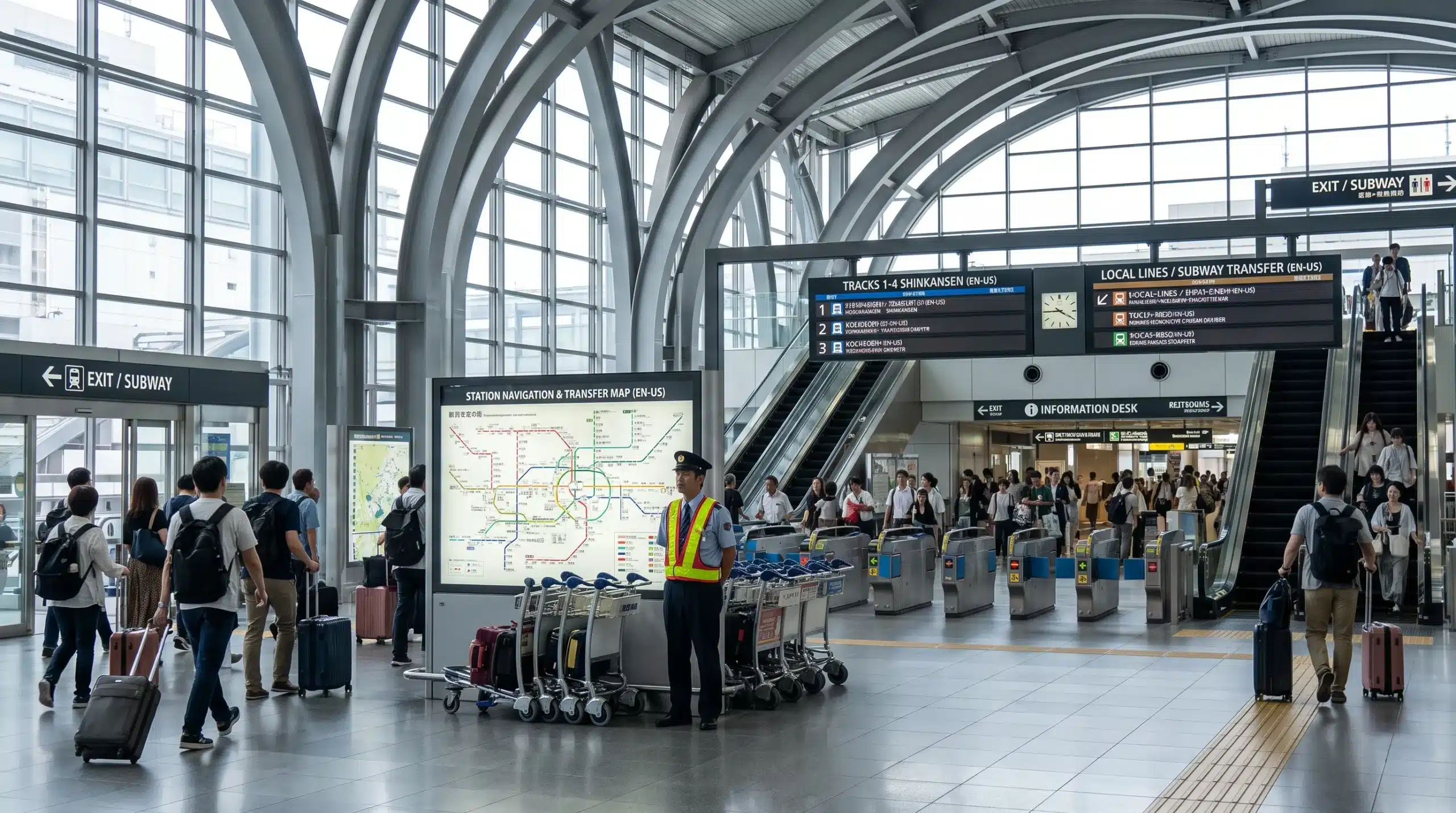
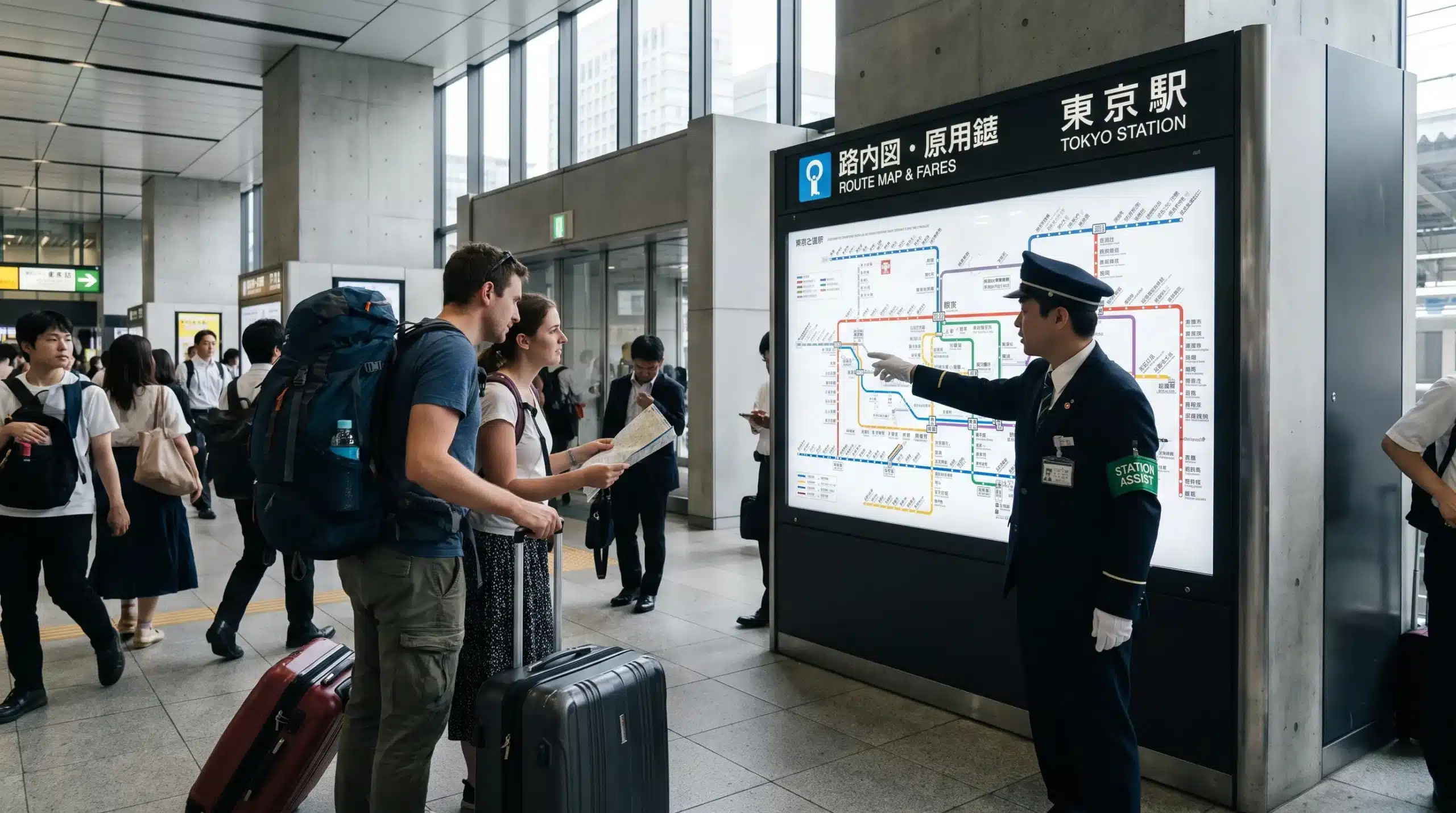
Major Japanese stations are large, busy and often built in stages over many decades. Elevators may be far from the platform you need. Transfers can involve different operators. Some routes are simple once you know them, but tiring when you are carrying several bags or moving with children.
Several shinkansen routes require an advance reservation for oversized luggage. Rules and processes can change, so it is sensible to check close to your travel date rather than relying on an old article or video. If you need an accompanying helper through a difficult transfer, station navigation help can reduce the risk of missed trains, wrong platforms and unnecessary stairs.
Food, allergies, halal needs and bookings
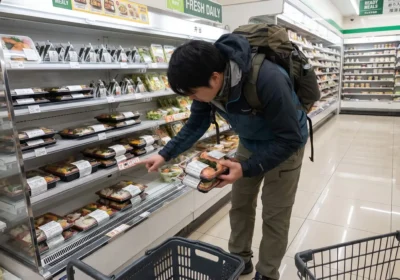
Food is one of the most common reasons travellers need local support. Allergens may appear in dashi, sauces, marinades or seasonings. A restaurant may give a polite but vague answer at the door, which is not the same as checking ingredients properly with the kitchen in advance.
Muslim travellers may also need halal food identification, prayer space planning and restaurant questions handled in Japanese. Japan Hand can assist with restaurant booking help where a direct conversation is needed. A helper cannot change a restaurant’s policy, but can ask clear questions and report the answer honestly.
Mobility, family pacing and realistic routes
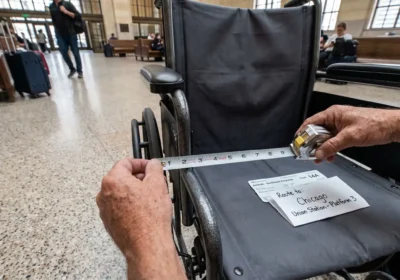
Japan’s published accessibility information can be incomplete, especially outside central districts. A route may be technically step-free but still involve long platform walks, steep slopes, crowded lifts or limited seating. Families may also need to balance feeding, toilets, luggage and short attention spans during transfer days.
Support is most valuable when the plan must be realistic rather than ideal. A helper can help identify routes that are slower but easier, assist with station movement and reduce the number of decisions a parent, guardian or older traveller must make at the same time.
Nationwide help beyond the usual visitor corridors
Local travel outside Japan’s best-known cities can be rewarding, but practical support becomes more important when English infrastructure is thin. Regional airports, small towns, islands and rural destinations may have fewer online booking options, less English signage and more situations where a phone call is still the most reliable method.
Japan Hand operates nationwide, not only in Tokyo and Kyoto. Helpers may be available across major destinations, regional cities and more remote areas, subject to timing, availability and the nature of the request. Support is also available in a range of languages beyond English, which matters for travellers who are more comfortable explaining medical needs, food restrictions or family requirements in another language.
Not every request can be accepted. Remote locations, short notice, venue restrictions and local rules can limit what is possible. A clear request with date, location, language needs and the exact task makes it easier to assess honestly.
How practical support reduces day-of risk
Practical support does not remove all uncertainty. It reduces avoidable uncertainty. A helper can interpret signs, ask staff, make calls and accompany you through unfamiliar processes, but cannot guarantee outcomes controlled by another party.
| Situation | Common risk | Practical support |
|---|---|---|
| Airport arrival | Confusion over transport, luggage or connectivity | Meet after arrival and assist with the first transfer |
| Large station transfer | Wrong platform, long walks or stairs | Accompany the route and ask station staff when needed |
| Restaurant booking | Language barriers or unclear dietary answers | Call ahead and confirm what the restaurant can and cannot do |
| Luggage forwarding | Address format or cut-off uncertainty | Help complete forms and confirm delivery details |
| Ticket collection | Japanese-only instructions or ID checks | Assist with instructions and collection where allowed |
| Urgent problem | Lost property, cancellation or dispute | Make calls, translate facts and help identify next steps |
The value is not only translation. It is also judgment. A helper may recognise that a train transfer is unrealistic with your luggage, that a taxi is simpler for one specific segment or that a restaurant answer is too uncertain for a serious allergy.
Practical details that change or surprise visitors
Many practical rules in Japan are straightforward once explained, but they are easy to miss when you are planning from overseas. Always check official information close to your travel date, especially for seasonal sites, ticketed venues and transport rules.
Transport, cash and connectivity
Most Japanese bank branch ATMs cannot process foreign cards. Convenience store and post office ATMs are usually more reliable for visitors, but availability can still depend on card network, maintenance windows and location. If you are travelling to rural areas or islands, it is sensible to plan cash access before you arrive.
Connectivity is another practical issue. SIM, eSIM and pocket WiFi arrangements can fail because of device settings, identity checks or incompatible handsets. A helper can assist with setup and troubleshooting, but some problems depend on the device, network or provider policy.
Tickets, access rules and seasonal limits
Some Japanese venues are often confused with one another. teamLab operates several distinct venues, and visitors sometimes mistake them for branches of one attraction. Ticket rules, locations and entry processes differ, so check the exact venue name before buying or travelling.
Kyoto’s Gion district has enforced photography restrictions, and entering private alleys carries a fine. For Mount Fuji, all four trails require an advance online reservation and a mandatory fee. The climbing season runs from July to early September. Weather, trail conditions and crowding remain outside anyone’s control.
Health, documents and personal items
Contact lenses require a locally obtained prescription in Japan. If you depend on a particular prescription product, bring what you need where lawful and prepare documentation as appropriate. Japan Hand can help with clinic, hospital, dental or pharmacy communication, but does not provide medical advice. Medical decisions must come from qualified professionals.
For longer stays, local travel may overlap with practical tasks such as ward office procedures, utilities, phone contracts, parcels or documents. If your needs involve commercial goods or business shipments rather than personal luggage, customs and logistics rules are separate from traveller support. This overview of practical requirements for exporting goods from the USA to Japan is a useful starting point before seeking specialist logistics advice.
How to request help from Japan Hand
A good request is specific. The more precise you are, the easier it is to confirm whether a helper is suitable and what kind of support is realistic.
Include the date, city, starting point, destination, number of travellers, luggage, language needs, mobility considerations and the exact task. If the matter involves food, list allergies, religious requirements and foods you avoid. If it involves a ticket, booking or document, explain the deadline and what has already been attempted.
Every enquiry receives a quote before anything is agreed, with no obligation. The price depends on the details of the request, including location, timing, language, duration and complexity. Japan Hand will also say when a request cannot be done or when another route is more appropriate.
Frequently Asked Questions
Do I need local travel support for a first visit to Japan? Not always. Many first-time visitors manage well with transport apps, hotel staff and clear plans. Support is useful when you have complex transfers, heavy luggage, children, mobility needs, dietary requirements or a task that requires Japanese communication.
Can Japan Hand help outside Tokyo and Kyoto? Yes, Japan Hand operates nationwide, including regional airports, smaller cities, rural areas and islands where support is available. Availability depends on timing, location, language and the nature of the request.
Can a helper guarantee tickets, restaurant seats or special access? No. Japan Hand can assist with applications, calls, collection and communication where allowed, but cannot guarantee lottery results, restaurant approval, venue entry, weather or access controlled by a third party.
Can Japan Hand help with medical or legal issues? A helper can assist with communication, translation of facts and finding the right place to ask for help. Japan Hand does not provide medical, legal, immigration or financial advice, and decisions in those areas should come from qualified professionals.
How is the price decided? The price depends on the specifics of the request. Use the contact form with as much detail as possible, and Japan Hand will provide a quote before anything is agreed.
Practical help when the plan depends on people
Some travel problems in Japan are not solved by more research. They are solved by a person who can ask the right question in the right place, in the right language, at the right time.
If you need help with arrival, stations, food, luggage, documents or an urgent issue, review the relevant service page and send the details through the Japan Hand contact form. Japan Hand will assess the request, explain what is realistic and provide a quote with no obligation.