How to Choose a Sake Tasting Experience in Japan
Sake Tasting Japan: How to Choose the Right Experience
A search for “sake tasting japan” can leave you comparing activities that offer quite different things: a few samples at a shop counter, a museum visit, a food pairing or access to a working brewery. The main difficulty is establishing what you can actually do, in which language and under what booking conditions.
Choose the format first, then check current visitor access, transport and any practical requirements. A well-matched tasting does not need to be at a famous brewery, and a brewery visit does not necessarily include access to production areas.
Choose the Format Before the Brewery
The right format depends on what you want to understand and how much time you can comfortably allow.
| Format | Best suited to | What to confirm |
|---|---|---|
| Shop or brewery tasting counter | Comparing several sake styles without a lengthy visit | Whether samples require a reservation and whether explanations are available |
| Sake museum or exhibition | Learning about equipment, history and production | Whether tasting is included, separate or unavailable |
| Working-brewery visit | Understanding brewing processes and the production setting | Which areas are accessible and whether production will be taking place |
| Food pairing or restaurant tasting | Understanding sake alongside a meal | The food menu, dietary arrangements and how much explanation is provided |
A counter tasting is often sufficient for a first introduction. You can compare contrasting styles without committing to a longer activity.
A working-brewery visit is more suitable if production is your main interest. However, “brewery visit” can mean access only to a shop, exhibition room or viewing window. Do not assume that photographs of brewing equipment show areas visitors may enter.
For sake tasting in Japan, the useful distinction is not simply private versus shared. It is whether the format provides the access and explanation you want.
Choose a Region That Fits Your Existing Route
You do not need to reorganise your journey around one celebrated sake destination. Tokyo and Osaka offer tasting counters and restaurants where you can compare bottles from several regions. These can be practical choices when your priority is flavour rather than production.
For a brewery setting, established areas include Fushimi in Kyoto, Nada in Hyogo, Saijo in Hiroshima and Aizu in Fukushima. Niigata also offers brewery options, including on Sado Island.
Regional reputations provide a starting point, not a reliable prediction of every bottle. A brewery may produce several styles, and neighbouring producers can make noticeably different sake.
Consider the return journey before choosing a rural location. A short distance on a map can involve infrequent buses, a substantial walk or a taxi that needs arranging in advance. Island visits also require attention to ferry connections.
The best location for sake tasting in Japan is often the one that fits your route without making the rest of the day difficult. Japan Hand can provide practical help nationwide, including in small towns, on islands and in rural destinations, subject to the arrangements for your request.
Confirm Current Visitor Access Directly
Separate three questions: whether the premises are open, whether tasting is available and whether visitors can enter production areas. An open shop does not establish either of the other two.
Brewing schedules, maintenance and hygiene requirements can affect visitor access. Check the brewery’s current information for your intended date rather than relying on an older article or a map listing.
Clear mobile-friendly website design can make a reservation form easier to use, but presentation alone does not establish that visitor information is current. Look for dated notices and obtain confirmation when the arrangements are unclear.
Walk-ins and Reservations Are Different Arrangements
Some shops accept visitors without reservations while requiring advance arrangements for tastings or production visits. Other venues operate only through scheduled sessions.
Ask what your reservation actually includes. Useful details are the meeting point, duration, tasting arrangements, areas visited and cancellation conditions. If the confirmation is in Japanese, have any uncertain terms checked before accepting it.
Do not assume that a helper can obtain access to a closed brewery or bypass a venue’s restrictions. An alternative tasting may be possible, but the brewery decides who can enter.
Check the Language of the Explanation
An English website does not necessarily mean an English-speaking member of staff will conduct the session. Translated labels also provide less support than a conversation about what you are tasting.
Before booking sake tasting in Japan, establish whether explanations are spoken, written or provided through an audio recording. If you need interpretation, ask whether an accompanying helper is permitted.
Japan Hand offers helpers in a range of languages beyond English. State your preferred language when enquiring so that the request can be assessed accurately.
Choose Contrasting Sake, Not Just Prestigious Labels
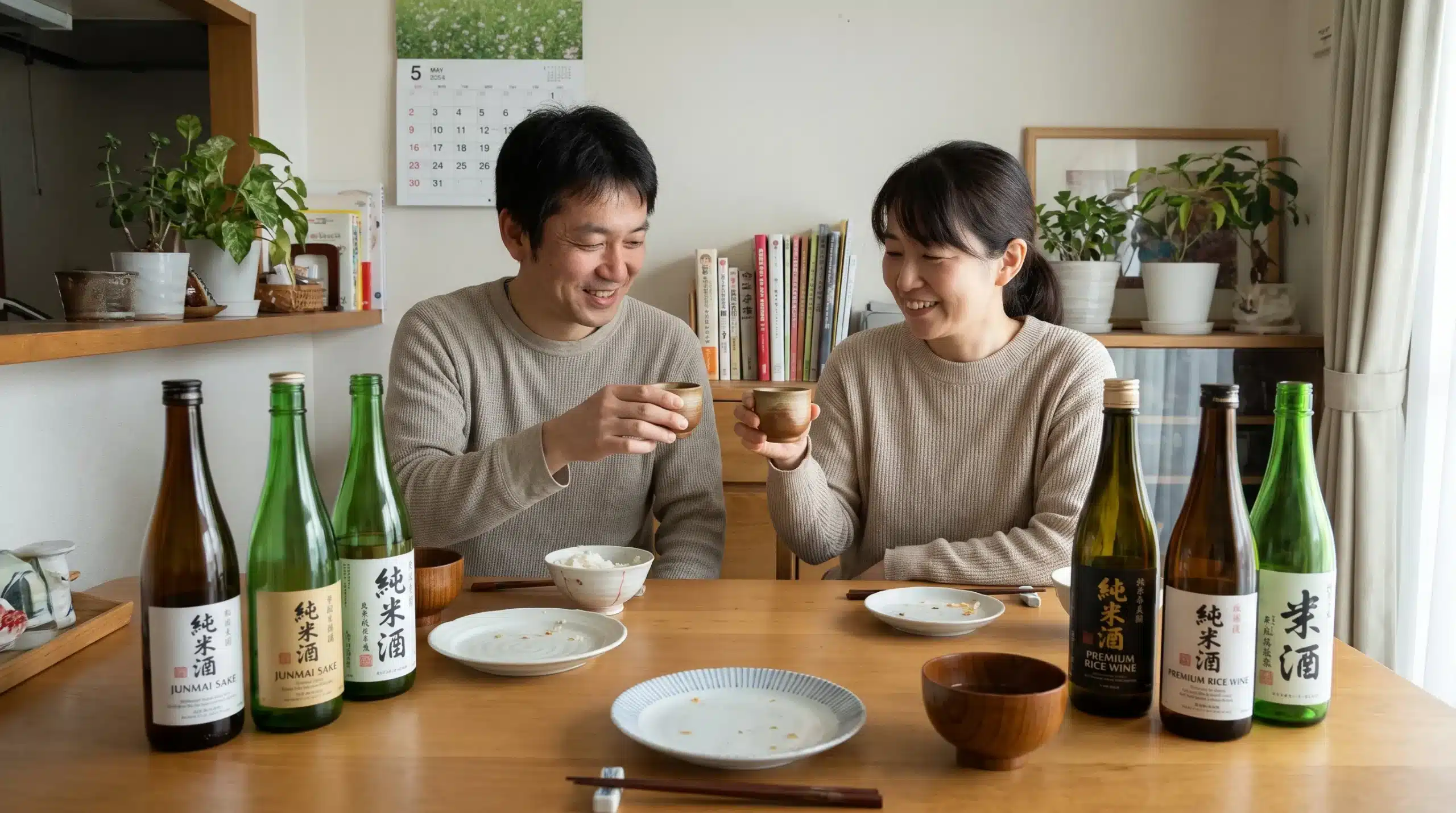
You do not need detailed technical knowledge before attending a tasting. A useful introductory selection should let you compare meaningful differences rather than present several similar premium bottles.
Sake is made through fermentation involving rice, water, koji and yeast. It is distinct from distilled drinks such as shochu and awamori.
A few terms will help you understand a tasting menu:
- Junmai: Sake made without added distilled alcohol. The term does not mean alcohol-free and does not specify one flavour profile.
- Ginjo and daiginjo: Categories involving rice-polishing requirements and particular brewing methods. They are not guarantees that you will prefer the result.
- Nigori: Cloudy sake containing suspended rice solids. Texture and sweetness vary.
- Namazake: Unpasteurised sake, for which storage and handling matter.
The Japan Sake and Shochu Makers Association’s sake information provides background on production and classifications.
For a first tasting, ask for a contrast in aroma, body, sweetness and serving temperature where available. Expensive bottles are not necessary for learning these differences.
A useful sake tasting in Japan should leave you better able to describe your preferences, not simply able to recognise a list of classifications.
Check Accessibility, Food and Transport
Mobility and Seating
Traditional buildings and working premises can have steps, uneven floors, narrow passages or areas where footwear must be removed. “Accessible” is too general to settle these questions.
Ask about the complete visitor route, including the entrance, tasting position and toilet. Establish whether the tasting is seated or standing and whether a shorter route is possible.
For requirements beyond mobility, our article on planning an experience around your actual needs explains how to frame questions about pacing, sensory conditions and dietary arrangements.
Food and Non-Drinking Companions
A food pairing requires separate checks for allergies and dietary restrictions. Do not assume that a small accompaniment is suitable because the main activity concerns sake. Ask about ingredients, preparation and cross-contact directly.
For parents and guardians, confirm whether children may enter and whether suitable seating is available. Japan’s minimum drinking age is 20.
Non-drinking companions should check admission arrangements and alternative drinks. If you avoid alcohol for religious or other reasons, a production exhibition may be more appropriate than a tasting, but confirm that the format suits your requirements.
The Return Journey
Do not drive or cycle after drinking. Plan public transport, walking routes or an appropriate alternative before the tasting begins.
Ask about sample quantities and whether you may decline individual pours. Water, food and a relaxed schedule are sensible arrangements, but they do not make it safe to drive after drinking.
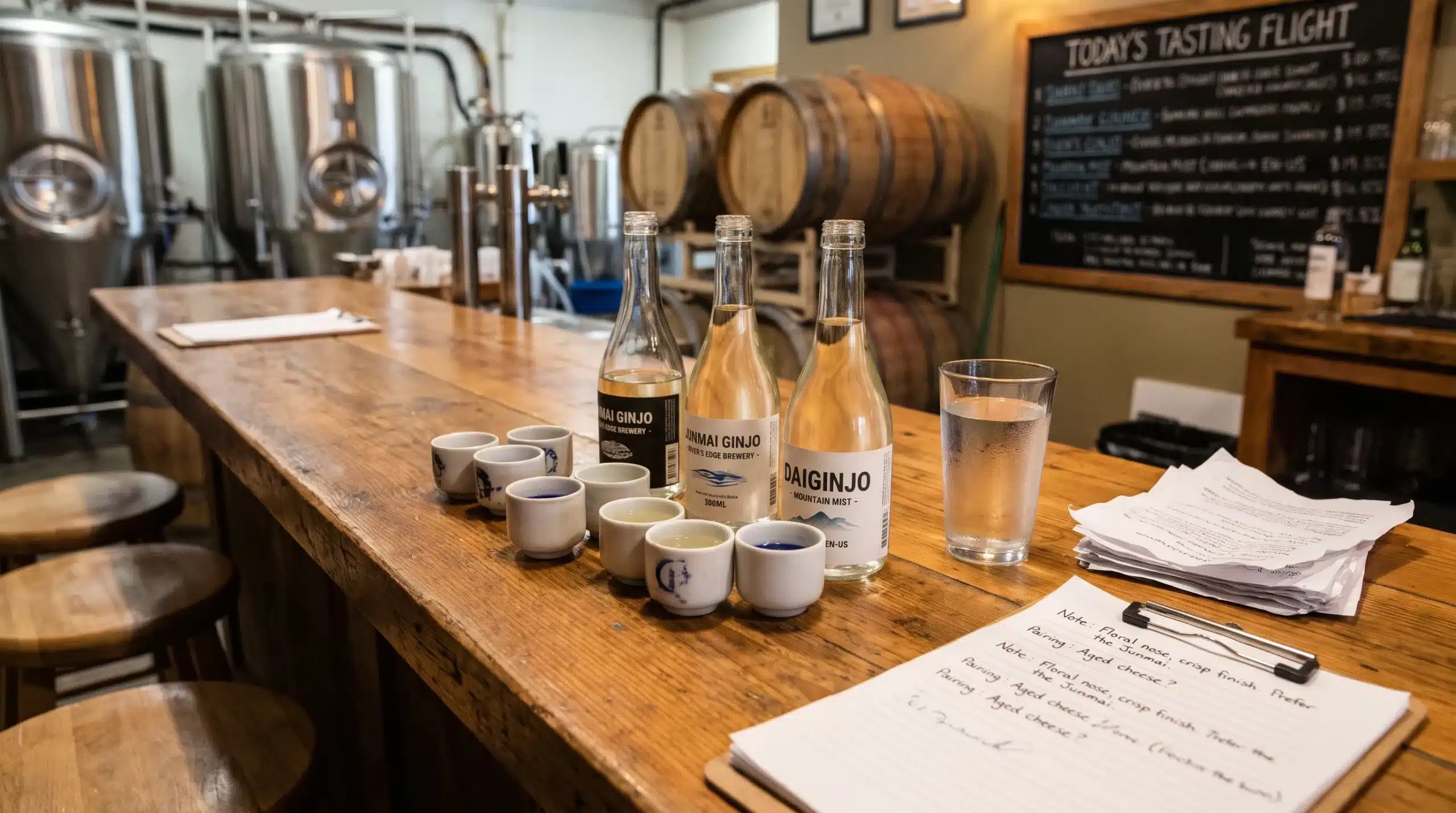
Sake Tasting Japan: A Booking Checklist
Before committing, obtain a clear answer to the points that would change your decision. A short written enquiry is usually more effective than a broad request for “an authentic experience”.
| Question | Why it matters |
|---|---|
| What happens during the session? | Distinguishes tasting, exhibition access and production-area access |
| What language is used? | Establishes whether you can follow the explanation |
| Is advance booking required? | Avoids confusing shop access with session availability |
| Is the tasting seated and step-free? | Identifies practical access requirements |
| Can dietary requirements be accommodated? | Allows the venue to assess any accompanying food |
| What happens if you arrive late? | Clarifies the consequences of transport disruption |
| How will you return afterwards? | Prevents a tasting from depending on driving or an uncertain connection |
For sake tasting in Japan, a clear confirmation is more useful than an extensive description of the brewery’s history. Keep the venue’s address, meeting instructions and booking confirmation available offline.
If a venue already offers a suitable session in your language with straightforward booking, you may not need additional help. Booking directly is often the simplest option.
Frequently Asked Questions
Is a brewery visit better than a tasting counter? Not automatically. A counter can be better for comparing flavours, while a brewery visit is more suitable for understanding production. Check what access and explanation each offers.
Can I visit a sake brewery without a reservation? Sometimes, but access to a shop does not imply access to a tasting session or production area. Check the brewery’s current arrangements for your intended date.
Which region is best for a first tasting? There is no single best region. Choose somewhere that fits your route and offers an explanation you can understand. A city tasting counter may be more useful than a distant brewery with limited visitor access.
Can I buy sake at a convenience store instead? Many convenience stores sell sake, although stock varies. Buying a bottle lets you try it independently, but it does not provide the comparison or explanation of an organised tasting.
Is sake healthier than wine? Do not choose sake on the assumption that it is a healthier alcoholic drink. A tasting should be about flavour and understanding, not a claimed health benefit.
Arrange Help Where It Is Needed
Japan Hand’s sake tasting support can help with practical arrangements and language barriers. If your tasting includes a meal, restaurant booking help may also be relevant. Use the contact form to provide your date, destination, preferred language and access or dietary requirements. The price depends on the specifics, and every request receives a quote with no obligation.