What to Expect From a Japanese Dining Experience
What to Expect From a Japanese Dining Experience
Booking a restaurant in Japan can leave several questions unanswered: what will be served, how ordering works, whether children can attend and whether the kitchen understands a dietary requirement. A Japanese dining experience may involve a quick meal ordered from a machine, shared dishes at an izakaya or a carefully timed sequence at a small counter. Knowing which format you have booked matters more than memorising elaborate etiquette rules.
This article explains what to confirm beforehand, what usually happens during the meal and when language support is useful.
Choose the Right Dining Format
Japanese restaurants differ considerably in atmosphere, pacing and flexibility. An unfamiliar menu term does not necessarily indicate a formal meal.
| Format | What it means | What to check |
|---|---|---|
| Omakase | The chef selects what to serve, commonly but not exclusively at sushi restaurants | Dietary restrictions, course details and whether substitutions are possible |
| Kaiseki | A seasonal, multi-course meal with attention to preparation and presentation | Meal duration, seating and the restaurant’s ability to accommodate restrictions |
| Izakaya | A restaurant serving drinks and dishes that are often shared | Seating charges, smoking arrangements and suitability for children |
| Teishoku | A set meal, usually combining a main dish with rice, soup and accompaniments | Ingredients in the main dish, soup and side dishes |
| Specialist restaurant | A restaurant focused on food such as ramen, soba, tempura or yakitori | Ordering method, queue arrangements and menu flexibility |
Omakase describes who chooses the food; kaiseki describes a style of meal. Neither term guarantees a particular atmosphere or level of formality.
Choose a Japanese dining experience around the food, seating and pace you want, rather than assuming the most elaborate format is the most suitable. A regional set-meal restaurant can be a better fit than a long counter meal when you need predictable timing or greater independence over ordering.
What to Confirm Before Booking
Reservations and Arrival
Some restaurants accept walk-ins, while others require advance reservations through a website, telephone call or designated booking platform. Availability, booking windows and cancellation conditions can change, so check the restaurant’s current instructions.
Before confirming, establish the exact location, arrival time, number of diners and cancellation terms. Ask whether the meal begins together for everyone and whether late arrival affects admission or the dishes served. Do not assume that a reservation can simply be moved if your train is delayed.
When a restaurant takes bookings only by telephone in Japanese, Japan Hand’s restaurant booking and dining escort support can help with communication. A helper cannot guarantee a table, override a restaurant’s restrictions or make an unavailable date possible.
For a Japanese dining experience with a fixed course, send dietary requirements before accepting the reservation, not after the menu has been agreed.
Children, Seating and Accessibility
Parents and guardians should confirm whether children are accepted, whether a children’s meal is available and whether each seated guest must order a course. Small counter restaurants may have age restrictions or limited space for pushchairs.
Ask specifically about chair seating, floor seating, entrance steps and accessible toilets. A restaurant described as having traditional seating may require removing shoes and sitting on tatami, which is not suitable for everyone. A lift in the building does not establish that the entire route is step-free.
For a family meal, realistic pacing and a suitable seat are usually more useful than an ambitious menu. Confirm space for mobility equipment directly rather than relying on photographs.
How a Japanese Dining Experience Usually Unfolds
Arrival and Ordering
Wait near the entrance until staff acknowledge you. They may confirm your reservation or ask how many people are dining before allocating seats. At some restaurants, you remove your shoes; follow the staff’s instructions rather than assuming this is required everywhere.
A warm or cool hand towel, called an oshibori, may be provided for your hands. Water or tea is often brought without a separate order, although arrangements vary.
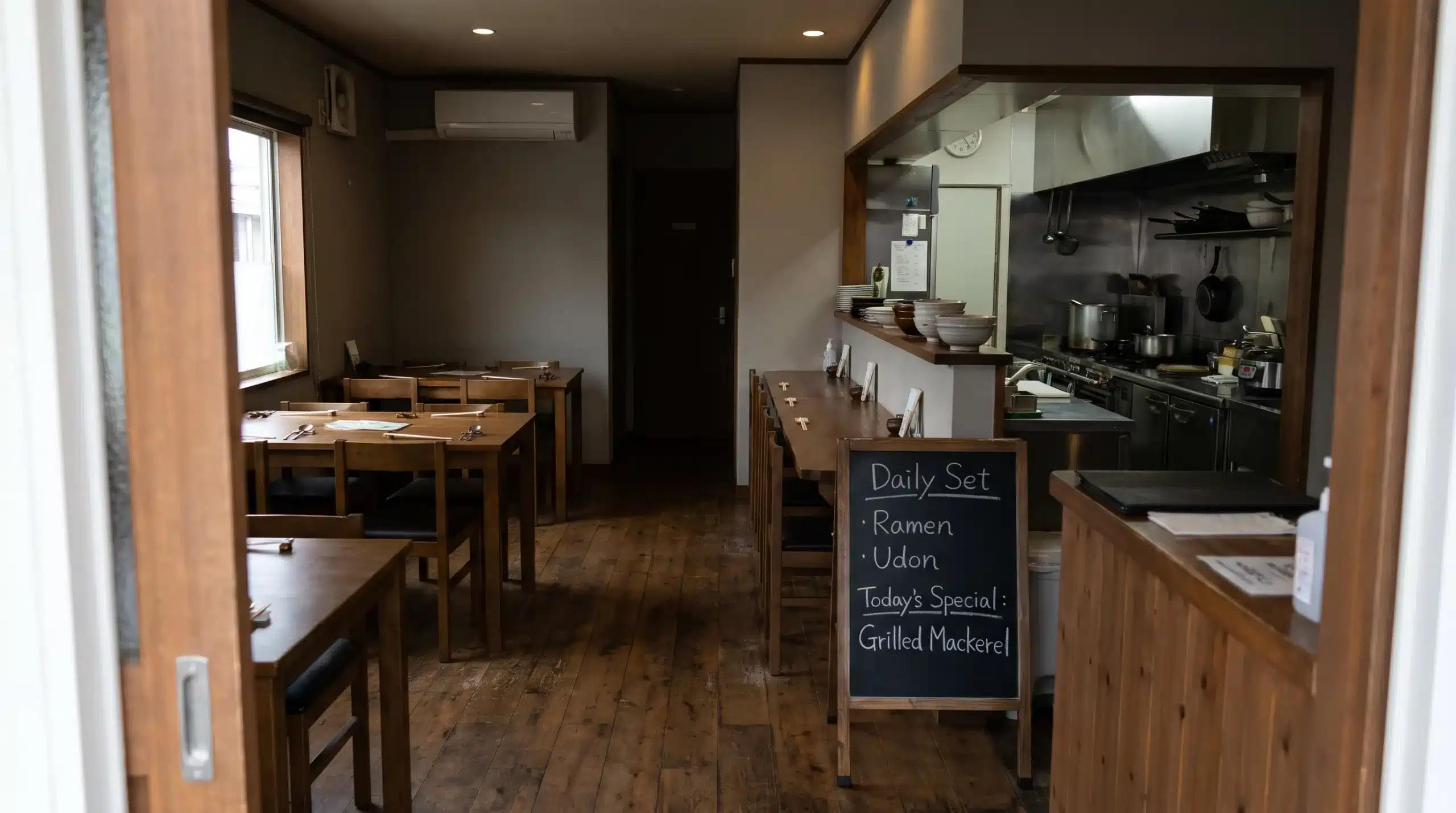
Ordering depends on the restaurant. You may use a paper menu, tablet, QR code or ticket machine. At ticket-machine restaurants, ordering and payment may happen before you sit down. At an izakaya, the first order often includes drinks, followed by dishes to share.
The rhythm of a Japanese dining experience also depends on the format. A set meal may arrive together on a tray, while a course meal arrives in stages. At a small sushi or tempura counter, serving times may be closely coordinated with preparation. Follow the staff’s indications rather than leaving freshly served food untouched for lengthy photography.
Charges and Payment
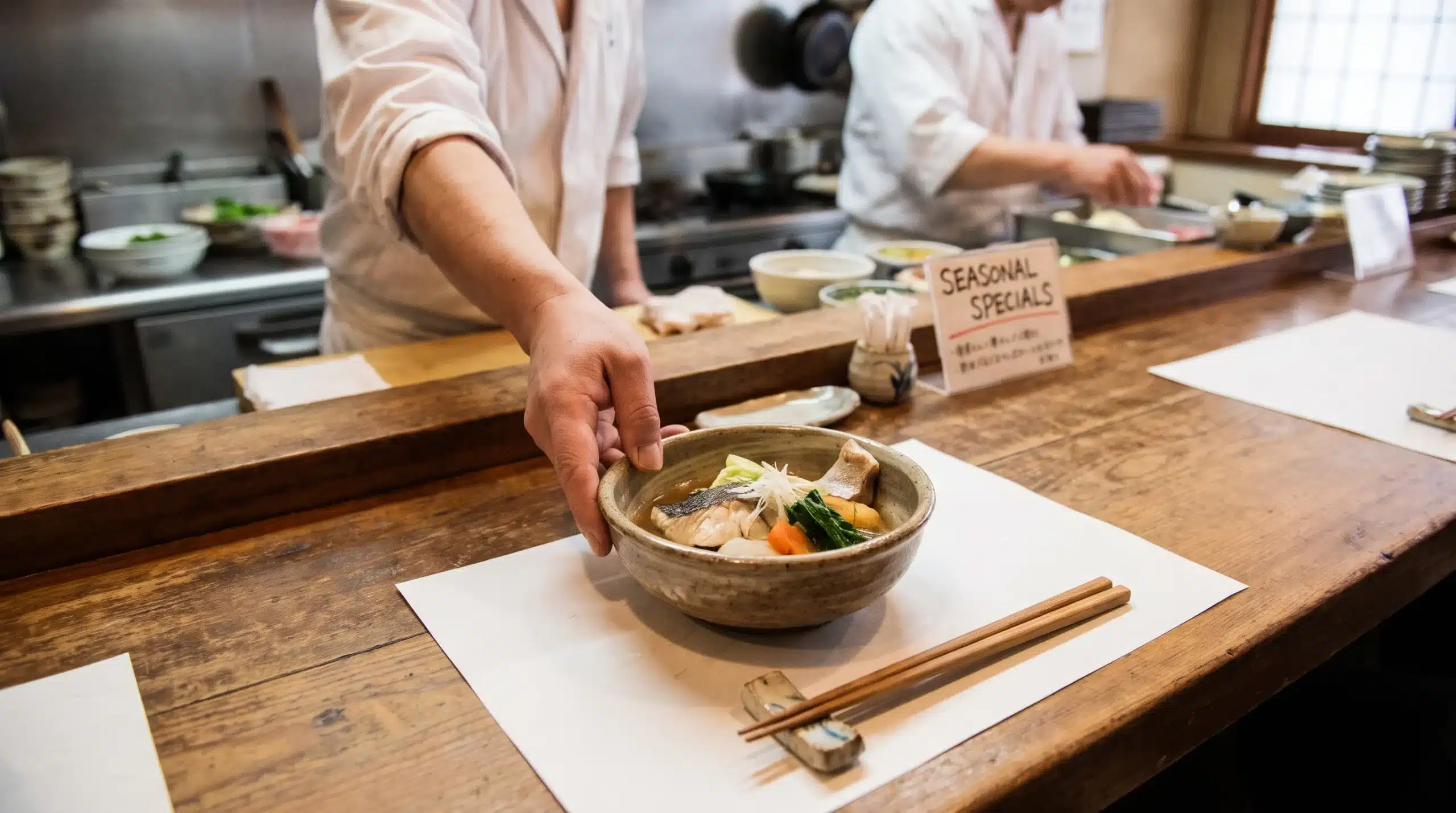
Some izakaya serve a small starter called otoshi, commonly associated with a seating charge. Other restaurants may apply service charges, minimum orders or set-course conditions. Ask about these before ordering if the menu is unclear; do not assume an unsolicited starter is free or automatically removable.
For a Japanese dining experience with several courses, check the restaurant’s current total, including drinks, applicable taxes and any additional charges. Confirm payment methods and whether separate payments are accepted. Tipping is not customary in ordinary restaurant transactions.
Keep dining expenditure separate from money needed for accommodation and onward transport. Singapore-based readers considering travel borrowing can review Swift Credit’s published loan information, but financing is a separate decision from restaurant booking. Seek qualified financial advice about borrowing rather than relying on dining recommendations.
Etiquette Without Unnecessary Anxiety
Most visitors do not need specialist etiquette training. Observe the room, handle food considerately and ask when something is unclear.
A few habits are particularly useful:
- Rest chopsticks on the holder when provided, rather than leaving them upright in rice.
- Do not pass food directly from your chopsticks to another person’s chopsticks, as this resembles a funerary practice.
- Use serving utensils when available for shared dishes and follow the restaurant’s instructions.
- Ask before photographing staff, other diners or a private dining space.
- Keep telephone conversations outside the dining room and avoid disturbing nearby tables.
You may hear diners say itadakimasu before eating and gochisōsama deshita afterwards. Using these expressions is courteous, but fluent Japanese is not a condition of being a considerate guest.
Slurping noodles is acceptable in many noodle restaurants, not an obligation. Small rice and soup bowls are commonly lifted towards the mouth; larger plates generally remain on the table.
A comfortable Japanese dining experience comes from responding to the actual setting, not treating every meal as a ceremony. If staff demonstrate how to eat a particular dish, follow their explanation. Otherwise, there is no need to imitate every movement of another diner.
Dietary Requirements Need Clear Confirmation
Menu translation is not the same as ingredient verification. Soup stock, sauces and garnishes may contain ingredients that are not obvious from the dish’s name or photograph.
For allergies, give the restaurant a clear written explanation of the ingredients to avoid and any relevant cross-contact restrictions. Ask whether the kitchen can accommodate them before booking. A translated card supports communication but does not establish that a meal is safe.
Muslim diners should distinguish between a restaurant offering some dishes without pork and one able to meet their specific halal requirements. Alcohol in seasonings, meat sourcing and shared preparation equipment may need direct questions. Vegetarian diners should also check stocks and sauces rather than relying on the absence of visible meat or fish.
The practical checks in navigating Japanese restaurants with allergies explain why advance communication matters.
Do not proceed with a Japanese dining experience when the kitchen cannot confidently answer a safety-critical question. A helper can communicate requirements and relay the restaurant’s response, but cannot certify a kitchen or replace advice from a qualified healthcare professional.
Frequently Asked Questions
What is the Japanese one-soup, three-dishes rule? Ichiju sansai means one soup and three dishes, generally a main dish and two side dishes, served alongside rice and often pickles. It is a traditional meal structure, not a rule that every restaurant or diner must follow. Ramen, sushi and many other meals use different formats.
How much does an omakase meal cost? There is no single standard amount. The restaurant, ingredients, course, drinks and additional charges determine the total. Check the restaurant’s current published information or request written confirmation before reserving. Cancellation conditions may be significant even when you do not attend.
Which dining experiences are worth considering outside major cities? Regional specialist restaurants, seasonal meals at accommodation and small restaurants using local produce can all be worthwhile choices. Check transport, reservation requirements and the return journey, especially in rural areas or on islands. Location alone does not establish quality, accessibility or dietary suitability.
Do I need a helper to eat in Japan? Usually not. Many restaurants have photographs, multilingual menus or straightforward ordering systems. Consider support when a Japanese dining experience involves telephone-only booking, detailed dietary questions or an arrangement you cannot confirm yourself. If you can book and communicate comfortably, additional help may be unnecessary.
Arrange the Support You Actually Need
Japan Hand provides practical dining help nationwide, including regional cities, small towns, islands and rural destinations. Helpers are available in a range of languages beyond English, subject to matching and availability. Support does not guarantee restaurant acceptance or availability.
For allergy and dietary handling support, describe your requirements, preferred location, dates and seating needs through the contact form on the Japan Hand website. The price depends on the specifics of the request, and you receive a quote with no obligation before anything is agreed.