Japan Travel Destinations Where English Is Limited
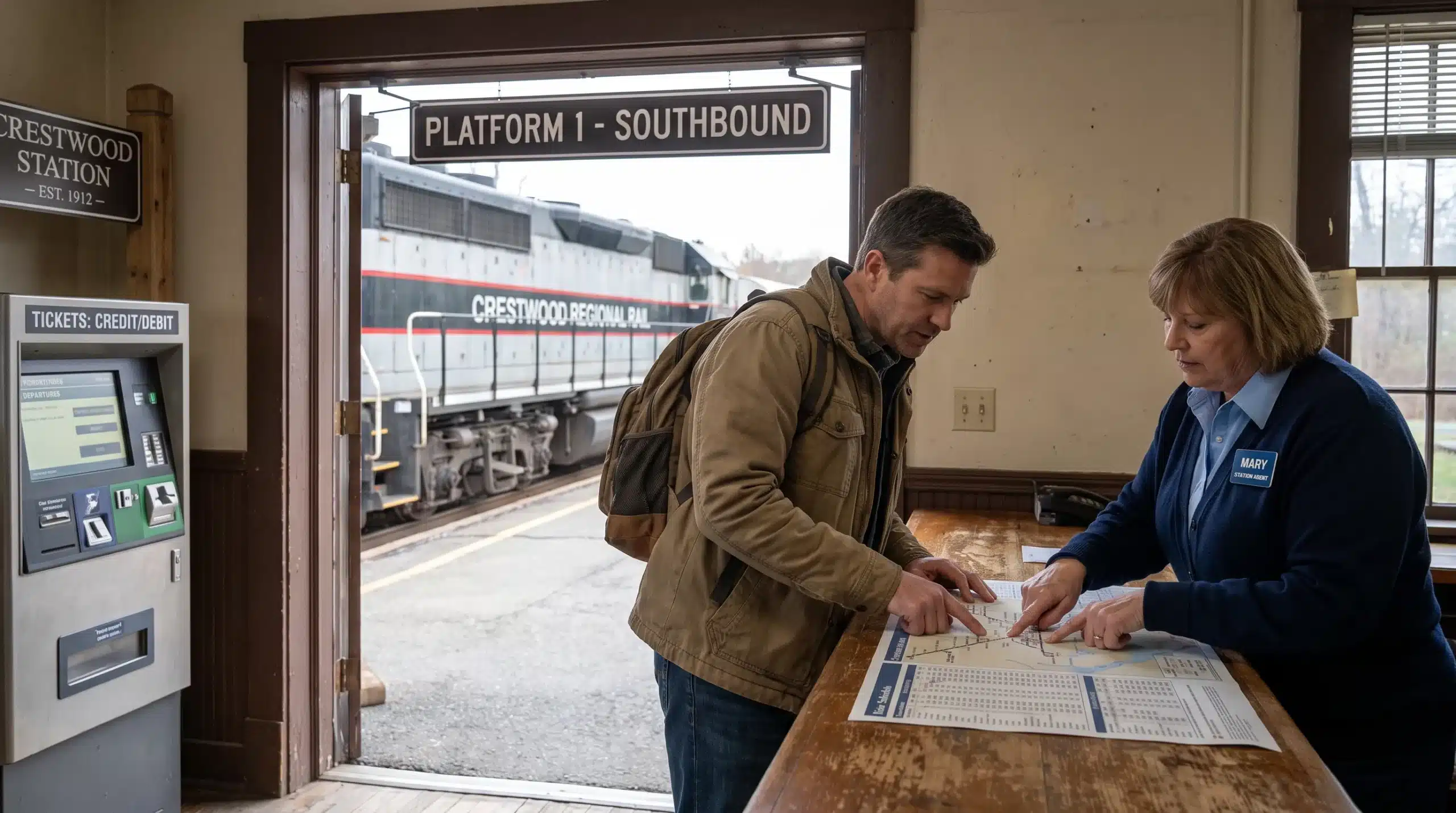
Choosing Japan travel destinations becomes more difficult when an English-language website tells you what to visit but not how to arrange the details. A railway station may have English signs while a nearby restaurant accepts reservations only by telephone in Japanese. Accommodation may welcome international visitors without being able to discuss food allergies or step-free access in English.
Limited English does not make a destination unsuitable. It means identifying which arrangements you can manage independently and which need confirmation before arrival. The six areas below illustrate different language challenges, rather than ranking places by how much English their residents speak.
What limited English actually means
Language support varies between businesses, even within the same town. A visitor information centre, major hotel or established attraction may provide English assistance while a family-run inn nearby does not.
The distinction is between finding information and resolving a problem. Translation software can help you recognise a menu item. It is less dependable when you need to explain an allergy, change a reservation or establish whether a bathroom is wheelchair-accessible.
For first-time visitors, a regional city with onward connections can be easier to manage than accommodation far from public transport. Parents and guardians should also consider how many arrangements depend on telephone calls, particularly when travelling with children and luggage.
The Japan National Tourism Organization’s planning information provides a useful starting point. Confirm property-specific conditions directly rather than treating general destination information as a guarantee.
Six Japan travel destinations where language planning helps
These destinations have established visitor appeal, but practical English support should not be assumed at every stage.
| Destination | Where communication may become difficult | What to confirm beforehand |
|---|---|---|
| Aizu-Wakamatsu and Ouchi-juku | Rural connections, small restaurants and traditional accommodation | Onward transport, meal arrangements and arrival instructions |
| Kiso Valley | Smaller inns, baggage arrangements and walking-route changes | Where to leave luggage, accommodation access and transport alternatives |
| Matsue and Izumo | Independent restaurants, workshops and travel beyond central areas | Reservation method, meeting location and return transport |
| Iya Valley | Scattered accommodation, road access and infrequent public transport | Arrival arrangements, walking conditions and onward connections |
| Beppu’s smaller bathing establishments | Bathing rules, private-bath enquiries and facility access | Tattoo policy, bathing arrangements and physical accessibility |
| Yakushima | Trailhead transport, weather-related changes and accommodation communication | Current trail conditions, transport and suitable walking plans |
Aizu-Wakamatsu and Ouchi-juku, Fukushima
Aizu-Wakamatsu offers a regional base for historical sites, traditional crafts and travel into the surrounding countryside. Ouchi-juku, known for its thatched buildings, requires a separate onward journey rather than a simple walk from Aizu-Wakamatsu Station.
English visitor information may help with the broad route. The difficult part can be confirming a rural connection, asking a small inn about dinner or explaining that your arrival time has changed.
When comparing Japan travel destinations, distinguish the city where you sleep from the smaller settlement you intend to visit. Their transport and communication arrangements may be quite different.
Ask your accommodation for its name and address in Japanese, the correct arrival point and instructions for contacting it if delayed. For dietary requirements, request confirmation before booking a meal-inclusive stay. A translated list of ingredients is useful, but it does not establish whether the kitchen can accommodate your needs.
Kiso Valley, Nagano and Gifu
The former post towns of the Kiso Valley, including Narai, Tsumago and Magome, appeal to visitors interested in historic streets and sections of the Nakasendo walking route. Their appearance can obscure practical differences in access: some locations are close to railway stations, while others require onward road transport.
Walking between settlements also creates language-dependent decisions. Bad weather, fatigue or a missed connection may require a change that an offline map cannot resolve.
Confirm where luggage can be left and how it will reach your next accommodation. Do not assume a small inn accepts forwarded bags or that a local baggage service operates on your travel date.
For older travellers and people with mobility requirements, ask about gradients, steps, bathroom arrangements and the distance from the actual drop-off point. “Close to the station” is not a sufficient accessibility description. Historic buildings may have constraints that cannot be removed by additional help.
Matsue and Izumo, Shimane
Matsue and Izumo provide a useful combination of a regional city, cultural sites and travel into the wider San’in area. English information exists at prominent visitor locations, but independent restaurants, craft businesses and smaller accommodation may communicate mainly in Japanese.
These Japan travel destinations suit a city-based itinerary, provided that individual reservations and journeys beyond the centre are checked separately.
For a workshop or dining reservation, establish the exact meeting location, arrival procedure and cancellation conditions. An English description of an activity does not necessarily mean the person delivering it speaks English.
If travelling beyond the main visitor areas, retain the destination’s Japanese name and address. Ask for the return connection as well as the outward route, particularly when plans involve buses or a taxi arranged by telephone. The article on travelling beyond Japan’s major cities explains how to organise those wider connections without overloading the itinerary.
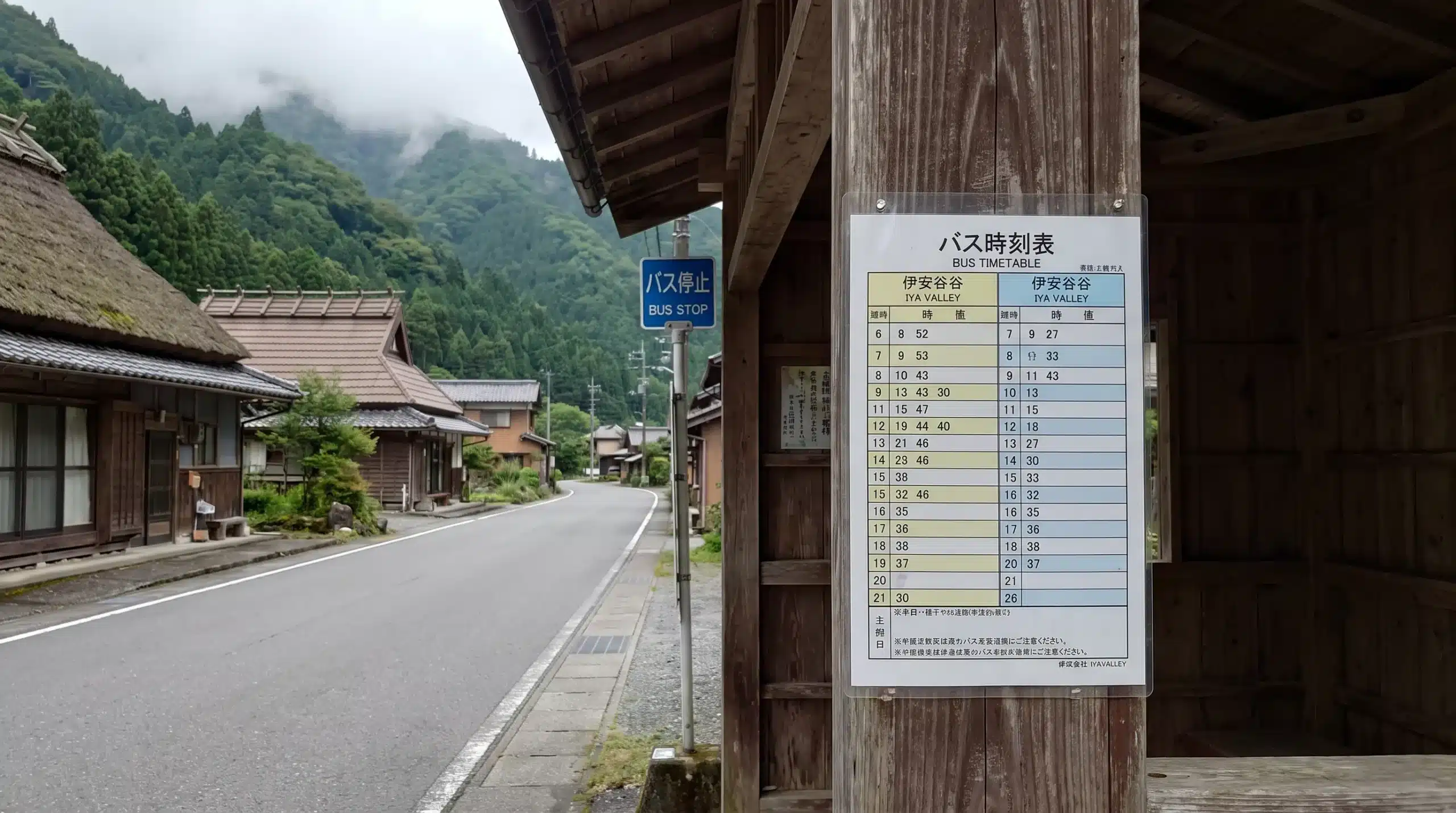
Iya Valley, Tokushima
The Iya Valley is a mountain destination where accommodation and attractions are spread across a large area. A location that looks nearby on a map may involve a winding road rather than a practical walk.
Language difficulties matter most when arranging the final stage of a journey. Confirm the nearest usable stop, whether accommodation offers a pickup and what happens if your arrival changes. A pickup mentioned in a review should not be treated as a current service commitment.
Families should check meal arrangements and sleeping conditions before committing to a remote stay. Travellers with mobility requirements need specific information about steps, surfaces and the distance between accommodation facilities.
Do not rely on finding an immediately available taxi after arrival. If your plan depends on a road transfer, arrange it in advance and retain a contact method. Local help can clarify the arrangements, but it cannot make an unsuitable road, steep path or inaccessible building suitable.
Beppu, Oita
Beppu has extensive visitor infrastructure, but smaller neighbourhood baths and traditional accommodation can still require Japanese communication. The questions are often more specific than asking whether a bath is open.
Confirm whether the establishment offers shared or private bathing, whether tattoos are permitted and how reservations work for your intended date. Policies differ between facilities. Also ask about steps, changing areas and assistance arrangements if access is a concern.
For readers familiar with home saunas and hot tubs, the distinction is that onsen refers to qualifying natural spring water, not a particular piece of bathing equipment. A property advertising an onsen does not automatically provide a sauna, private bath or accessible bathing area.
A translation application may explain posted etiquette, but a telephone enquiry is more useful for conditions that determine whether you can use the facility. If the establishment cannot meet your requirements, choose another rather than assuming an exception will be made at arrival.
Yakushima, Kagoshima
Yakushima combines island transport with mountainous terrain and walking routes that require realistic preparation. English information can help identify attractions, but accommodation, trailhead transport and last-minute changes may still involve Japanese communication.
Among Japan travel destinations with limited English support, an island requires particular attention to the consequences of disruption. Weather can affect both access to the island and activities after arrival.
Confirm transport for your chosen walking route, current local advice and the arrangements for returning to accommodation. Do not choose a demanding route solely because photographs make it look manageable. Ask about walking time, surfaces, toilets and alternatives appropriate to your group.
A helper can assist with communication and practical arrangements. That does not replace qualified outdoor supervision where required, nor can anyone guarantee suitable weather or access. Keep flexibility around transport-dependent plans and avoid relying on a tight connection immediately after a mountain walk.
Confirm the questions that translation applications cannot settle
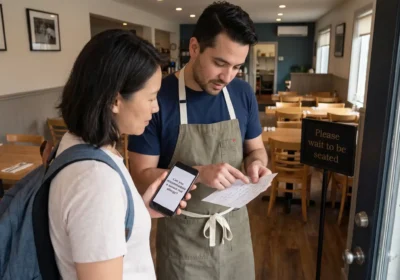
Before booking, separate ordinary language inconvenience from conditions that determine whether an arrangement will work. Reading a shop sign is different from confirming that a kitchen can handle a serious allergy.
For Japan travel destinations outside major international visitor areas, four checks are particularly useful:
- Transport: Confirm the exact arrival point, final connection and return arrangements for your date.
- Accommodation: Ask about check-in procedures, meals, luggage acceptance and any steps between the entrance and your room.
- Food: Explain specific ingredients or dietary requirements rather than relying on broad labels such as “vegetarian” or “Muslim-friendly”.
- Communication: Save Japanese names, addresses, reservation references and a working contact method offline.
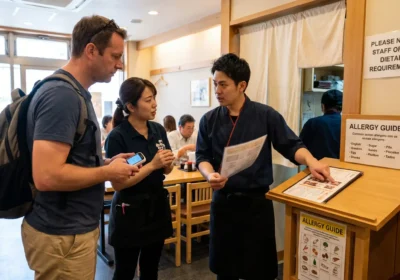
For allergies, kitchens need clear questions about ingredients and preparation. Japan Hand’s article on restaurant communication when travelling with allergies explains why a general reassurance is not enough. Halal requirements likewise need direct confirmation about ingredients and preparation; an English menu alone does not establish suitability.
If you can make the arrangements through the establishment’s website and your needs are straightforward, you may not need paid help. Reserve human support for a defined task that remains unresolved.
Frequently asked questions
Can I visit these destinations without speaking Japanese? Yes, many arrangements can be managed with official information, translation applications and advance preparation. The deciding factor is the complexity of your plans, not simply the destination’s size.
Are these Japan travel destinations unsuitable for a first visit? No. A manageable regional stay can work well on a first visit. Avoid combining several uncertain connections, unconfirmed meals and remote accommodation on the same day.
Can a helper guarantee a booking or dietary accommodation? No. A helper can ask questions, explain requirements and assist with arrangements. The establishment decides whether it can accept the reservation or meet the requirement. Communication support cannot guarantee food safety.
Is Japan Hand limited to Tokyo and English-speaking assistance? No. Japan Hand operates nationwide, including regional airports, small towns, islands and rural destinations. Helpers are available in a range of languages beyond English; confirm the language and location needed when enquiring.
Request help for a specific arrangement
For station navigation, restaurant booking and other practical support from Japan Hand, use the contact form to describe your destination, dates, preferred language and unresolved task. Japan Hand provides help rather than sightseeing packages. Each request receives a quote before anything is agreed, with no obligation.