Travel Through Japan With Luggage, Children, or Mobility Needs
A manageable journey on a route map can become difficult when it includes suitcases, a pushchair or a wheelchair. To travel through Japan comfortably, you need to check more than departure times: the station entrance, platform access, luggage arrangements and route to your accommodation all matter. Plan around the person with the greatest access needs, then choose transport that works for everyone travelling together.
Travel Through Japan With Luggage, Children or Mobility Needs
Plan to travel through Japan from door to door
The fastest train is not necessarily the easiest journey. A direct service with a longer journey time may be preferable to a connection involving several lifts, crowded platforms and a change of station.
Assess each transfer as a complete sequence: leaving your room, reaching the station, boarding, arriving and getting into your next accommodation. Include the walking involved inside stations, not just the distance shown between the station and hotel.
Before choosing accommodation, confirm its practical access. “Near the station” does not establish that the nearest exit has a lift, that the pavement is suitable for a wheelchair or that reception is reachable without steps. Ask for the precise entrance and usable station exit.
For a multi-city itinerary, fewer accommodation changes reduce repeated packing, checkout deadlines and unfamiliar routes. A longer stay in one regional base can also make it easier to adjust plans around fatigue or weather.
If you intend to travel through Japan with several competing needs, resolve the difficult transfer days before filling the itinerary with activities.
Make luggage decisions before buying rail tickets
Luggage capacity is a practical constraint, not an afterthought. Decide which bags must travel with you and which could be forwarded before reserving trains.
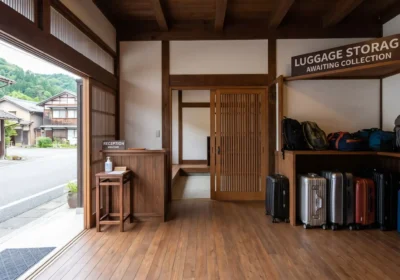
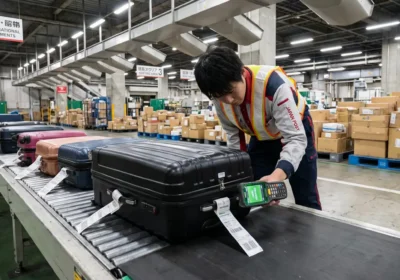
Hotel-to-hotel forwarding can reduce what you carry, but first confirm that both properties can handle the handover. Check collection arrangements, delivery timing and whether the receiving property accepts bags before check-in. Unstaffed accommodation and island destinations need particular attention.
Keep medication, travel documents, mobility equipment, charging supplies and essential children's items with you. Do not forward anything you cannot manage without if delivery takes longer than expected.
For the Tokaido, Sanyo and Kyushu Shinkansen, JR Central's oversized baggage rules explain the reservation requirements for bags whose combined height, width and depth exceed 160 cm and are no more than 250 cm. Check the current rules for your particular route before booking. Other trains have different arrangements, and wheelchairs and pushchairs should not simply be treated as ordinary suitcases.
There is no single luggage arrangement for every way to travel through Japan. Forwarding larger bags and carrying a small overnight bag may work well, while a direct transfer may justify keeping everything with you.
Check station transfers beyond the journey planner
Journey planners are useful for comparing services, but a suggested connection is not proof that everyone in your group can complete it comfortably. Check the actual route between platforms and allow for lift queues, toilet stops and staff assistance.
Use this checklist when assessing a transfer:
| Part of the journey | What to confirm |
|---|---|
| Station entrance | The entrance with step-free access, not simply the nearest entrance |
| Platform change | Lift locations, walking distance and whether you must leave the paid area |
| Boarding | Any assistance arrangements and where to meet station staff |
| Arrival exit | The usable exit for your accommodation or onward vehicle |
| Final connection | Vehicle access, luggage capacity and the consequences of missing it |
Avoid planning around the shortest possible connection. Leave additional time according to the station layout and your group's pace rather than applying one fixed allowance everywhere.
Station staff may be able to arrange boarding assistance or identify an accessible route. Contact the operator beforehand where possible, particularly when using a wheelchair or making a complicated interchange.
Japan Hand's station navigation help can support a specific transfer when you need an accompanying helper or language assistance. If you can travel through Japan using clear station information and the operator's assistance, you may not need additional help.
Give children a workable transfer day
For parents and guardians, the difficulty is often managing several tasks at once: tickets, bags, a pushchair, food and a child who needs attention. Reduce how many of those tasks coincide.
A transfer day should have fewer fixed commitments than a day spent near your accommodation. Avoid making a restaurant reservation or timed attraction admission depend on an unfamiliar connection running exactly as planned.
Check the train operator's current child-ticket rules and seat arrangements before purchase. Do not assume that a child travelling without a separate ticket will have a seat. Consider whether holding a child throughout the journey is realistic alongside your other needs.
Pushchairs can be useful, but lifts may be busy and space on local trains limited. Choose an arrangement that you can safely manage when boarding or when the pushchair needs folding. A parent or guardian remains responsible for supervising children throughout.
Families who travel through Japan with fewer hotel changes can keep more predictable meal and rest routines. Carry suitable food for delays, particularly when allergies or dietary requirements limit station purchases.
Ask specific questions about mobility access
“Accessible” is too broad to establish whether a station, hotel or venue will work for you. Describe your requirements and ask about physical conditions.
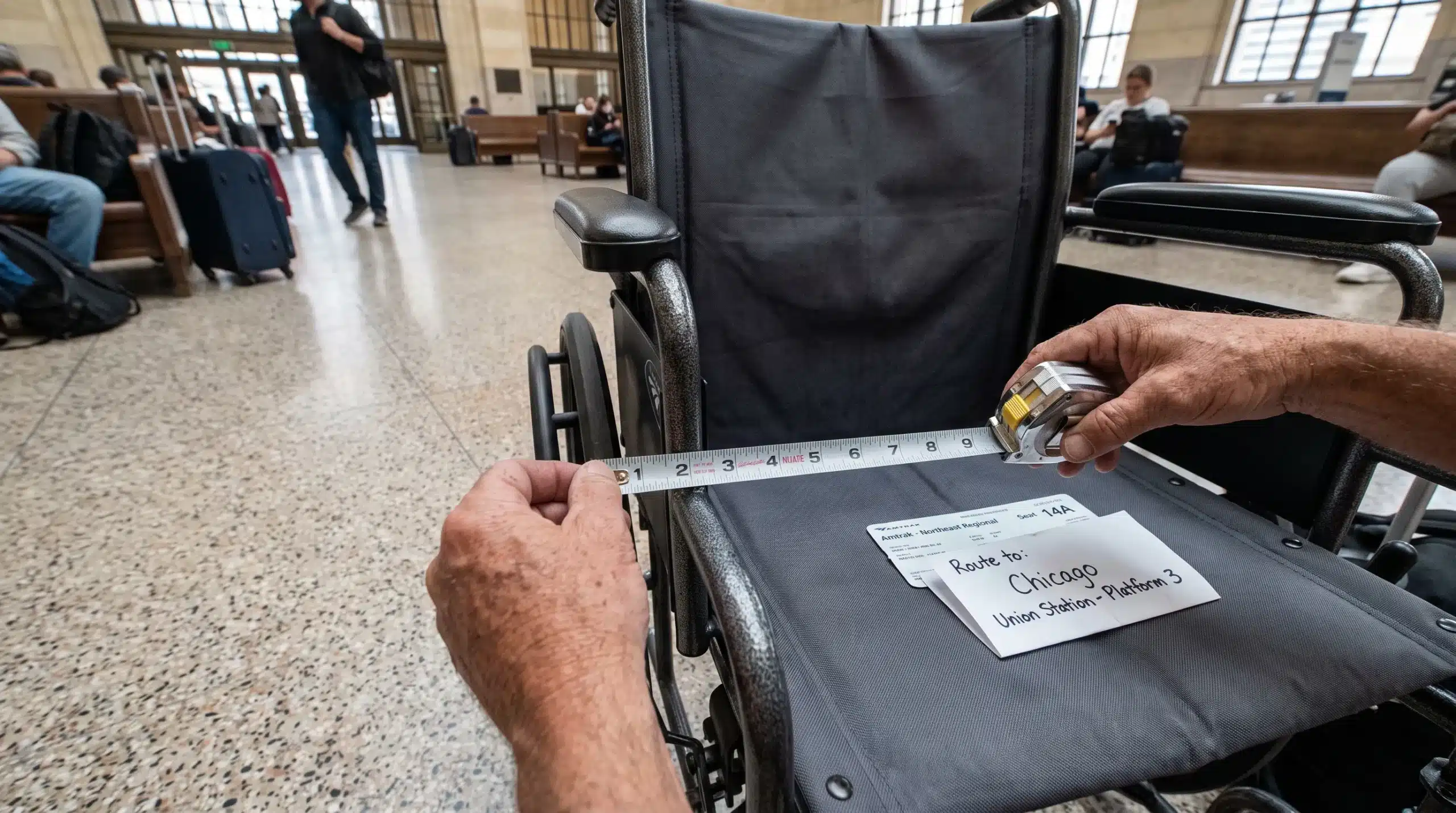
For accommodation, useful questions include entrance steps, lift access, doorway width, bathroom layout and whether the shower has a threshold. If you use a wheelchair, confirm measurements against your actual equipment rather than relying only on an accessibility label.
For rail travel, ask the operator about boarding assistance, wheelchair spaces and any relevant reservation arrangements. Explain the wheelchair type and dimensions, whether you remain seated in it and whether you need assistance at both ends of the journey.
Step-free does not necessarily mean easy. Long corridors, steep slopes, uneven paving and limited seating can affect travellers who walk but cannot comfortably cover long distances. Include rest opportunities and avoid judging a route solely by its length on a map.
When you travel through Japan with mobility requirements, distinguish accompaniment from personal care. A helper can assist with agreed practical tasks and communication, but lifting, transfers or specialist care must not be assumed to be included. Confirm the task in advance and seek appropriately qualified support where needed.
If the necessary access cannot be confirmed, change the venue or route rather than relying on assistance to overcome an unsuitable physical layout.
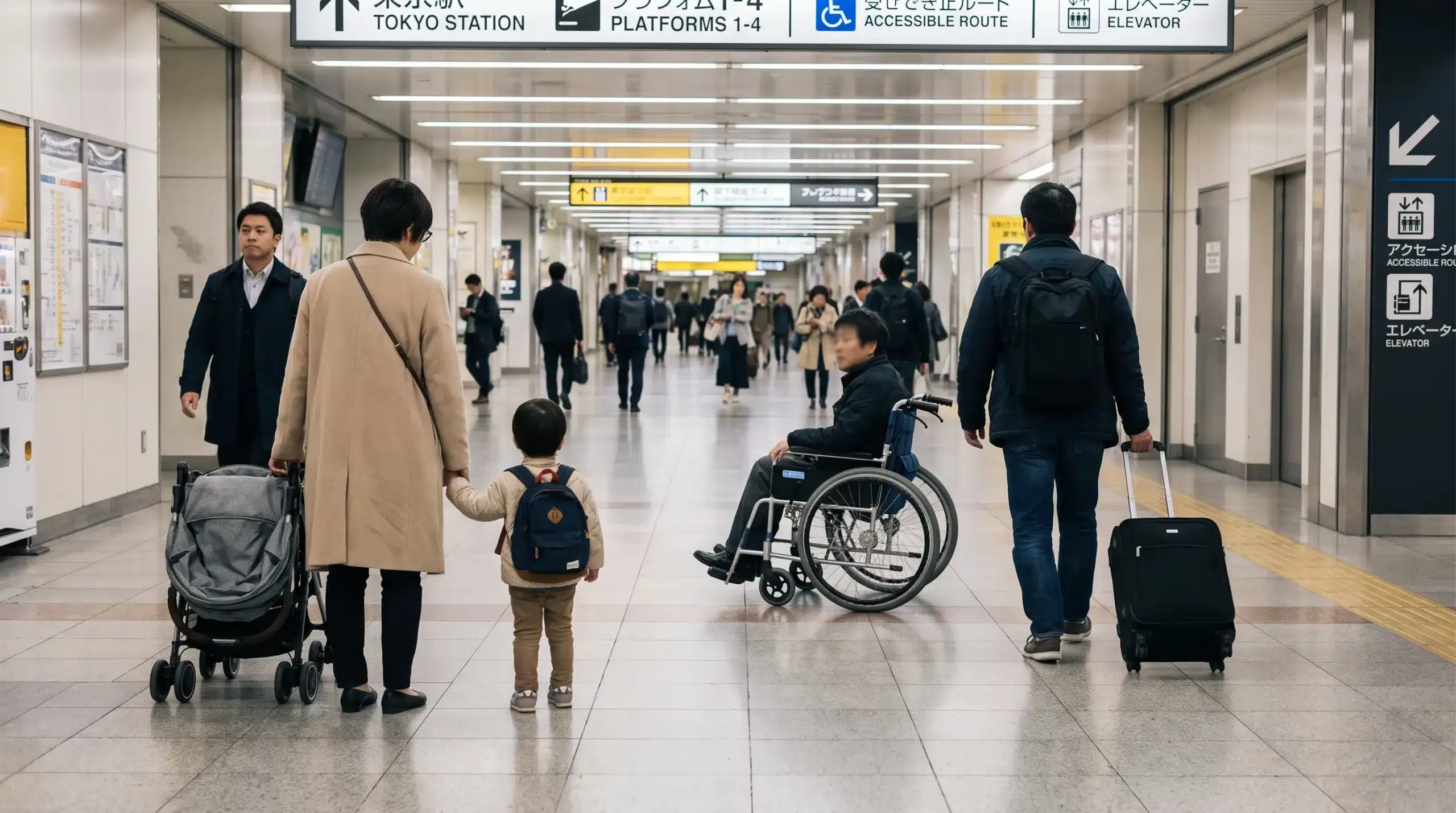
Plan rural and island connections separately
A journey can be straightforward between major cities and difficult over its final few kilometres. Regional airports, small-town stations and ferry terminals may have limited onward transport, longer gaps between departures or fewer accessible vehicles.
Check the current timetable in both directions. Establish what happens if the arriving train or flight is delayed, and do not assume that another connection will follow shortly afterwards.
For ferries, confirm boarding access, passenger facilities and how mobility equipment is handled. For buses and taxis, ask about the particular vehicle rather than treating access as a standard feature. A helper's presence does not make an inaccessible vehicle usable.
To travel through Japan beyond the main urban centres, treat the final connection as a separate booking and access task.
Japan Hand handles requests nationwide, including regional airports, small towns, islands and rural destinations. Helpers work in a range of languages beyond English; state your required language, location and timing when enquiring so that suitable support can be assessed.
Separate ticket purchase from venue access
Buying a ticket does not confirm that an event works for your group. Before paying, check the entrance, accessible seating, pushchair policy, toilets and whether companions need particular tickets.
Confirm the exact venue and admission time. Similarly named attractions can be in different locations, and a ticket for one venue does not establish access to another.
Some organisers use platforms such as TixFlow's event ticketing platform, which supports ticket purchases without buyer registration. That may simplify checkout, but it does not establish step-free entry, suitable seating or admission arrangements. Those details need confirmation from the organiser or venue.
If admission is allocated by lottery or subject to restrictions, practical support cannot guarantee a successful application. Do not build essential transport or accommodation arrangements around tickets that have not been secured.
Keep a usable alternative for disruption
A backup plan should be something your group can actually use. Another train with several extra changes may not be a reasonable alternative when you are managing mobility equipment or tired children.
Save the next accommodation's address in Japanese, its contact details and any instructions for late arrival. Keep ticket confirmations and essential route information available offline. Make sure more than one responsible adult can access them when travelling as a family.
If a lift is unavailable or a service is cancelled, speak to station staff before moving elsewhere. The alternative route may start from a different entrance or require assistance that cannot be arranged immediately.
People who travel through Japan with fixed ferry departures, flights or cruise all-aboard deadlines should leave a substantial margin appropriate to the route. Local support can help with communication and alternatives, but it cannot change a transport operator's departure or safety rules.
Frequently asked questions
Do I need a helper for every transfer? No. A direct journey with manageable luggage and confirmed access may need no additional support. Consider help for a specific difficult interchange, a language-dependent arrangement or a task you cannot comfortably manage yourself.
Can I take a wheelchair or pushchair on the shinkansen? Check with the operator for your route. Wheelchair accommodation, boarding assistance and pushchair storage are distinct matters. Provide equipment dimensions and your boarding requirements before booking rather than assuming that a standard seat reservation resolves them.
Is luggage forwarding always the best choice? No. It depends on delivery timing, accommodation arrangements and what you need to keep with you. Carrying a manageable bag on a direct journey may be simpler than arranging forwarding between properties that cannot receive it reliably.
How many cities should I include? There is no fixed number. To travel through Japan at a realistic pace, count accommodation changes and demanding transfer days rather than destinations alone. Reduce the number if the itinerary leaves little room for rest or disruption.
Request help for the difficult parts
For a journey requiring confirmed access or practical accompaniment, describe your needs through Japan Hand's wheelchair and mobility support service. Include dates, locations, equipment details, luggage and your preferred language. The price depends on the specifics; use the Japan Hand contact form for a quote with no obligation before anything is agreed.