How to Travel Local in Japan Beyond Major Cities
How to travel local in Japan beyond major cities
A regional railway station may be straightforward to reach, while the accommodation, workshop or ferry terminal beyond it requires more planning. To travel local in Japan, you need to understand those final connections, not simply identify a destination on a map.
Beyond the main visitor routes, transport can be less frequent, reservations may require a Japanese telephone call and useful information may exist only locally. A manageable regional base, confirmed arrangements and enough flexibility will usually serve you better than a long list of places to cover.
Choose one regional base rather than several short stops
Start with what you want to spend time doing: visiting working craft shops, eating regional food, walking through a town or exploring an island community. Then choose accommodation that makes those activities practical.
A regional city can provide access to smaller settlements without requiring you to change hotels each day. Staying within walking distance of useful transport and several dining options also gives you alternatives when weather or operating schedules change.
These are possible starting points, not ready-made itineraries:
| Base to investigate | Regional focus | Main planning question |
|---|---|---|
| Matsue, Shimane | Town walks, lakeside areas and surrounding communities | How will you reach places outside the centre and return? |
| Takamatsu, Kagawa | City neighbourhoods and access to Setouchi islands | Which ferry terminal and return sailing does your destination require? |
| Morioka, Iwate | Regional food, crafts and access to surrounding areas | Which activities are accessible from the city and which need separate transport? |
Before booking, check the accommodation’s actual location rather than relying on its town name. A property described as being near an attraction may still be difficult to reach without a car.
The simplest way to travel local is often to stay longer in one suitable base and make fewer transfers. This leaves room for ordinary activities, such as a market visit or an unhurried meal, without turning every day into a transport exercise.
Plan to travel local around reliable transport
Confirm the final connection and the return
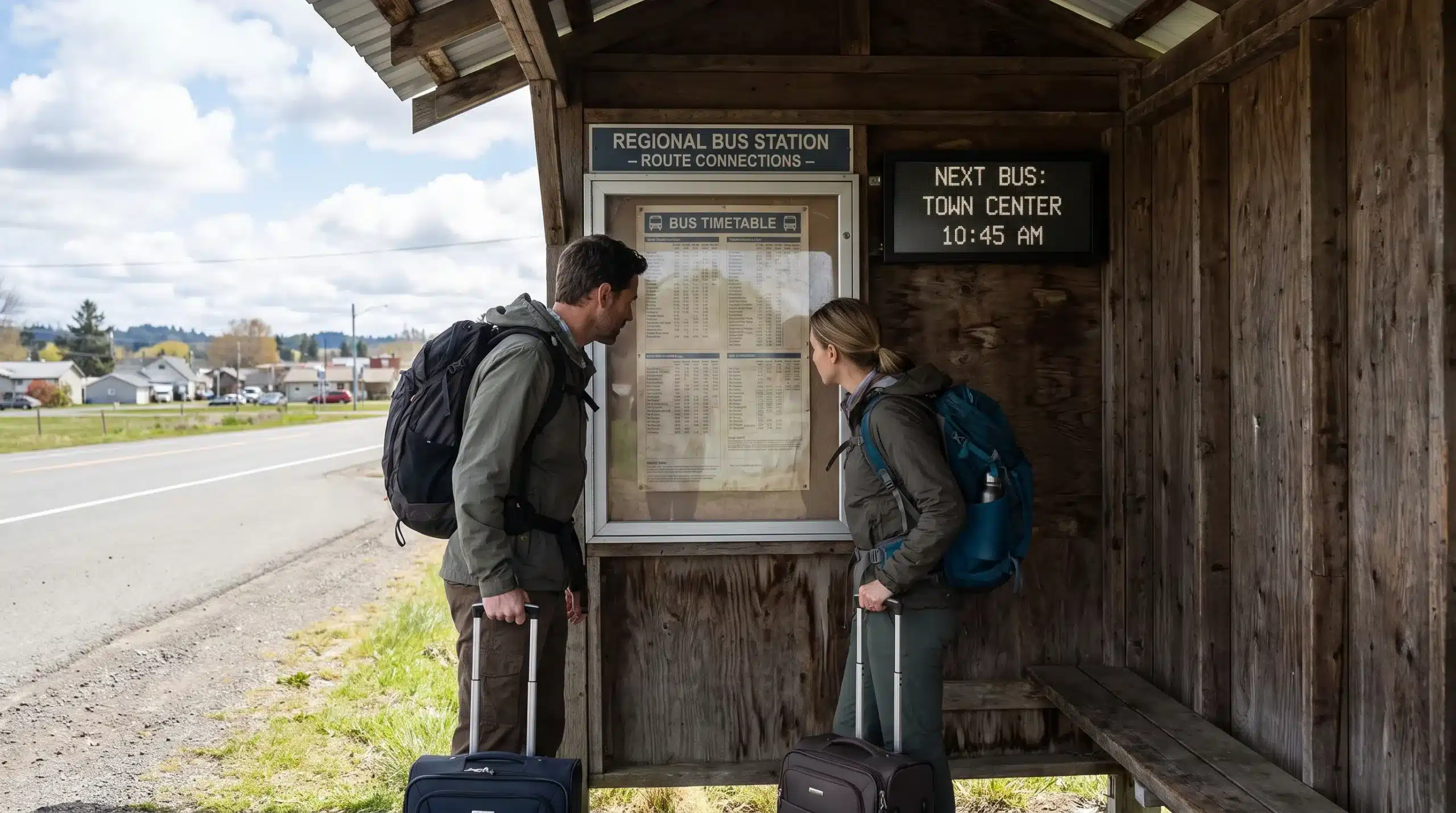
Map the whole journey from your accommodation to the destination entrance. A rail search may cover the main journey but leave out the bus, ferry or walk that makes the visit possible.
Check the operator’s timetable for your travel date, including weekday, weekend and seasonal differences. The Japan National Tourism Organization’s transport overview explains the main options, but individual operators remain the source for current services.
For each outing, establish:
- The correct station exit, bus stop or ferry terminal.
- The last usable return connection, not just the outward departure.
- Any reservation requirement and accepted payment methods.
- A workable alternative if the connection is cancelled or missed.
An alternative should be something you have checked. Do not assume that a taxi will be waiting at a small station or that a ride-booking application covers the area.
Leave room for disruption
If you want to travel local on an island or in a rural area, avoid making the final return service your only route to a flight or other fixed departure. Weather, road conditions and operating changes can affect connections.
Ask accommodation staff or the operator about the practical consequences of a cancellation. Where no reliable same-day alternative exists, change the plan rather than depend on an unconfirmed solution.
Arrange meals and meaningful activities in advance
Regional travel does not require private access or an elaborate schedule. A public workshop, a small museum or a restaurant serving local dishes can provide a useful introduction to an area.
Check what is actually open to visitors. A craft business may primarily be a working premises, and a farm is not automatically somewhere the public can enter. Confirm booking requirements, arrival instructions and the language used during an activity.
Food needs deserve separate attention. Outside larger centres, fewer nearby alternatives can make an unsuitable restaurant more than a minor inconvenience. Identify several options before arrival, especially if you have allergies, dietary restrictions or halal requirements.
To travel local with specific food requirements, ask about ingredients and preparation before committing to a reservation. A translated preference is not the same as a kitchen confirming what it can provide.
For halal enquiries, questions may need to cover meat sourcing, alcohol in cooking and shared preparation equipment. For allergies, ask the restaurant directly about the relevant ingredients and cross-contact limitations. A helper can support that conversation but cannot certify that a meal is safe or halal.
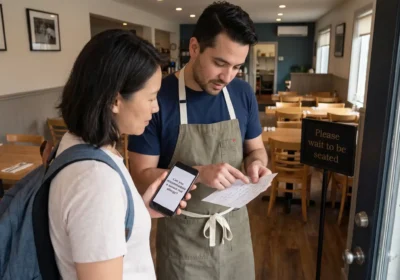
Japan Hand’s restaurant booking help can assist with Japanese-language enquiries and reservations. A restaurant may decline a request or be unable to accommodate it; support does not change those limits.
Match luggage and footwear to the route
Carry less on transfer days
A journey that looks simple on a map becomes harder when it includes luggage, steps and a crowded local bus. Check storage arrangements and the route between the station and accommodation before deciding what to carry.
Luggage forwarding may be useful between suitable properties, but confirm acceptance, collection arrangements and delivery timing. Islands, remote addresses and accommodation without a staffed reception require particular care.
The overview of luggage transfer options for moving between Japanese cities explains the decisions involved. Keep medication, travel documents and essentials with you rather than in forwarded luggage.
Assess the walking surface, not just the distance
A short walk can involve slopes, gravel, uneven paving or long stretches without seating. Ask about the actual route if you use a wheelchair, have limited stamina or are planning outings with children in your care.
When you travel local, footwear should suit the surfaces and time spent standing. A comparison of Flower Mountain women’s footwear for travel, written in Italian, discusses fit, stability and grip when choosing sneakers. For trails, choose footwear appropriate to the terrain rather than relying on an everyday shoe.
Comfortable footwear does not make an inaccessible route accessible. Confirm steps, gradients, toilets and resting places separately.
Respect places that are not visitor attractions
Local travel means entering places where people work, commute and live. Residential streets, fishing ports and agricultural areas should not be treated as unrestricted visitor spaces.
Use public paths, follow posted restrictions and ask before photographing people or entering business premises. At working ports, keep clear of loading areas and equipment. A location being visible from the road does not mean it is open to visitors.
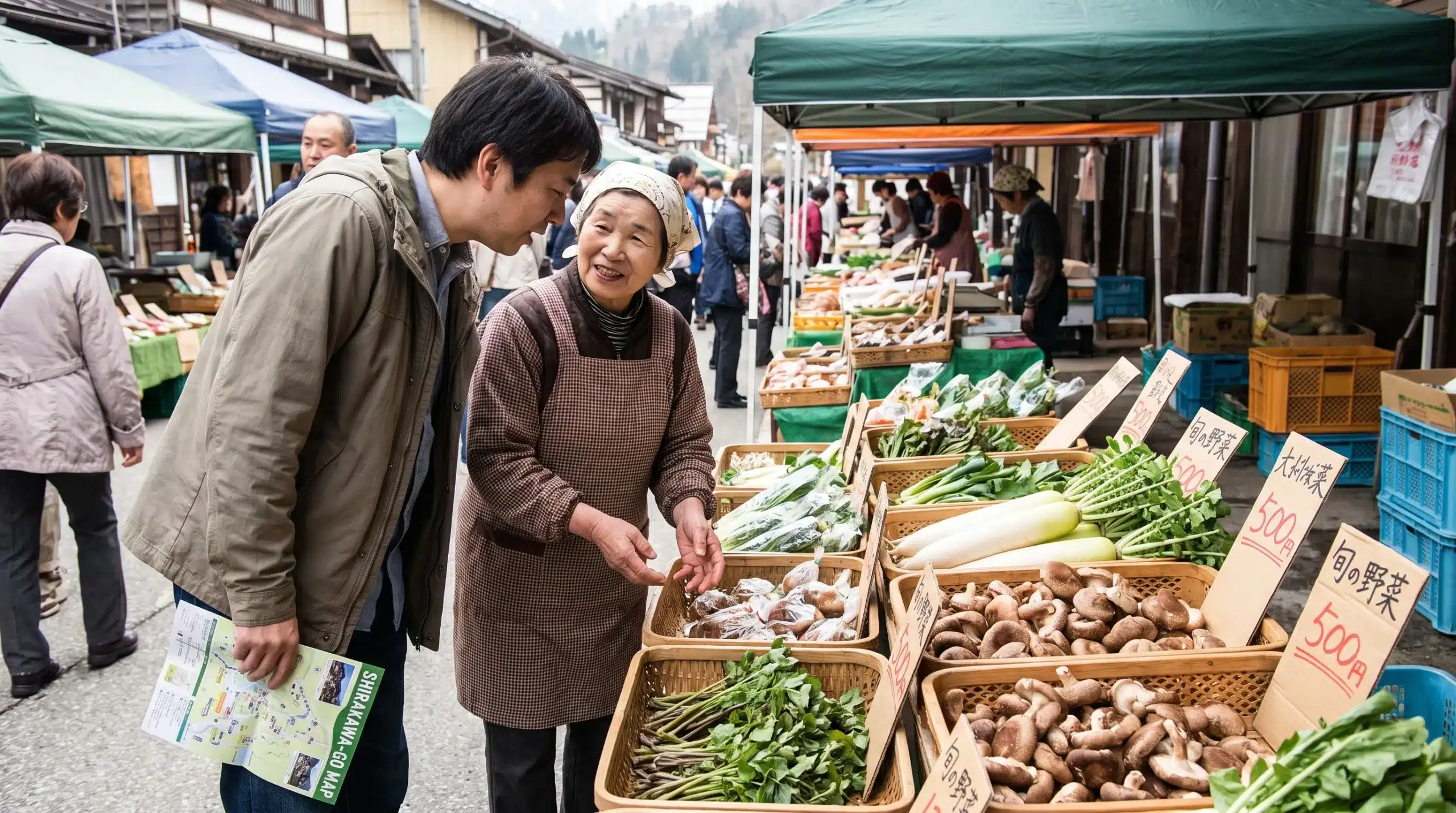
If you want to travel local through a seasonal event, check the organiser’s visitor information rather than assuming that photographs from a previous year describe current access. Participation, photography and booking conditions can change.
A few practical language preparations are also useful. Save the destination name and address in Japanese, along with your accommodation details and any confirmed reservation. Download information you may need without connectivity.
Translation applications can help with straightforward exchanges. For a detailed dietary discussion, a disputed booking or instructions with significant consequences, seek direct clarification rather than relying on a translation you cannot verify.
Use a helper for a defined problem
Local assistance is most useful when the task is clear: confirming a rural pickup, making a Japanese telephone call, accompanying a difficult connection or checking whether an activity can accommodate your requirements.
Japan Hand provides practical help booked by time, not a sightseeing package. Requests are handled nationwide, including regional airports with scheduled flights, small towns, islands and rural destinations. Helpers work in a range of languages beyond English; confirm the language and availability needed for your location and date.
You do not need a helper for every regional journey. If the operator provides clear information, your accommodation confirms the arrival arrangements and you can manage the route, travelling independently may be entirely reasonable. Start with published information and assistance already available from the operator or accommodation.
When arranging support to travel local, send the exact task, date, locations and relevant constraints. Include luggage, mobility needs, dietary requirements and any fixed departure deadline where applicable.
A helper cannot override a cancellation, guarantee a restaurant table or create access where visitors are not permitted. The price depends on the specifics of the request, and Japan Hand provides a quote before anything is agreed, with no obligation.
Frequently asked questions
Do I need to speak Japanese to visit smaller towns? Not necessarily. Clear arrival arrangements, saved Japanese addresses and confirmed transport can make an independent visit practical. More complex reservations or conversations may need language support, particularly where telephone contact is required.
Can I rely on payment cards outside major cities? Do not assume every business accepts your card. Confirm payment arrangements for accommodation, transport and activities, and carry an appropriate cash reserve. Convenience store and post office ATMs can process foreign cards, subject to the machine and card; most Japanese bank branch ATMs cannot.
Is renting a car always the best option? No. Compare it with public transport and a more conveniently located base. Check rental eligibility, parking and road conditions before deciding. A car does not resolve ferry disruption, access restrictions or unsuitable walking terrain.
How much should I plan before arrival? To travel local without unnecessary uncertainty, confirm accommodation access, important meals, reserved activities and the return journey. Leave some time unallocated, but do not leave essential connections to chance.
Request help for a specific connection
For a difficult regional transfer, consider Japan Hand’s station navigation help. Use the Japan Hand contact form to explain where you need support, when and in which language. Every request receives a quote before anything is agreed, with no obligation.