Plan Your Japan Visit With Fewer Arrival-Day Problems
Plan Your Japan Visit With Fewer Arrival-Day Problems
A Japan visit can become difficult before the interesting part of the journey has properly begun. Arrival day often combines immigration formalities, luggage, money, transport, communication and food at a moment when decisions need to be made quickly and in an unfamiliar setting.
The aim is not to plan every minute. The aim is to remove the avoidable problems: not knowing which train to take, discovering your card will not work at a bank ATM, carrying large suitcases through a station at peak time or trying to explain an allergy after you have already sat down in a restaurant.
This article focuses on practical preparation for the first day in Japan. It is especially relevant if you are arriving with children, mobility requirements, dietary restrictions, multiple suitcases or an onward connection to another city.
Before Your Japan Visit, Reduce Decisions You Must Make on Arrival
Arrival-day planning works best when you decide the non-negotiable items before boarding your flight. You do not need a rigid schedule, but you should know how you will leave the airport, how you will connect to the internet and what you will do if the first plan fails.
| Arrival-day issue | Decide before arrival | Why it matters |
|---|---|---|
| Transport | Train, bus, taxi or local helper support | Airport transport options may require different terminals, counters or platforms |
| Connectivity | eSIM, SIM, pocket WiFi or roaming | Translation, maps and messaging are difficult without data |
| Cash access | Where to withdraw cash | Most Japanese bank branch ATMs cannot process foreign cards |
| Luggage | Carry, store or forward | Stations can have stairs, long transfers and crowded platforms |
| Food | First meal or emergency snack plan | Restaurants may not handle allergies or dietary needs without advance communication |
| Accommodation | Address in Japanese and check-in conditions | Staff may need exact details, especially at smaller properties |
Do not assume that arrival at a major airport means everything will be simple. Tokyo, Osaka, Fukuoka, Sapporo, Naha and regional airports all work differently. Smaller airports can be easier to move through, but they may have fewer late transport options and less English support.
Airport Arrival: Plan the First Hour After Customs
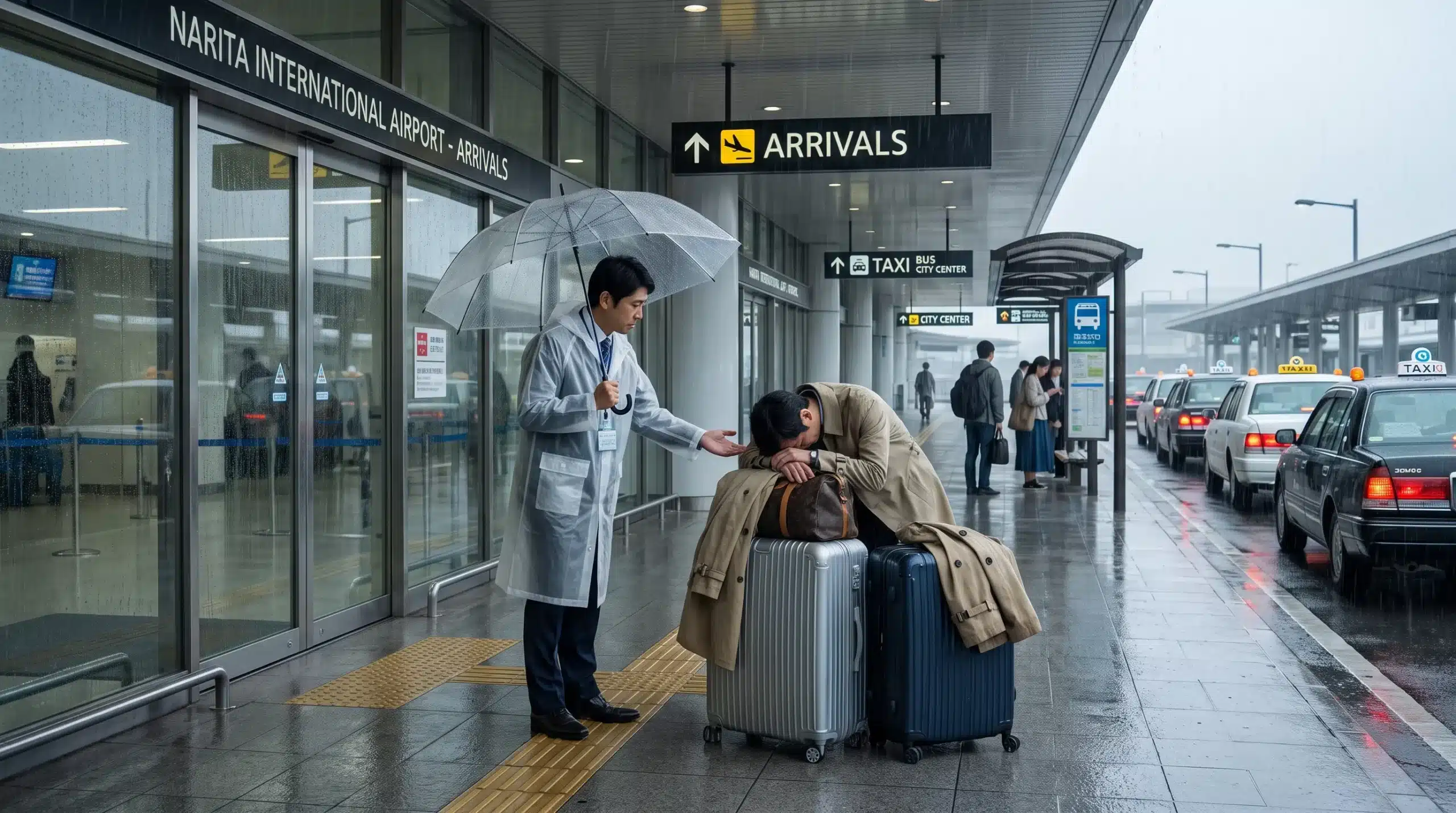
The first hour after customs is when many small mistakes happen. Visitors often stop at the first counter they see, join the wrong queue or follow a sign without confirming whether it matches their destination.
If you have a complex arrival, Japan Hand can provide airport arrival support with a local helper who assists with practical steps such as meeting you at the airport, helping with onward transport and reducing language problems at counters. This is useful when your arrival involves children, older relatives, mobility equipment, several bags or a tight onward connection.
You may not need a helper if you are carrying one small bag, staying near the airport and have mobile data ready. Japan is organised, and many airport processes are manageable for independent travellers. The point is to identify when arrival has too many moving parts to handle comfortably while tired.
Keep Essential Information Available Offline
Mobile data sometimes fails at the exact moment it is needed. Before departure, save the following information offline on each adult traveller's phone and on paper if possible:
- Accommodation name, address and telephone number in Japanese
- Passport details and reservation references
- First transport route, including the destination station or stop
- Emergency contacts and travel insurance contact details
- Medication names and allergy information in Japanese if relevant
If you wear contact lenses, bring enough for the journey and carry glasses. Contact lenses require a locally obtained prescription in Japan, so replacing them at short notice may not be as simple as visiting a shop.
Money, Cards and Connectivity
Japan is much more card-friendly than it used to be, but cash still matters. Smaller restaurants, rural taxis, temples, clinics, local buses and some family-run accommodation may not accept foreign cards. Payment systems also vary by region.
Most Japanese bank branch ATMs cannot process foreign cards. Convenience store and post office ATMs can, though availability, maintenance and card acceptance can vary. For a Japan visit involving rural areas or islands, withdraw cash before leaving a major transport hub because the next convenient ATM may not be nearby.
Connectivity should be treated as an arrival-day tool, not an optional comfort. Maps, translation, messaging and train disruption information all depend on it. If you use an eSIM, install it before travel where possible and understand when to activate it. If you use a physical SIM, confirm that your phone is unlocked and that you know where the airport counter is located.
Do Not Rely on One Payment Method
Carry at least two payment methods if possible, stored separately. A foreign card can be blocked by fraud checks, a mobile wallet can fail and an ATM may reject a card without explaining why in English.
For online bookings and Japanese-only payment systems, the difficulty is often not the money itself but the domestic phone number, local address or Japanese interface required to complete the transaction. Japan Hand can sometimes help with practical communication or payment-related tasks, but no result should be promised where a venue, platform or lottery controls the outcome.
Transport and Luggage: Avoid Overloading Your First Transfer
The first transfer from airport to hotel is often harder than it looks on a map. A route may have many lifts, or it may have one long staircase at the point where you least expect it. Some stations are large underground complexes with multiple railway companies, exits and ticket gates.
Several shinkansen routes require an advance reservation for oversized luggage. If you will travel onward by shinkansen soon after arrival, check the current baggage rules for your route before you leave home. Large suitcases can also be difficult on commuter trains, especially during busy periods.
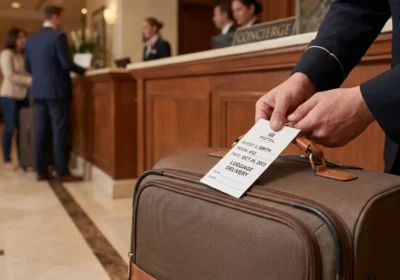
Japan has luggage forwarding services, and they are often the better choice for multi-city travellers. The main limitation is timing: same-day or next-day delivery is not always available depending on location, counter deadlines and destination. A helper can assist with forms, hotel-to-hotel arrangements and counter communication, but the delivery company controls acceptance and timing.
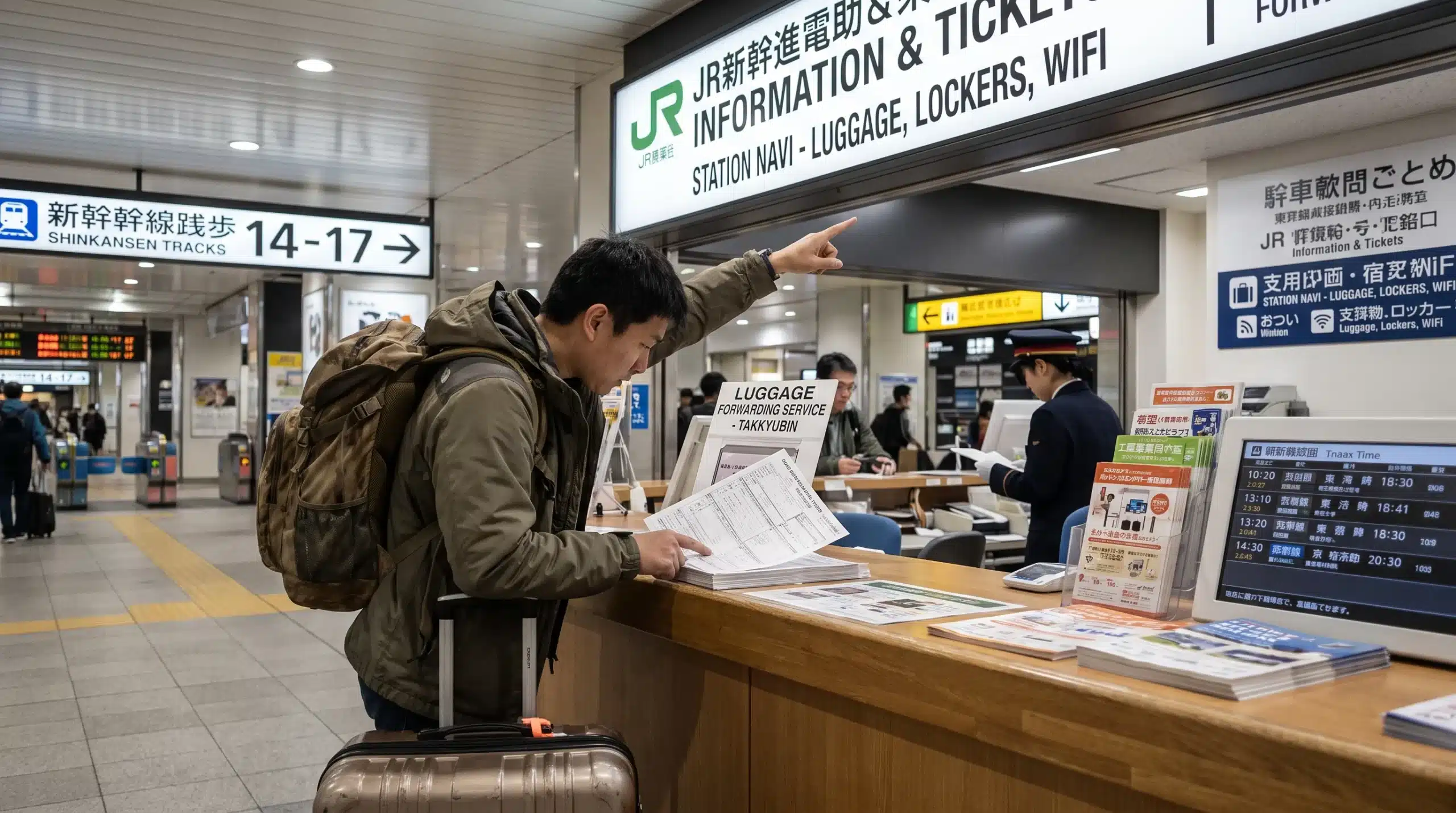
When Station Navigation Help Is Worth Considering
Large stations such as Shinjuku, Tokyo, Umeda, Kyoto, Nagoya and Hakata can be difficult even for people who read Japanese. The issue is not only language. It is the combination of railway operators, ticket gates, underground passages, exits that are far apart and trains leaving from similar platforms.
Japan Hand offers station navigation help when you need a local helper to meet you, move with you through a transfer or help you reach the correct platform, taxi stand or accommodation. This can be useful for older travellers, wheelchair users, families managing luggage and travellers changing between regional lines.
If your route is simple and you have time, mobile map apps and station signs may be enough. If missing the connection creates a serious problem, practical support may be sensible.
Food on Arrival Day: Keep It Simple and Safe
Arrival day is not the best time to improvise if you have allergies, halal requirements, vegetarian requirements or strong food restrictions. Menus may not list ingredients fully, and staff may not be comfortable making assurances at the door. Dashi, soy sauce, mirin, gelatine and shared cooking surfaces can create problems that are not obvious from an English menu.
A Japan visit with food restrictions should include one safe first meal plan. This might mean eating before leaving the airport, choosing a restaurant that has been contacted in advance or carrying suitable snacks until you reach the hotel. Muslim travellers should also plan prayer timing and facilities around the arrival route rather than assuming something will be nearby.
Japan Hand can assist with restaurant booking help where Japanese phone calls, allergy questions, halal checks or booking conditions need to be handled before you arrive. For some high-demand restaurants, you may also come across a restaurant-only reservation marketplace such as LineFlip during your research, but always check the restaurant's own rules before relying on any transferred reservation or waitlist arrangement.
No one can honestly guarantee a table at a restaurant that restricts bookings, changes its rules or uses a lottery system. What can be done is to ask the right questions in Japanese, identify realistic alternatives and avoid unsafe assumptions.
Hotel Check-In and Accommodation Problems
Accommodation check-in in Japan is usually straightforward, but difficulties arise when arrival time changes, the property is unmanned, the address is unclear or the booking name does not match the passport name. Smaller accommodation may communicate mainly in Japanese and may not answer immediately outside its usual staffing pattern.
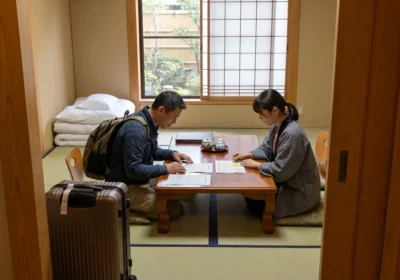
Before you travel, confirm how to enter the property, what happens if you arrive late and whether luggage can be left before check-in. Do not assume this is always possible. Some properties have limited space, unmanned systems or building rules that are not flexible.
If there is a dispute or misunderstanding, keep communication calm and factual. A bilingual helper can assist with Japanese communication, but cannot force a hotel, apartment operator or platform to accept a position it is not legally or contractually required to accept. For legal issues, use a qualified professional.
Planning for Families, Older Travellers and Mobility Needs
Families and older travellers benefit from slower arrival-day planning. A route that looks efficient on a map can be unsuitable if it involves long walks, no seating, several changes or stairs. In Japan, accessible routes often exist, but they may be indirect and poorly explained in English.
For wheelchair users or travellers with limited mobility, check step-free routes in advance. Station staff can sometimes assist, but arrangements depend on the station, railway company, staffing and timing. Rural stations may have limited facilities.
With children, reduce the number of tasks on arrival day. Do not combine currency exchange, SIM setup, rail pass issues, restaurant searching and a long transfer unless there is no alternative. One adult should be able to focus on children while another manages documents and navigation, or you should arrange help for the most complex part of the route.
Beyond Tokyo and Kyoto, Arrival Planning Matters More
A Japan visit beyond Tokyo and Kyoto can be rewarding, but practical support becomes more important outside the largest visitor corridors. Regional airports, small towns, islands and rural destinations may have limited English signage, fewer taxis, shorter service hours and fewer staff used to international requests.
Japan Hand operates nationwide, including regional airports with scheduled flights, smaller cities, islands and rural areas, subject to the details of the request and local availability. Helpers may be available in a range of languages beyond English, which can matter for families or travellers who are more comfortable discussing important details in another language.
This nationwide scope is useful when the problem is not sightseeing, but access: reaching the correct pier, explaining a mobility need to a railway company, finding halal food in a smaller city, recovering lost property or making a Japanese phone call to a local business.
A Simple Arrival-Day Checklist
Use this checklist as a final review before departure. It is deliberately practical and short.
- Save your accommodation address and phone number in Japanese
- Confirm airport-to-hotel transport, including the final station exit or bus stop
- Prepare mobile data before arrival or know exactly where to collect it
- Carry cash access options, not only one card or mobile wallet
- Check luggage rules if you will use the shinkansen with large suitcases
- Prepare allergy, medication, halal or dietary information in Japanese
- Confirm check-in instructions, especially for late arrivals or unmanned properties
- Decide in advance whether a helper is needed for the airport, station or first meal
If your arrival plan depends on many uncertain points, simplify it. A slower first day is usually better than an ambitious first day that leaves no margin for delays.
Frequently Asked Questions
How early should I arrange help for my Japan visit? Arrange help as soon as your arrival date, airport, accommodation and main concerns are known. Last-minute help may be possible, but availability depends on location, language needs, timing and the nature of the task.
Do I need local help at a Japanese airport? Not always. If your route is simple, your luggage is light and you have working mobile data, you may be fine without support. Help is more useful when you have children, mobility needs, large luggage, a late arrival, a regional onward connection or limited confidence with Japanese transport.
Can Japan Hand guarantee restaurant reservations or ticket access? No. Some restaurants, venues and events use rules, lotteries or booking systems that no outside service can control. Japan Hand can help with Japanese communication, checking conditions and realistic alternatives, but it will not promise an outcome that depends on chance or a third party's decision.
Can a helper assist outside Tokyo and Kyoto? Yes, Japan Hand operates nationwide, including regional cities, small towns, islands and rural destinations where English infrastructure may be limited. Availability depends on the request, timing, location and language requirements.
What if something goes wrong after I arrive in Japan? If you are already in Japan and face a practical problem such as lost property, missed transport, accommodation communication, urgent document translation or a Japanese phone call, Japan Hand can review the request and explain what may be possible. For medical, legal, immigration or financial matters, you should also contact the appropriate qualified professional or official service.
Arrival day does not need to be complicated, but it should be planned honestly. If you want practical support for the airport, a station transfer, luggage, restaurant communication or another first-day task, use the relevant Japan Hand service page and send the details through the contact form. Japan Hand will review the request and provide a quote before anything is agreed, with no obligation.