Places in Japan That Are Easier With Local Support
Choosing places in Japan is not only a question of what you want to see. A station transfer, inaccessible entrance, Japanese-only reservation or uncertain ferry connection can determine whether a destination works for you. Local support is most useful where a specific practical difficulty stands between you and the place, rather than throughout every day of your visit.
Places in Japan That Are Easier With Local Support
Match each destination to its practical difficulty
Start with the task that needs resolving. A bilingual helper can clarify arrangements, accompany you through unfamiliar transport or communicate with a business. They cannot remove access restrictions, guarantee availability or make an unsuitable route accessible.
| Place or setting | Practical difficulty | Useful support |
|---|---|---|
| Narita, Kansai and regional airports | Finding onward transport with luggage or mobility requirements | Arrival assistance and route coordination |
| Shinjuku, Shin-Osaka and Hakata stations | Locating the correct entrance, platform and lift | Station navigation and transfer support |
| Kyoto's Gion district | Distinguishing public streets from restricted private alleys | Explaining access rules and arranging permitted activities |
| Osaka and Fukuoka dining districts | Confirming ingredients or making Japanese-language reservations | Restaurant communication and dining support |
| Mount Fuji and Hakone | Reservations, weather-dependent transport and uneven terrain | Checking arrangements and realistic access options |
| Islands and rural destinations | Limited connections and accommodation communication | Confirming transport and arrival arrangements |
Many places in Japan are manageable independently once these details are clear. Published transport information, station staff and your accommodation may be enough. Consider a helper when the unresolved task involves several organisations, detailed Japanese communication or physical accompaniment.
Airport arrival halls and large stations
Narita and Kansai airports have extensive visitor information, but your onward journey may involve more than identifying a train. The correct terminal, luggage arrangements, accommodation address and step-free route all matter. Regional airports may have fewer onward options, making a missed connection more consequential.
Check the actual arrival airport and terminal against your accommodation, rather than assuming the nearest major city is the destination. Keep the address in Japanese and confirm how you will complete the final section from the station or bus stop.
Japan Hand's airport arrival support is relevant when you need someone to help with these arrangements after arrival. A helper cannot accompany you through areas where public access is prohibited, including immigration processing.
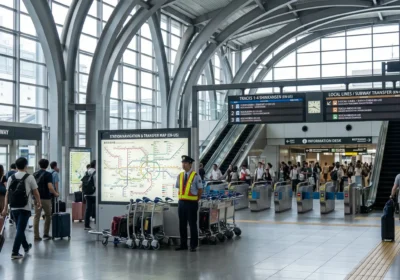
At Shinjuku, Shin-Osaka or Hakata, the issue is often the route through the station rather than the train itself. A lift may be some distance from the most obvious entrance, and changing between operators can involve separate ticket gates.
Large stations are among the places in Japan where a short period of support can be more useful than assistance for an entire day. Provide the train details, luggage dimensions and mobility requirements in advance. Several shinkansen routes require an advance reservation for oversized luggage, so check the applicable rules before booking.
Kyoto's Gion district and restricted-access venues
Gion requires careful attention to boundaries. Public streets and private alleys are not interchangeable. Some private alleys prohibit visitor entry and carry fines for entering; photography restrictions are also enforced. Follow the signs at the location rather than copying what other visitors are doing.
Local support can help clarify permitted access or communicate with a venue. It does not create permission to enter private property, photograph someone against their wishes or obtain a guaranteed maiko sighting.
Elsewhere in Kyoto, the practical difficulty may be a telephone-only restaurant reservation, a Japanese-language application or a meeting point that is difficult to identify. Confirm the booking procedure before building the rest of your day around it.
The same principle applies to ticketed attractions in other cities. teamLab operates several distinct venues, not interchangeable branches of one attraction. Check the exact venue name, address and ticket before travelling. A helper may assist with access arrangements, but cannot guarantee a lottery result or availability at a sold-out venue.
Dining districts in Osaka, Fukuoka and regional cities
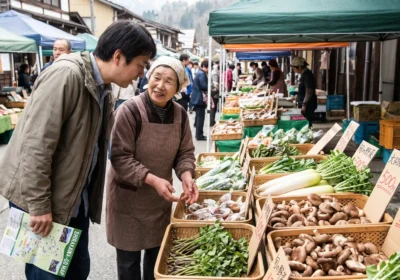
Dotonbori in Osaka and the dining areas around central Fukuoka offer many choices, but a translated menu may not answer the questions that matter to you. Broth ingredients, cooking alcohol, shared utensils and substitutions can require a conversation with the kitchen.
For travellers with allergies, the useful task is advance confirmation with the restaurant. Japan Hand's explanation of restaurant communication for food allergies sets out why a general reassurance at the door may be insufficient. A helper can relay questions and responses, but cannot certify that a meal is safe.
Food-focused places in Japan become easier to assess when you separate preference from a requirement that must be met. Muslim travellers may need ingredient checks, clarification of halal arrangements and a suitable prayer space within the day's route. Vegetarian diners may need to ask about fish-based stock even when no meat is visible.
In smaller towns, contact the accommodation or restaurant before arrival. If the kitchen cannot meet your requirements, choose another option rather than relying on negotiation when you are already seated. No helper can require a business to change its preparation methods.
Mount Fuji, Hakone and steep historic towns
Mount Fuji's climbing rules have changed in recent seasons. Current rules require an advance online reservation and a mandatory fee on all four trails. The climbing season runs from July to early September, with exact trail dates and operating conditions requiring confirmation through the official Mount Fuji climbing information.
Support with reservations and transport is not a substitute for suitable fitness, equipment or mountain safety decisions. Nor can anyone guarantee clear weather or that a planned ascent will proceed.
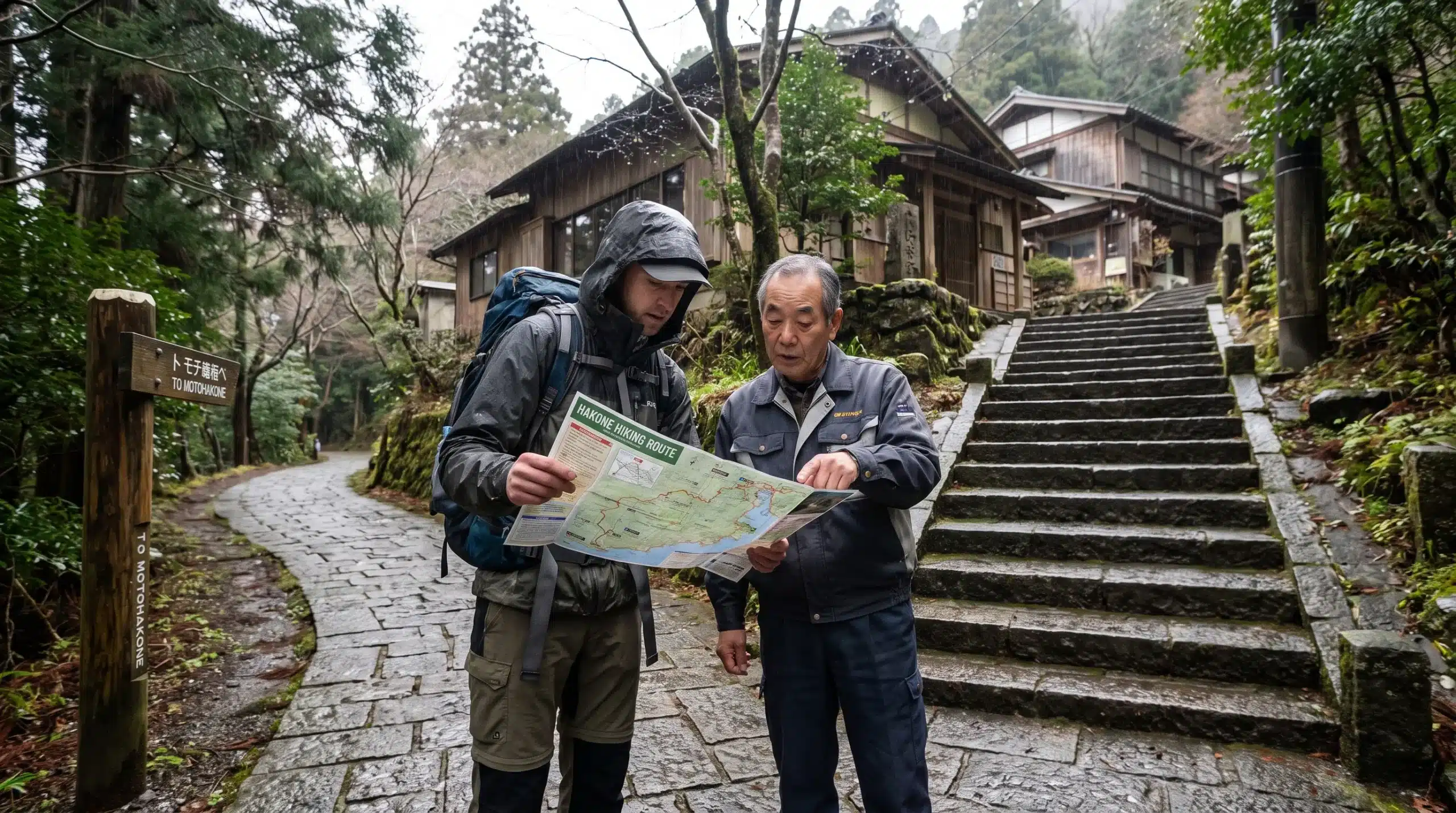
Mount Fuji and Hakone are places in Japan where access planning should be separate from the attraction itself. In Hakone, assess each transport segment individually. A route involving trains, buses, boats and ropeways may not suit every wheelchair user or family managing a pushchair.
The same applies to hillside temple areas and historic towns. An accessible station does not establish that the route beyond it is step-free. Ask about gradients, steps, surfaces, seating and toilets, then identify an alternative if the original route is unsuitable. A helper can assist with navigation and communication, but cannot remove physical barriers.
Islands, rural connections and cruise terminals
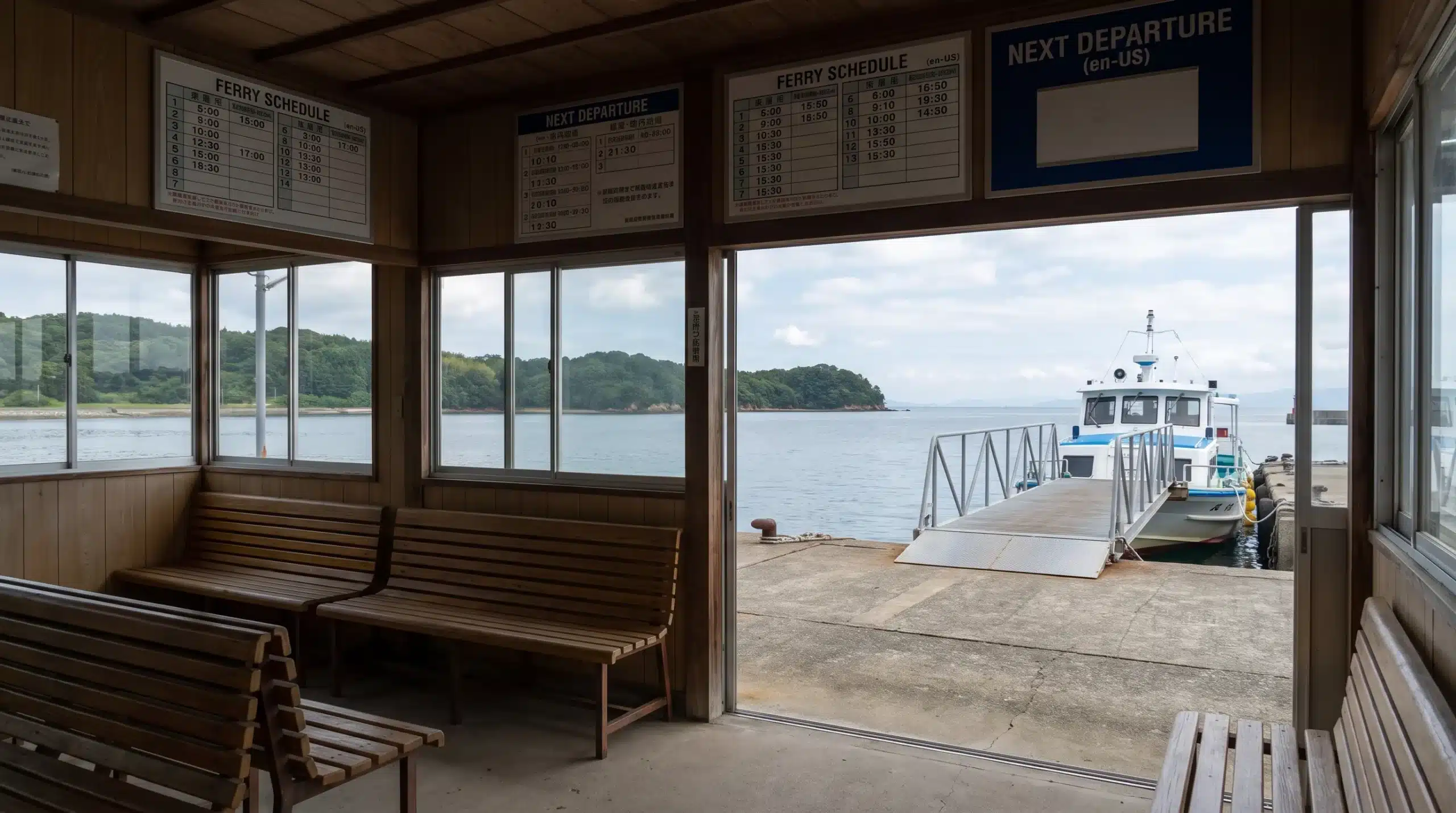
Naoshima, the islands around Hiroshima and rural areas such as the Iya Valley require attention to connections. The important detail is not simply whether transport exists, but whether it connects with your arrival, accommodation check-in and return journey.
Check the departure port, arrival port and onward transport separately. Allow for disruption and establish what you will do if the intended connection is unavailable. Do not assume that a taxi will be waiting at an isolated stop or that an accommodation host can collect you without prior agreement.
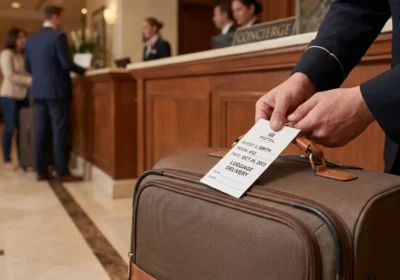
For island and rural places in Japan, local support is often most useful before you leave the main transport hub. A helper can contact accommodation, clarify pickup arrangements or help coordinate luggage forwarding. Delivery timing and acceptance must be confirmed, particularly for islands and properties without a staffed reception.
Cruise passengers face a different constraint: the ship's all-aboard deadline. Confirm the actual terminal, the distance to your intended destination and a realistic return margin. A helper cannot guarantee that a delayed vehicle will reach the ship in time.
Japan Hand accepts requests nationwide, including regional airports, small towns, islands and rural destinations. Helpers speak a range of languages beyond English. State your preferred language and exact location when enquiring so the proposed arrangements can be confirmed.
Clinics, dental practices and pharmacies
A clinic or dental practice can become an important destination when a health problem interrupts your plans. Finding an appropriate provider, explaining symptoms and understanding appointment instructions may require more detailed communication than everyday shopping.
A helper can support that communication and practical attendance. Diagnosis, treatment decisions and medical advice belong to qualified healthcare professionals. For a medical emergency, call Japan's emergency services on 119 rather than waiting for a marketplace response.
If you have ongoing dental treatment, discuss your travel dates with your treating dentist before departure. Gold Coast readers who receive care at Teeth On Ferry in Southport can raise those questions with that practice. Your own clinician is the appropriate person to advise on your treatment and travel plans.
When comparing places in Japan for a longer stay, consider access to suitable healthcare as well as accommodation and transport. Keep relevant medical information available and contact your insurer about its procedures. Do not assume that every clinic can accept an unscheduled visitor or provide communication in your preferred language.
Frequently asked questions
Do I need a helper in every destination? No. Clear transport information, a straightforward route and accommodation that can answer your questions may be sufficient. Book support for a defined difficulty rather than assuming you need continuous accompaniment.
Can a helper arrange access to a restricted venue? Only within the venue's rules. Japan Hand cannot guarantee lottery results, unavailable tickets, private access or reservations that a business will not accept.
Can families and older travellers request practical accompaniment? Yes. Describe the assistance required, luggage, walking limitations and any equipment. Parents or guardians should explain their family's needs so the proposed support can be assessed realistically.
How is the price determined? The price depends on the specifics of the request. Use Japan Hand's contact form for a quote with no obligation; nothing is agreed before the quote is provided.
Arrange support for places in Japan
Identify the place, date and task you need help with. For an arrival-related request, review Japan Hand's airport arrival support information, then use the contact form through Japan Hand. Include your preferred language and any mobility, luggage or dietary requirements. You will receive a quote before anything is agreed, with no obligation.