How to Arrange a Japanese Home Cooked Meal Respectfully
How to Arrange a Japanese Home Cooked Meal Respectfully
Arranging a Japanese home cooked meal requires more care than reserving a table. A private home is not a restaurant, and a host is not a service counter. If you want to eat in a domestic setting, the respectful approach is to make expectations clear early, avoid pressure and recognise that many Japanese people do not casually invite visitors into their homes.
A home meal can still be arranged in Japan, especially through a structured home cooking experience, an accommodation connection, a community exchange or an introduction made by someone who can explain both sides properly. The aim is not only to eat different food. It is to enter someone’s private space without treating that space as a public attraction.
What a Japanese home cooked meal usually means
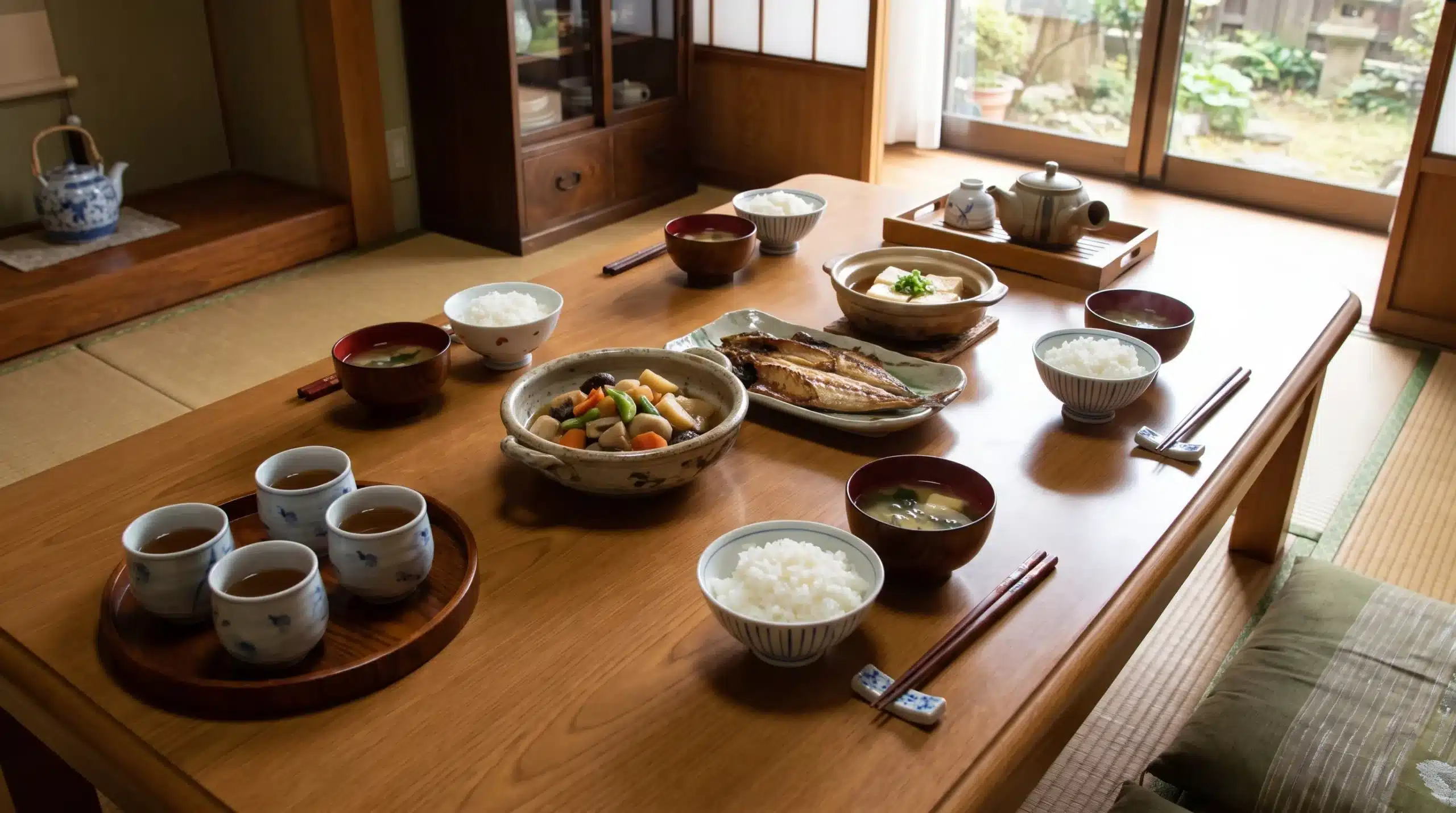
A Japanese home cooked meal may mean several different things. It could be a meal prepared in someone’s home, a cooking session followed by eating together, a farm stay dinner, a small community food exchange or a private arrangement with a host family. These are not all the same, and the etiquette changes depending on the setting.
The most respectful first question is not “Can I come to someone’s house?” It is “What kind of setting is appropriate for the purpose?” If you mainly want to learn about everyday food, a home cooking experience may be better than asking for access to a private family dinner. If you have strict dietary or religious needs, a restaurant with clear communication may be safer than a home kitchen.
In Japan, privacy matters. Many homes are compact, family schedules are busy and hosting can create pressure, especially when the guest does not speak Japanese. A Japanese home cooked meal should therefore be arranged in a way that protects the host’s choice as much as the visitor’s interest.
Choose the right arrangement before asking
The arrangement you choose affects consent, payment, food safety, language support and expectations. A casual invitation from a friend is different from a paid experience. A local helper can assist with communication, but they should not pressure a household to host.
| Arrangement type | When it may be appropriate | What to be careful about |
|---|---|---|
| Private invitation from someone you know | You already have a genuine relationship and the host offers | Do not turn hospitality into an obligation or arrive with extra people |
| Home cooking experience | You want a structured setting with agreed timing and activities | Confirm what is included, what is not and whether dietary needs can be handled |
| Accommodation or farm stay meal | You are staying somewhere that offers meals as part of the stay | Check bathroom, stairs, bedding and transport if mobility is an issue |
| Community food exchange | You want conversation and cultural exchange in a managed setting | Ask who is organising it and how hosts are protected |
A Japanese home cooked meal should not be arranged by approaching strangers, asking hotel staff to find “a local family” at short notice or assuming that someone you meet socially can host you. The more personal the setting, the more important it is to make refusal easy.
How to ask without creating pressure
A respectful request is specific, modest and easy to decline. Avoid broad requests such as “I want to eat with a real Japanese family.” That wording can make the host feel observed rather than respected. It is better to say that you are interested in everyday cooking, that you understand hosting may not be possible and that a structured cooking setting is also acceptable.
If you are asking through an intermediary, give them permission to say no on the host’s behalf. In Japanese communication, a direct refusal may be softened. “It may be difficult” often means no. Do not keep negotiating after that.
Useful information to include at the start includes the date range, number of guests, languages spoken, dietary restrictions, mobility needs, children in the group, whether you hope to cook or only eat, and whether photographs are important to you. The host should not discover these details after agreeing.
If a Japanese home cooked meal is being arranged through a paid experience, keep communication inside the agreed channel unless the host clearly invites otherwise. Private contact details, home addresses and family information should be treated carefully.
Clarify food, timing and household rules in advance
Japanese homes vary widely. Some households eat at low tables, some use chairs, some cook with fish stock in nearly everything and some have pets. A clear conversation before agreement prevents embarrassment later.
Confirm these points before anyone commits:
- The number of guests and whether children are joining
- Arrival time, expected finishing time and nearest station or meeting point
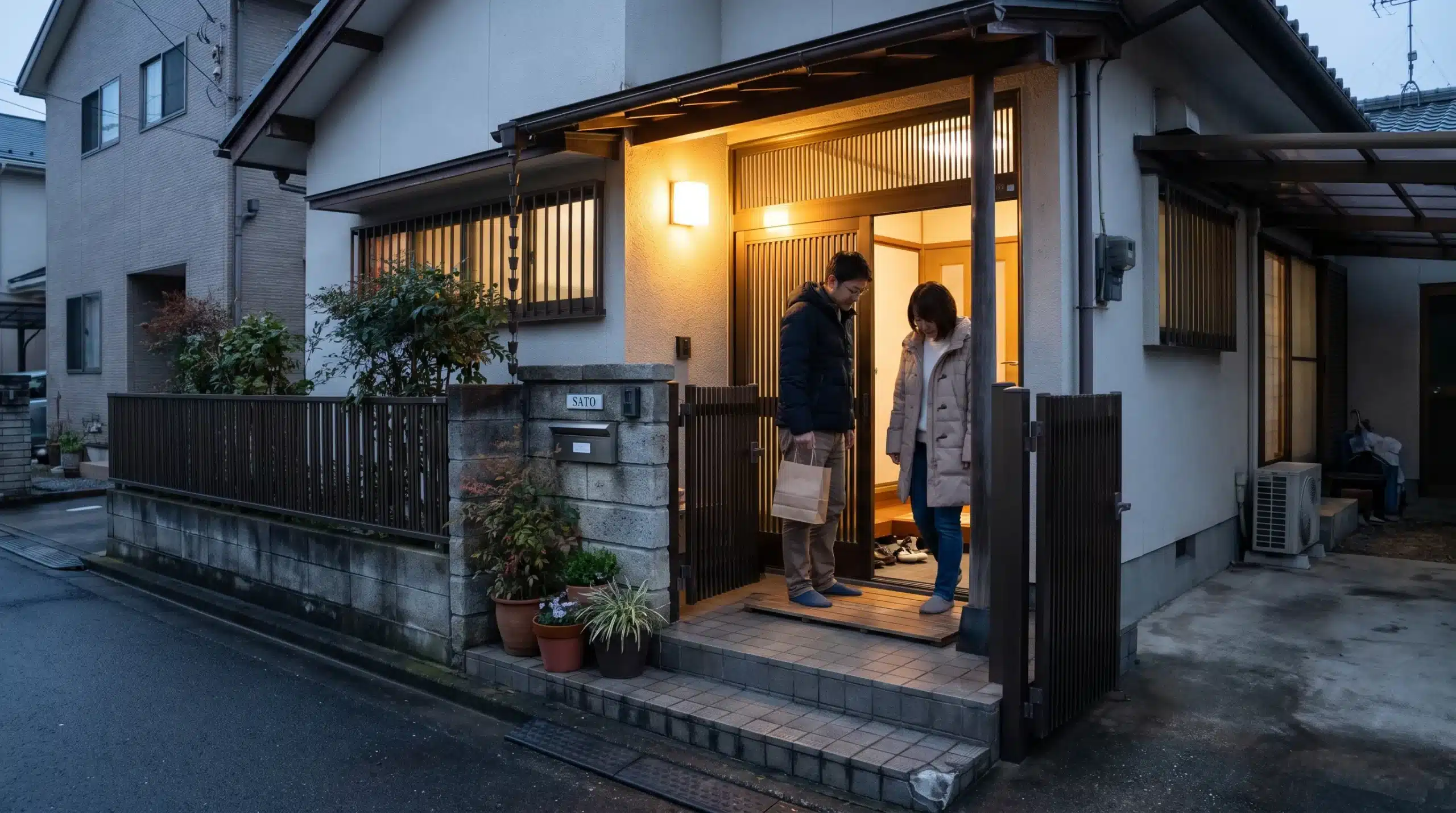
- Whether shoes must be removed before entering, as they usually are
- Seating style, including chairs, floor seating or tatami rooms
- Foods that cannot be eaten for medical, religious or personal reasons
- Alcohol preferences, including whether cooking alcohol is acceptable
- Photography rules for the home, host, children, kitchen and meal
- Whether the guest should bring anything or avoid bringing food
Do not assume that a household can change the menu easily. Dashi, soy sauce, miso, mirin, sake, bonito flakes and shared utensils can all matter. If any ingredient is medically dangerous or religiously prohibited, the arrangement needs more than a polite note.
Dietary requirements and religious needs need direct communication
Dietary communication in Japan can be more complicated than visitors expect. A host may understand “no meat” but still use fish-based dashi. A kitchen may avoid visible pork but use seasoning that contains alcohol. A person may say “it should be fine” as a kindness, not as a verified ingredient statement.
For a Japanese home cooked meal, this matters because private kitchens are not usually designed like professional kitchens with formal allergen systems. If you have a serious allergy, ask whether cross-contact can realistically be avoided. If the answer is uncertain, do not proceed simply because the setting sounds appealing.
Japan Hand can help with allergy and dietary handling by having requirements explained in Japanese before an arrangement is accepted. For travellers who need halal handling, prayer timing or ingredient checks, halal food identification and halal restaurant booking may be a more suitable form of support, especially when a home kitchen cannot give reliable assurances.
If your requirements are strict, it may be more respectful to choose a restaurant or food experience that can answer ingredient questions properly. Japan Hand will say so when that is the safer or more realistic option.
Etiquette inside a Japanese home
Once you enter a Japanese home, follow the host’s lead. Remove shoes where indicated and do not step from the entrance area into the living space wearing outdoor footwear. If slippers are provided, use them as shown. Tatami rooms may have separate expectations, and slippers are often not worn on tatami.
Arrive on time, not very early. A host may be cooking, cleaning or managing family routines before the agreed time. If you are delayed, send a message as soon as possible. In rural areas, small towns and islands, transport options can be limited, so plan the route conservatively.
A small gift is often appreciated when visiting a private home, but it should not be extravagant. Individually wrapped sweets, tea or something from your home region can work if it is easy to share and does not create storage problems. Avoid bringing strong-smelling food or anything that conflicts with the host’s dietary or religious situation.
At the table, wait until the host indicates where to sit. It is polite to say “itadakimasu” before eating and “gochisousama deshita” after the meal. You do not need perfect pronunciation, but the gesture is usually understood. If you cannot use chopsticks comfortably, ask calmly rather than struggling in silence.
Photography requires explicit permission. Do not photograph family members, children, personal documents, name plates, building entrances, religious objects or the outside of the home without clear consent. A Japanese home cooked meal is a private experience first and a photograph second.
Payment, gifts and thanks
Payment should be handled according to the arrangement. If it is a paid home cooking experience, payment belongs in the agreed system or process. If it is a private invitation, do not hand over cash unless this was clearly discussed in advance. In many cases, a thoughtful gift and a written thank-you message are more appropriate.
Do not bargain with a private host. Do not ask for extra dishes after arrival, extend the evening without checking or invite additional people. If a helper is present to support language or movement, the helper’s role is to help communication and practical flow, not to turn the host’s home into a commercial dining room.
After the meal, send thanks through the same channel used to arrange it. If the host has shared photos, ask before posting anything publicly. Even a harmless image can reveal a child’s face, a school uniform, a street view or an address.
When a home meal is not the right choice
There are times when a Japanese home cooked meal is not the best answer. If your group is tired, carrying luggage, managing small children or moving between cities that day, a private home visit may add stress. A restaurant close to your hotel may be more practical.
A home meal may also be unsuitable if you need wheelchair access, step-free toilets, controlled allergen separation, late-night timing or guaranteed English conversation. Some Japanese homes have narrow entrances, stairs, low seating and bathrooms that are not suitable for every visitor. These are practical realities, not failures of hospitality.
If your main aim is simply to eat local food, a neighbourhood restaurant, department store food hall, market counter or ryokan dinner may meet the need with less burden on a private household. Respect sometimes means choosing the less intimate option.
How Japan Hand can support the arrangement
Japan Hand helps travellers arrange practical in-person support across Japan, including major cities, regional airports, small towns, islands and rural destinations. Helpers are available in a range of languages beyond English, subject to the details of the request and location.
For a Japanese home cooked meal, Japan Hand can help clarify what is realistic, communicate dietary and household requirements in Japanese, support restaurant alternatives where appropriate and assist with navigation to the meeting point. Where a restaurant is the better option, restaurant booking help can be used to ask questions that are difficult to handle through online forms alone.
Japan Hand cannot guarantee that a private household will accept, that a specific host is available or that every dietary need can be safely managed in a home kitchen. If something cannot be done, or if a simpler option would serve you better, Japan Hand will say so.
Frequently Asked Questions
Can I ask a Japanese person I have just met to host me for dinner? It is usually better not to. A private dinner can create pressure, especially across a language barrier. If the person offers clearly, you can respond politely, but do not treat a casual conversation as an invitation.
Is a Japanese home cooked meal safe for severe allergies? It depends on the kitchen, ingredients and level of risk. Many private kitchens cannot guarantee separation from allergens. If the allergy is serious, get requirements checked in Japanese before agreeing, and choose another option if the answer is uncertain.
Should I bring a gift to a Japanese home? A small, neat gift is often appropriate for a private invitation. Choose something easy to share and avoid anything that creates a burden for the host. For a paid experience, ask whether a gift is expected before bringing one.
Can Japan Hand find a host family anywhere in Japan? Japan Hand can help make enquiries and support communication nationwide, including regional areas, but it cannot promise that a private host will be available or willing. Some locations and dates are more difficult than others.
Is a restaurant better than a home meal for halal, vegetarian or allergy needs? Sometimes, yes. A restaurant that can answer ingredient questions clearly may be safer than a private kitchen. For strict requirements, the best choice is the one that can give reliable answers, not the one that sounds most personal.
If you would like help arranging a respectful food experience, confirming dietary requirements or choosing a safer alternative, send the details through the Japan Hand contact form. The price depends on the specifics of the request, and you will receive a quote before anything is agreed, with no obligation.