How a Japan Travel Company Differs From Local Help
How a Japan Travel Company Differs From Local Help
Searching for a Japan travel company does not necessarily mean you need someone to organise your entire visit. You may already have flights, accommodation and rail bookings, but still need help finding an airport meeting point, discussing an allergy with a restaurant or reaching a hotel without using stairs.
The useful distinction is between arranging travel and helping you complete a particular task. These services can complement each other, but they are not interchangeable. Before booking either, establish what remains unresolved and who will take responsibility for it.
Compare the booking, not the label
“Travel company” is a broad description. Depending on the business, it may cover accommodation reservations, transport arrangements, organised itineraries or activities. It does not automatically mean that someone will meet you at a station or make a Japanese telephone call on your behalf.
Local help starts with a narrower request. You explain what needs doing, where it needs to happen and what assistance you require. The service is defined around that task rather than a complete itinerary.
| Question | Travel arrangements | Task-based local help |
|---|---|---|
| What are you booking? | The itinerary, reservations or activities specified by the provider | Assistance with an agreed practical task |
| What should you confirm? | Included arrangements, exclusions and responsibility for changes | Location, timing, language and the boundaries of the help |
| Do existing bookings matter? | Check whether the provider supports independently booked arrangements | Existing bookings often form the context for the request |
| What happens if access is unavailable? | The provider’s booking conditions determine the options | A helper cannot override venue rules or create availability |
For a work-related visit, keep learning provision separate from travel logistics too. A provider of business simulation software for corporate learning supplies tools for developing marketing, strategy and sales skills. Airport assistance and Japanese-language coordination are different services, with separate responsibilities.
Where a Japan travel company and local help differ
The main difference is the scope of responsibility. A business arranging your itinerary may coordinate several reservations. A local helper supports the task agreed with you, which might involve only one station transfer, restaurant conversation or accommodation check-in.
Japan Hand is an on-demand marketplace connecting visitors and residents with bilingual local helpers. It sells help booked by time, delivered by a real person. It does not sell tours, trips or sightseeing packages.
That distinction matters when you already know where you want to go. You do not need a replacement itinerary simply because one part of your plans is difficult to manage in Japanese.
It also matters when considering Japan Hand’s experiences catalogue. Support with access, communication or practical arrangements should not be mistaken for an inclusive holiday booking. Confirm what is being arranged and which tickets, reservations or other requirements remain separate.
Neither type of provider should be assumed to take responsibility for services outside the agreed booking.
When organised travel arrangements make sense
A Japan travel company may be the appropriate choice when you want one business to arrange a substantial part of your itinerary. This can include coordinating accommodation, transport and scheduled activities under clearly stated booking conditions.
The benefit is not simply having someone available in Japan. It is having an agreed structure for the arrangements that business supplies. Ask who handles changes, what assistance is available during travel and whether independently booked elements are covered.
For families, an organised itinerary can reduce the number of reservations a parent or guardian must coordinate. For older travellers, a provider that assesses pacing and accommodation suitability may also be useful. Those provisions must be confirmed rather than inferred from general marketing language.
If your reservations are already complete, buying additional itinerary planning may not solve the remaining problem. Identify the missing task before deciding which service to request.
When a defined task is the better starting point
Airport arrivals and station transfers
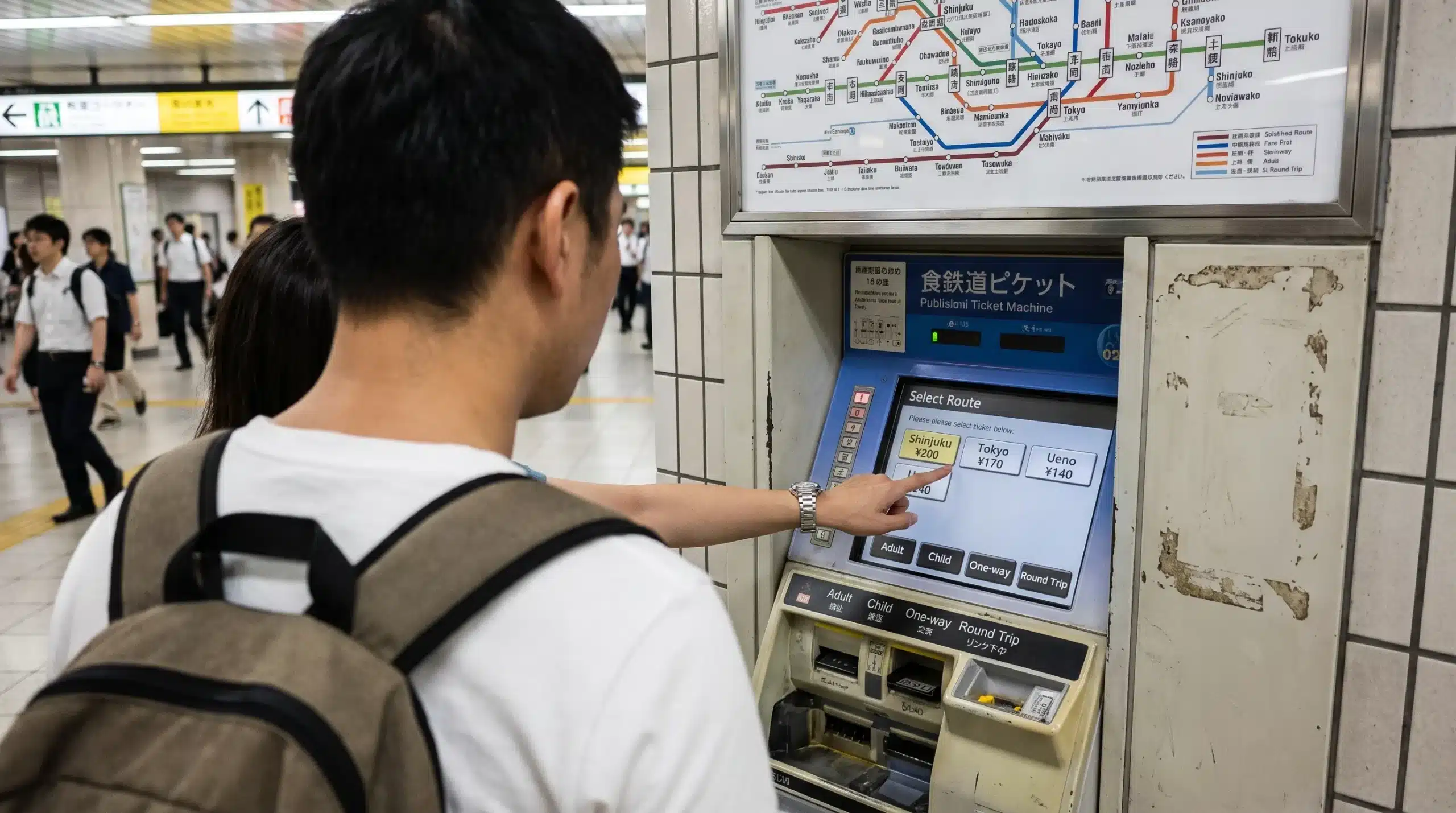
Arrival support can focus on meeting arrangements, onward transport, ticket-machine communication or reaching the correct platform. The request should specify your airport, terminal, destination and any luggage or mobility requirements.
Station navigation is a separate practical issue. A route that looks straightforward on a map may involve stairs, a long interchange or an exit that is inconvenient for your accommodation. A helper can assist with navigation and communication, but cannot guarantee that a lift or transport service will remain available.
If luggage is the main difficulty, consider forwarding it rather than carrying everything through each transfer. On applicable shinkansen routes, check the railway operator’s current oversized baggage reservation requirements before travel.
Restaurant communication and dietary requirements
A Japan travel company booking a restaurant does not necessarily mean that the kitchen has confirmed your specific dietary requirements. Reservation availability and suitability of the food are different questions.
Japan Hand’s restaurant booking help can support communication about reservations and practical requirements. For allergies, explain the ingredient, the relevant preparation concerns and what must be checked with the kitchen. A helper can relay questions and answers, but cannot guarantee food safety.
Muslim travellers may need clarification about ingredients, preparation practices and what a restaurant means by “halal”. Prayer-space access may also need to be checked against the day’s actual route. A label alone does not answer every individual requirement.
Access, telephone calls and unresolved bookings
Some tasks are difficult because they require Japanese-language communication rather than more itinerary planning. These can include a telephone-only restaurant enquiry, an accommodation problem or collecting a ticket under stated conditions.
A helper may be able to communicate with the relevant business and explain the available options. That does not mean a restricted reservation can be obtained or a ticket application will succeed.
For Japanese-only ticket lotteries, check eligibility, identity requirements and collection rules before requesting help. Assistance with an application cannot guarantee a successful result or make an ineligible applicant eligible.
Check coverage, language and accessibility separately
A provider’s presence in Tokyo does not establish its ability to support a request elsewhere. Regional airports, small towns, islands and rural destinations require attention to the exact meeting place and the practical conditions there.
Japan Hand operates nationwide, including airports with scheduled flights and destinations beyond the main visitor centres. Helpers are available in a range of languages beyond English. State the language you need and confirm availability for the particular location and date.
For mobility support, describe functional requirements rather than relying only on the word “accessible”. Relevant details may include wheelchair dimensions, difficulty using stairs, walking tolerance and whether seating is needed during transfers.
Availability of human help is also separate from physical access. A helper cannot remove stairs, alter a ferry’s boarding arrangements or make an unsuitable venue accessible. Those conditions need checking before the booking is agreed.

Understand what no provider can promise
An unavailable table remains unavailable unless the restaurant offers another option. Sold-out admission, restricted booking systems and weather-dependent plans require the same caution. Support can improve communication and preparation, not guarantee an outcome controlled by someone else.
Transport conditions also change. A helper can assist with an alternative route after disruption, but cannot ensure that a cancelled service operates or that another connection has space.
For medical, legal, immigration or financial matters, use a qualified professional. Practical help can support communication, appointments and navigation; it is not professional advice or a substitute for emergency services.
You may not need paid assistance at all. If you can complete a reservation through an official website, understand the route and manage the required communication, proceed independently. Ask your accommodation whether its reception staff can handle a straightforward enquiry before arranging separate help for the same task.
Define the request before asking for a quote
When comparing a Japan travel company with local help, a written scope is more useful than a general promise of support. Explain the outcome you need and distinguish it from outcomes nobody can guarantee.
For a local-help enquiry, include:
- Location and timing: The airport, station, accommodation or venue, together with the relevant date and meeting details.
- The task: What you need the helper to do, including any Japanese telephone calls or advance enquiries.
- Practical requirements: Preferred language, luggage, mobility needs, children travelling with you and dietary requirements where relevant.
- Existing arrangements: Bookings already made, deadlines and any unresolved questions.
Avoid sending passport details or medical documents in an initial general enquiry unless they are requested through an appropriate process.
Japan Hand reviews requests before anything is agreed. The price depends on the specifics, and every request receives a quote with no obligation. Confirm the proposed scope, what remains your responsibility and how changes will be handled before proceeding.
Frequently asked questions
Is Japan Hand a travel agency? No. Japan Hand is an on-demand helper marketplace for practical, in-person tasks. It does not sell tours, trips or sightseeing packages.
Can local help complement bookings made elsewhere? Yes, a request can concern an independently booked journey, accommodation stay or reservation. Explain the existing arrangements so the task can be assessed. Assistance does not change the original provider’s booking conditions.
Does a Japan travel company always include local assistance? No. Some businesses include support with the arrangements they supply, but the scope varies. Ask specifically about airport meetings, station transfers, language assistance and independently booked services.
Can a helper guarantee tickets or restaurant availability? No. Venue restrictions, lottery outcomes, identity requirements and availability still apply. A helper can assist with permitted enquiries or procedures, not promise admission or a reservation.
Is English the only language available? No. Japan Hand offers helpers with a range of language capabilities. Include your preferred language in the enquiry so availability can be checked for your location and date.
Request the support your plans actually need
If arrival is the unresolved part of your plans, review Japan Hand’s airport arrival support. Then use the contact form on Japan Hand to describe your location, timing and requirements. You will receive a quote before anything is agreed, with no obligation.