When to Hire a Local in Japan for Practical Tasks
When to Hire a Local in Japan for Practical Tasks
A journey can become difficult when the next step requires a Japanese telephone call, a conversation about an allergy or someone physically present at a station. It makes sense to hire a local when that specific task exceeds what you can reasonably manage yourself, not simply because you are visiting Japan for the first time.
Japan Hand connects visitors and residents with bilingual helpers for practical assistance booked by time. The purpose is to complete an agreed task, rather than accompany you throughout your stay. You may need support for one transfer, one appointment or one conversation, then continue independently.
Decide by the task, not by the destination
Start with three questions: does the task require Japanese communication, does someone need to be there in person and what happens if it goes wrong?
Reading a menu is different from confirming how a kitchen prevents allergen cross-contact. Finding a platform is different from moving through a station with luggage and a mobility requirement. The second task in each pair involves details that a translated screen may not resolve.
Consider the available alternative first. Station staff can answer transport questions, accommodation staff may help with routine reservations and official booking websites may provide sufficient instructions. You do not need outside support when those options meet your requirements.
A practical reason to hire a local is that an unresolved task has meaningful consequences, such as missing a connection, arriving at an inaccessible entrance or being unable to explain a dietary restriction.
When it makes sense to hire a local
The following distinctions help separate useful support from assistance you may not need.
| Task | Try independently first | Consider a helper when |
|---|---|---|
| Airport arrival | Check the airport’s official transport information | You need assistance connecting the arrival process with onward travel |
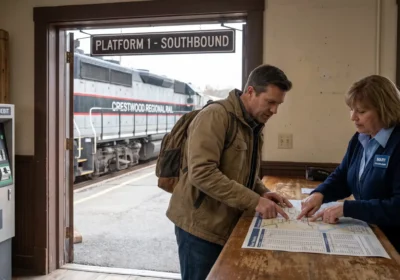
| Station transfer | Check the route and ask station staff | Luggage, accessibility or several connections complicate the transfer |
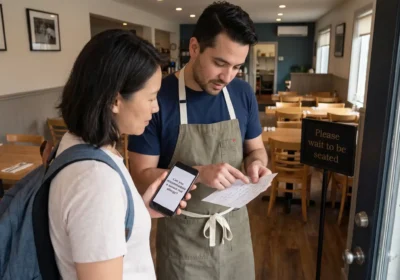
| Restaurant reservation | Use the restaurant’s own booking channel | Reservations require a Japanese telephone call or detailed dietary questions |
| Lost property | Contact the relevant operator’s lost-property office | You need Japanese communication or help coordinating collection |
| Appointment | Ask the organisation about language support | You need practical communication assistance before or during the appointment |
| Ticket access | Read the official eligibility and booking conditions | You cannot understand the application process or collection requirements |
Choose support for the unresolved part, not automatically for the entire day. A telephone enquiry may establish that no in-person assistance is necessary. Conversely, written instructions may be insufficient when the difficulty is physical access rather than language.
You do not need to hire a local merely to use ordinary public transport if the route is clear, your luggage is manageable and you are comfortable asking staff for directions.
Airport and station tasks
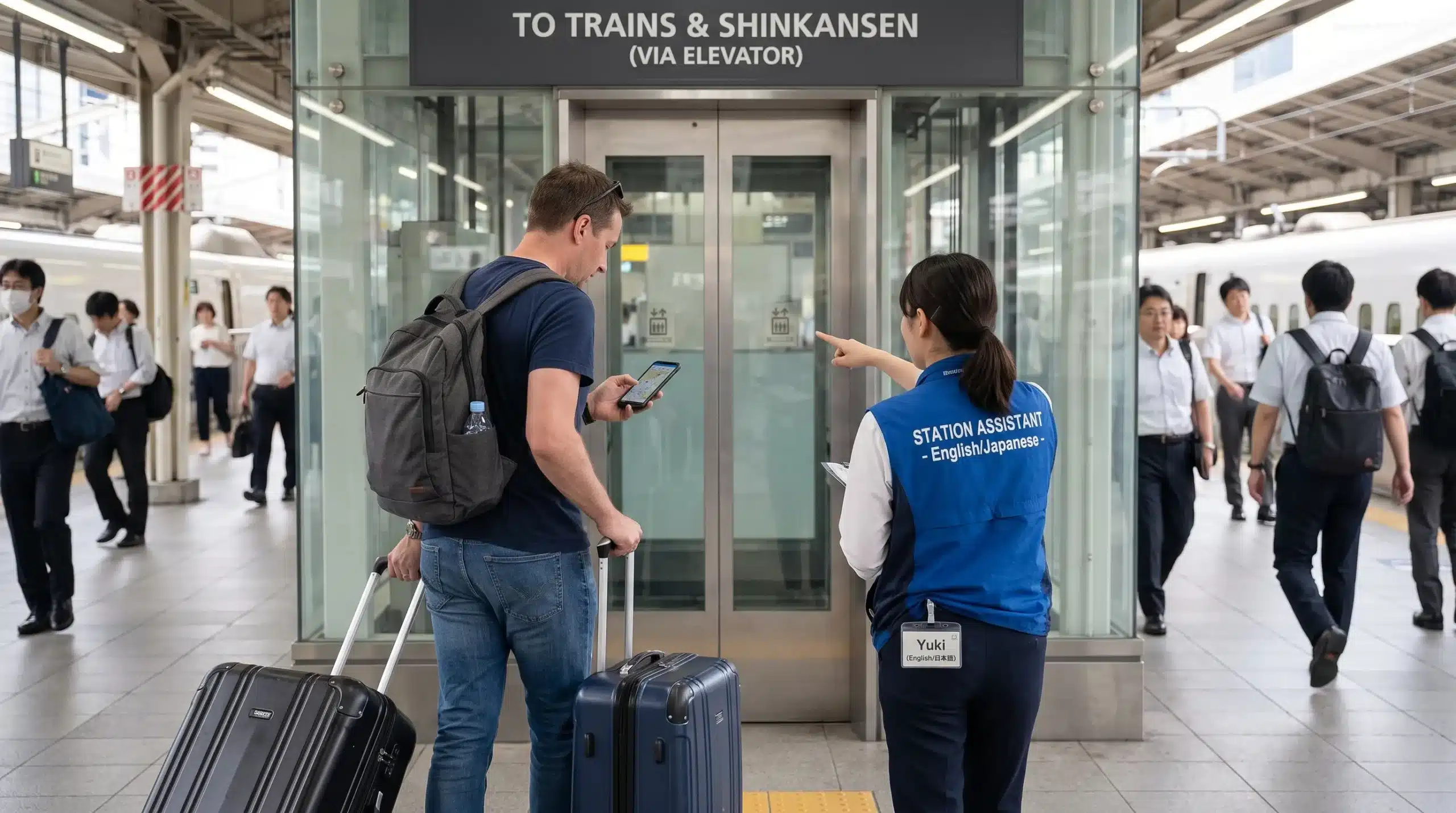
Transport support is most useful when several requirements interact. Parents may be managing children and luggage while checking a connection. Older travellers may need seating and a route that avoids stairs. A person using a wheelchair may need assistance arranged with the transport operator, not just directions to a lift.
Japan Hand’s airport arrival support can address an agreed arrival task. Specify the airport, arrival details, onward destination, luggage and any mobility requirements. Do not assume that meeting arrangements or access to restricted airport areas are possible without confirmation.
For rail travel, check luggage requirements with the relevant operator before departure. Several shinkansen routes require advance reservations for oversized luggage. A helper cannot replace a required reservation or override transport rules.
Luggage forwarding may remove the need to carry suitcases through a difficult transfer. Before requesting physical luggage assistance, establish whether forwarding works with your accommodation, delivery timing and essential belongings.
Restaurant communication and dietary requirements
A restaurant that accepts online reservations may need no outside assistance. Support becomes more useful when booking is telephone-only or the kitchen needs to answer questions that cannot be reduced to a translated label.
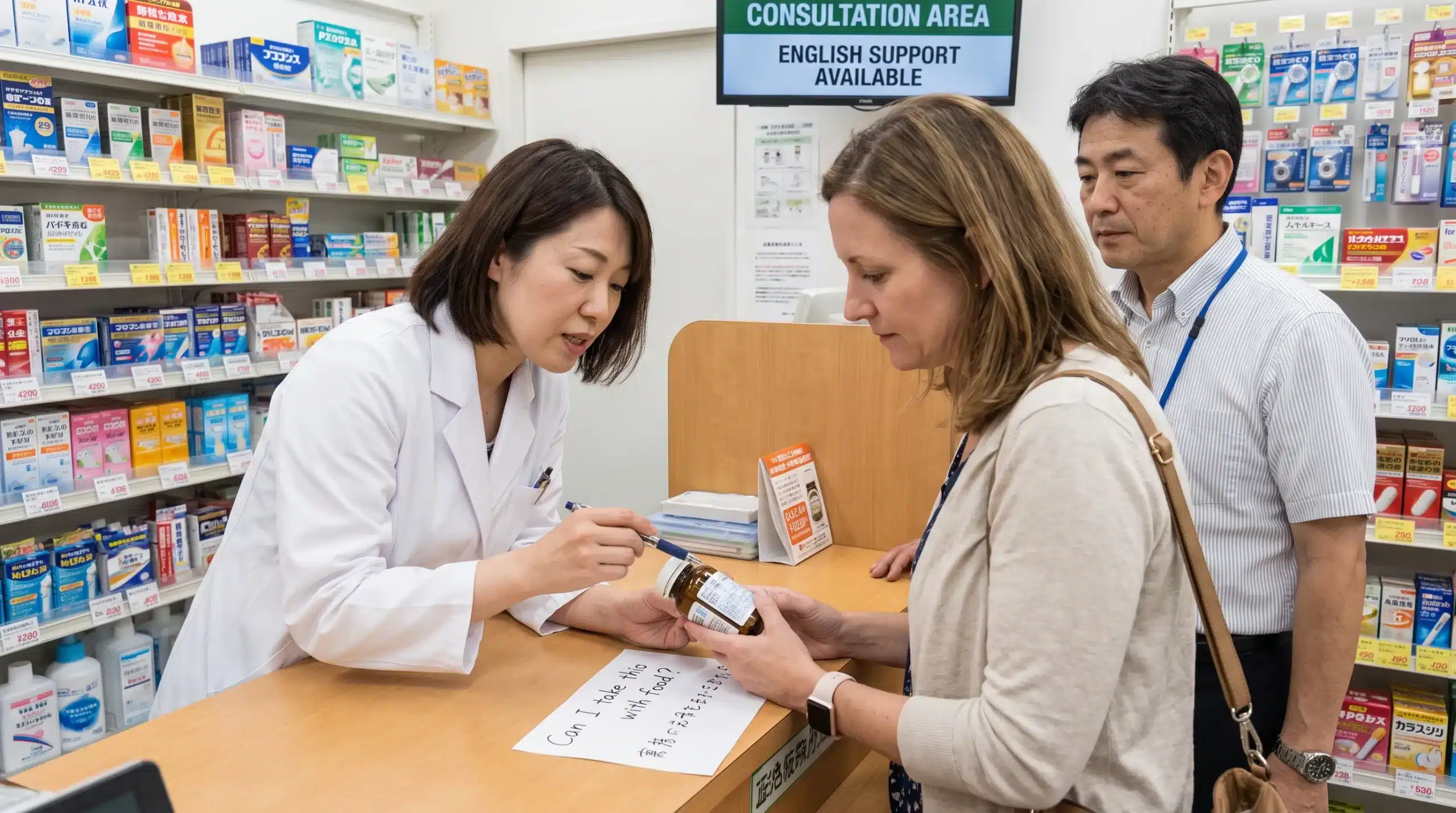
It can be sensible to hire a local for advance communication about allergies, halal requirements or other dietary restrictions, particularly when the answer will determine whether you can eat there at all.
Describe the requirement precisely. For allergies, distinguish ingredients from preparation methods and possible cross-contact. For halal dining, explain what you need confirmed about ingredients, alcohol use and preparation. A general statement that a dish contains no pork does not answer every halal question.
A helper can relay questions and report the restaurant’s response. They cannot certify a kitchen, guarantee food safety or compel a restaurant to accommodate a request. If the establishment cannot provide sufficiently clear information, choosing another restaurant may be the appropriate outcome.
Appointments, lost property and restricted bookings
Some tasks depend on communicating with the organisation that controls the outcome. These include recovering an item from a transport operator, explaining a problem at accommodation or understanding an appointment’s administrative requirements.
Before seeking help, collect the relevant reference numbers, dates, locations and correspondence. For lost property, a clear description and the likely place of loss are more useful than a general request to search.
You may also hire a local to clarify ticket eligibility, application instructions or collection procedures. Assistance does not guarantee a lottery result, create ticket availability or remove identity checks. A requirement for a domestic telephone number does not automatically make an application suitable for a helper to submit on your behalf.
For medical appointments, helpers can support practical communication but do not replace qualified clinicians. For an urgent medical emergency in Japan, call 119 rather than waiting for a helper enquiry to be answered.
Know where apps stop being enough
Maps, translation apps and official websites are often sufficient for straightforward tasks. Use them to identify an entrance, understand basic instructions or prepare a short question. Save important addresses and booking information offline where possible.
Their limitation is confirmation. A translation app can express a request without establishing that the recipient understood or accepted it. An AI tool can suggest a route without checking a temporary lift closure or confirming assistance with an operator.
The same distinction matters in product design: the AI Product Adoption Deck is a resource for teams diagnosing AI adoption, trust and usability problems. For travel decisions, treat a generated answer as information to verify, not proof that an organisation has agreed to help.
You should hire a local when the remaining problem is a conversation or an action that software cannot complete reliably. If an official source answers the question clearly, further assistance may be unnecessary.
Define the request before asking for a quote
A useful request identifies the task and the result you need. “Help with Japan” is too broad. “Assist with the transfer between these stations, using a step-free route” gives a helper something concrete to assess.
Include the information that affects feasibility:
- Location and timing: Give the airport, station, accommodation or other meeting point, with the date and any fixed deadline.
- Required task: Explain what needs to be done, rather than requesting general accompaniment.
- Language: State the language in which you need support.
- Practical requirements: Describe luggage, mobility needs, children travelling with you or relevant dietary requirements.
- Existing arrangements: Identify confirmed reservations, enquiries already made and outstanding questions.
- Completion point: Explain where the assistance should end or what confirmation you need to receive.
Japan Hand accepts requests nationwide, including regional airports, small towns, islands and rural destinations. Helpers work in a range of languages beyond English. State the precise location and language early so that availability can be assessed rather than assumed.
For journeys outside major cities, the planning considerations in travelling beyond Japan’s major cities can help you identify which part needs support.
Before you hire a local, confirm that the proposed service addresses the actual difficulty. A route companion, a telephone enquiry and help collecting an item are different tasks, even when they concern the same journey.
Confirm the boundaries of the service
Ask what the helper can do, what requires your presence and what depends on a third party. A restaurant controls its reservations, a transport operator controls its procedures and a venue controls admission.
Mobility support also needs a clear scope. Explain the assistance you require rather than assuming that accompaniment includes lifting, personal care or specialist equipment. Any necessary arrangements with operators or venues should be confirmed separately.
For urgent requests, ask about availability, but keep pursuing appropriate official channels. Japan Hand should not be treated as an emergency response service. Where a task requires legal, medical, immigration or financial advice, consult a qualified professional; practical communication support is not a substitute.
Frequently asked questions
Do I need a helper for my whole stay? No. It is often more appropriate to hire a local for one defined task and manage the rest independently. Start with the difficulty you cannot resolve through official information or routine staff assistance.
Can I request support outside Tokyo and Kyoto? Yes. Japan Hand operates nationwide, including regional airports, rural destinations and islands. The specific task, timing and requested language still need to be assessed before arrangements are agreed.
Can a helper guarantee a booking or admission? No. Availability, lottery outcomes, eligibility and venue restrictions remain outside the helper’s control. Support can clarify requirements and assist with permitted procedures.
How is the service price determined? The price depends on the specifics of the request. Submit the task through Japan Hand’s contact form to receive a quote with no obligation before anything is agreed.
Request support for a defined task
For transfer-related assistance, review Japan Hand’s station navigation help. For that service or another practical request, use the contact form on Japan Hand’s website and provide the location, date, preferred language and required outcome. Japan Hand can assess what is possible, explain any limitations and provide a quote with no obligation.