Booking a Local Japanese Restaurant That Only Takes Phone Calls
Booking a Local Japanese Restaurant That Only Takes Phone Calls
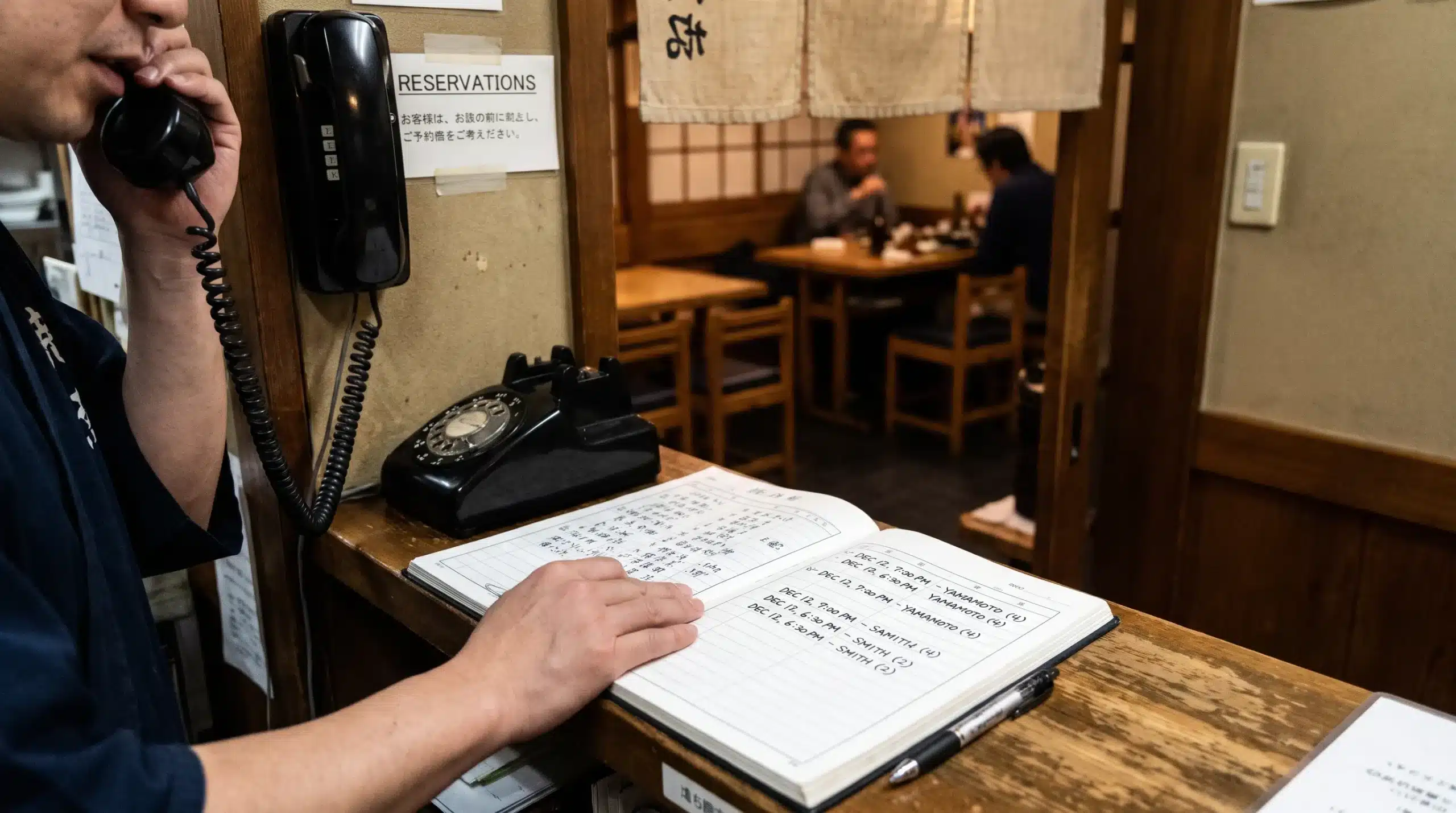
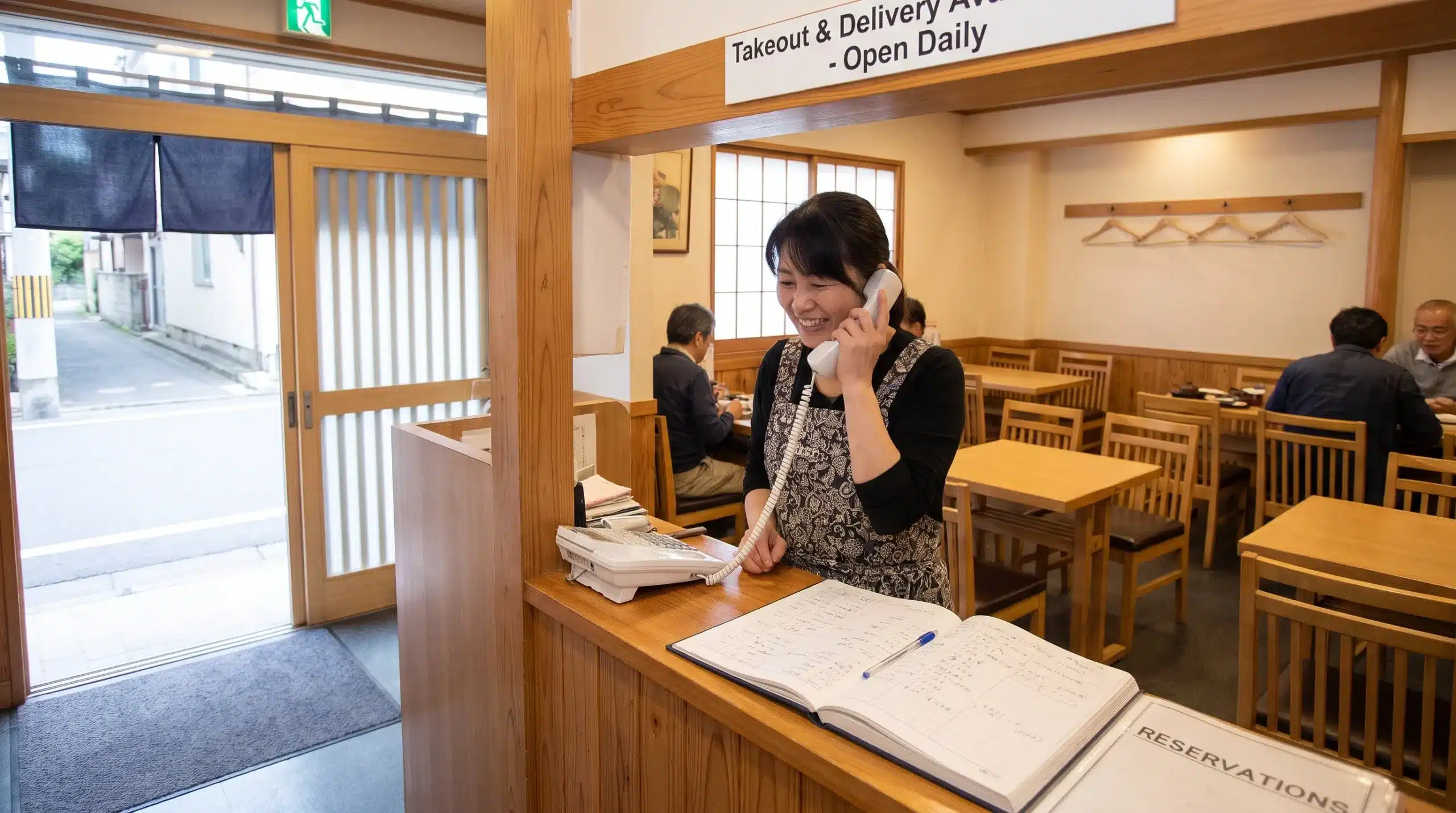
You have found a local Japanese restaurant, but its website lists only a telephone number and the booking platform has no reservation button. The difficulty is not simply asking for a table in Japanese. You may also need to confirm dietary requirements, seating, a set menu or cancellation conditions before agreeing to the booking.
A successful call should leave both sides with the same information. This article explains what to prepare, what to ask and when help with Japanese communication is useful.
Check whether a telephone call is necessary
Start with the restaurant’s own website or official social media account. A map listing or restaurant directory can help you find the business, but its telephone number, opening information or reservation link may be outdated.
Check the exact branch and address. Restaurants with similar names can be unrelated, while different branches of the same business may use different booking arrangements.
An online calendar showing no tables does not necessarily mean the restaurant accepts telephone bookings. It may be fully booked, may not yet have opened reservations for your date or may accept walk-ins only. Look for an explanation before calling.
If an official booking page accepts your reservation and records everything you need, you do not need a helper. A local Japanese restaurant that publishes a telephone number may still prefer customers to use its online system when one is available.
Prepare your local Japanese restaurant booking details
Write down your request before anyone makes the call. Missing information can turn one conversation into several, particularly when the restaurant needs the kitchen or manager to answer a question.
| Information | What to prepare |
|---|---|
| Restaurant | Official name, branch, address and website |
| Date and time | Your preferred date, meal and acceptable alternatives |
| Party | Total number of diners, including children |
| Reservation name | A name you can recognise and repeat at arrival |
| Contact details | Your telephone number, including the country code |
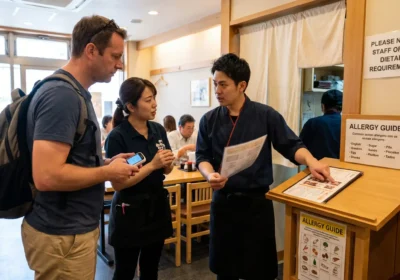
| Food requirements | Specific allergies, dietary restrictions and ingredients to avoid |
| Seating and access | Chairs, entrance steps, wheelchair space or other essential requirements |
| Menu preference | Any advertised course you want, or a request to order individual dishes |
Separate essential requirements from preferences. A chair rather than floor seating may be essential for one diner, while a window table may simply be preferred. The person calling needs to know which conditions determine whether you can accept the reservation.
For a local Japanese restaurant with limited seating, flexibility about the date or time can help. Agree on acceptable alternatives beforehand, rather than asking the caller to make that decision for you.
Decide who should make the call
If you or a travelling companion can discuss the booking confidently in Japanese, calling directly is reasonable. A short opening phrase is less useful if you cannot understand questions about courses, children or cancellation conditions.
You can also ask your accommodation whether staff can telephone the restaurant. Some properties provide this support for guests, but others cannot make external reservations or accept responsibility for them. Ask rather than assume.
Japan Hand’s Phone Call Proxy service provides Japanese-language calls on your behalf. Send the restaurant details and your requirements together so the helper can make a clear request.
Japan Hand operates nationwide, including regional cities, small towns, islands and rural destinations. Helpers speak a range of languages beyond English, so state your preferred language when enquiring. A telephone request does not require you to be staying in Tokyo or Kyoto.
Make the call and confirm the conditions
Use the restaurant’s published reservation contact times where available. Otherwise, try to avoid its busiest meal service, when staff may have little time to discuss a complicated request.
If calling from abroad, calculate the time in Japan. Japan Standard Time is UTC+9 and does not observe daylight saving time.
A basic opening is 「予約をお願いしたいのですが」 (Yoyaku o onegai shitai no desu ga), meaning “I would like to make a reservation.” Be ready to give the date, time and number of diners immediately afterwards.
Before accepting a table at a local Japanese restaurant, establish whether the booking requires a particular course, advance menu choices or other conditions. Ask about any cancellation charges, deposits, minimum orders or table time limits that apply to that reservation. These are restaurant-specific conditions, not assumptions to make from another venue’s policy.
Finally, have the details repeated back: date, time, party size, reservation name and any requirements the restaurant has accepted. If staff say they need to check with the kitchen or call back, the booking is still pending. An answered telephone call is not confirmation of a table.
Resolve dietary requirements before accepting
A reservation and an agreement to accommodate a dietary requirement are separate matters. Ask the restaurant to confirm both.
Describe the actual ingredients that must be avoided. “Vegetarian” may not communicate a restriction on fish stock, while “no pork” does not establish whether a dish meets your halal requirements. Broths, sauces, seasonings and cooking alcohol may need separate discussion.
For allergies, explain the relevant ingredients and ask about shared utensils, preparation surfaces and cooking oil where necessary. Give the restaurant enough information to say honestly whether it can accommodate the request. Do not interpret a polite acknowledgement as a confirmed preparation arrangement.
A local Japanese restaurant may be unable to change a fixed menu or control cross-contact. If the kitchen cannot meet an essential requirement, choose another restaurant. A helper can communicate questions and report the answers, but cannot certify a kitchen’s allergen controls or halal status.
Check seating, access and arrangements for children
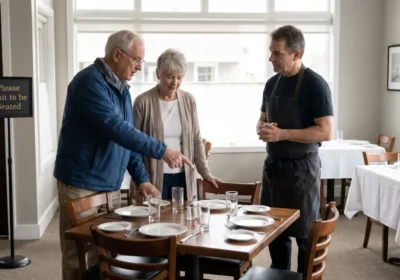
Ask about the actual seating rather than relying on photographs. Zashiki generally refers to tatami seating, often involving sitting on the floor. Horigotatsu seating has a recessed space beneath the table, but getting into and out of it may still be difficult for some diners.
For visitors accustomed to single-level homes, such as the residential bungalows at Hermitage Park in Berkshire, restaurant access needs a more detailed check than “ground floor”. Ask separately about entrance steps, thresholds, seating and the route to the toilet.
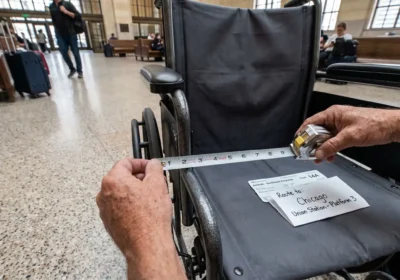
If you use a wheelchair, provide relevant dimensions and ask whether you can remain in it at the table. Do not assume that an accessible entrance means an accessible toilet.
Parents and guardians should state children’s ages and ask about suitable seating, menu requirements and pushchair storage. A restaurant may count children within its booking conditions even when they will not order an adult meal.
Keep a clear record of the reservation
After booking a local Japanese restaurant, save a written summary containing the confirmed date, time, party size, reservation name, address and telephone number. Include any accepted dietary arrangements and the cancellation conditions explained during the call.
Save the restaurant’s name in Japanese as well as any English spelling. This can help you identify the correct entrance and show someone where you are trying to go. If confirmation was only verbal, your own notes are useful, but they are not written confirmation from the restaurant.
Ask how changes should be communicated. A telephone-only booking may also require a telephone call to change the party size or cancel. Do not assume an unanswered social media message has reached the reservation staff.
If you will be late, contact the restaurant as soon as you know. Staff may be able to adjust the arrangement, but a late arrival can affect a timed course or the next seating. Nobody making the call can promise that the table will be held.
Frequently asked questions
Can I book without a Japanese telephone number? Sometimes. Ask whether the restaurant accepts an international number and how it will contact you if necessary. If it requires a domestic number, establish an arrangement it explicitly accepts. Do not supply an unrelated number or assume a helper’s number can be used without agreement.
Does a local Japanese restaurant accept overseas reservations by phone? Some do, but telephone access does not override the restaurant’s booking conditions. It may restrict how far ahead it accepts reservations, require a particular booking channel or decline third-party requests. A helper can ask, but cannot require the restaurant to accept.
What if the restaurant is fully booked? Ask once about acceptable alternative times, dates or an official cancellation list. If none is available, choose another restaurant. Repeated calls or a different caller do not create availability.
Do I need someone to accompany me after the booking? Not necessarily. If the reservation is settled and you can manage ordering and communication at the table, telephone support may be sufficient. In-person help is useful when you also need menu explanations or further discussion with staff.
Request help with the call or the meal
For help making the reservation, send Japan Hand the restaurant link, preferred dates and essential requirements. If you also need a helper at the table, Dining Escort support can assist with menus, ordering and communication with staff.
Use the contact form on Japan Hand to explain what you need. The price depends on the specifics, and every request receives a quote before anything is agreed, with no obligation. A reservation remains subject to the restaurant’s availability and conditions.