How to Assess Local Finds in Japan Before Buying Handmade Goods
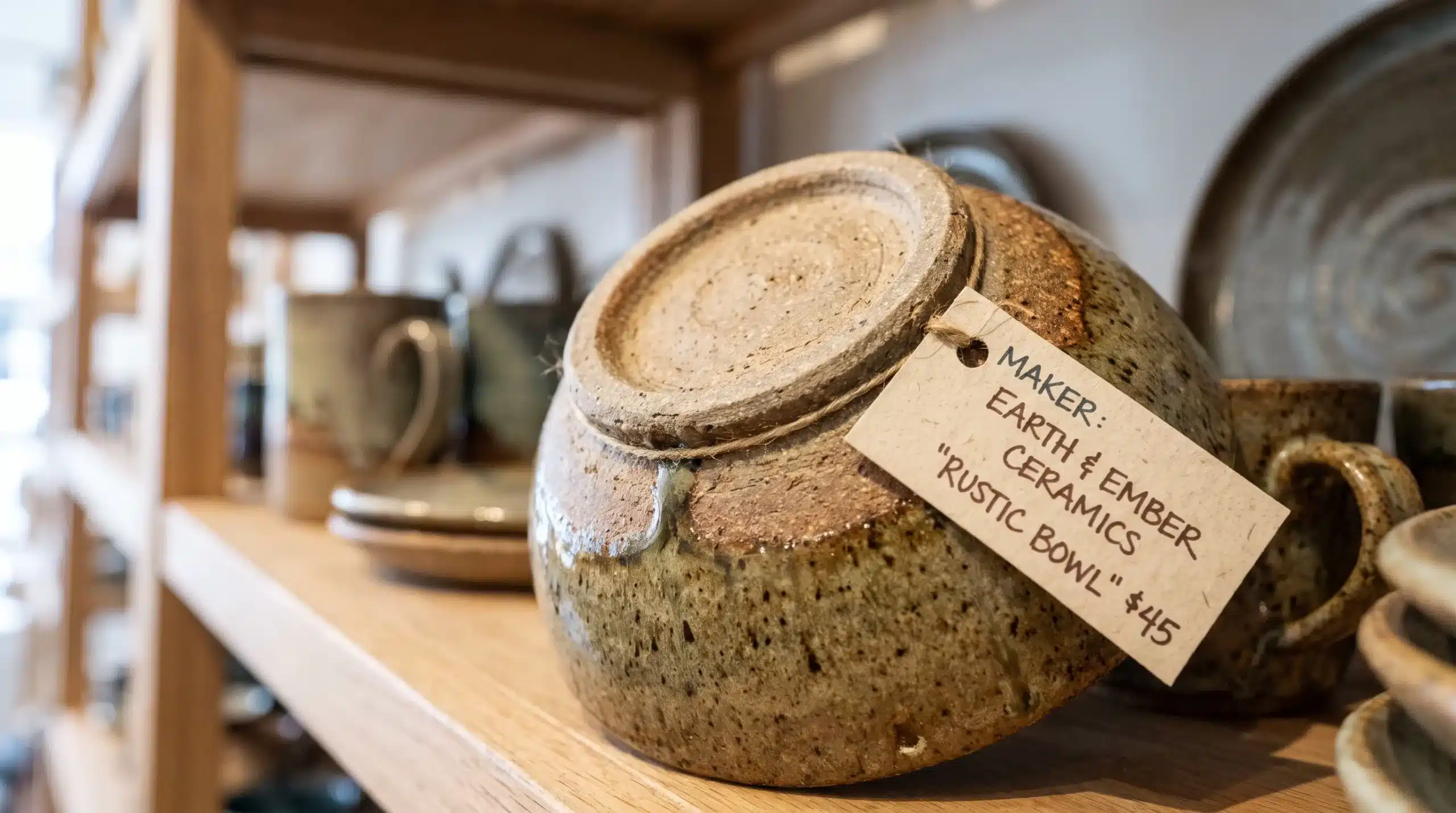
A handmade label does not tell you who made an object, where it was produced or whether it will survive the journey home. When assessing local finds in Japan, the useful checks are provenance, condition and suitability for use. A regional shop may stock goods made elsewhere, while a department store may sell work directly attributable to a Japanese maker.
A practical checklist for assessing local finds in Japan
Establish who made the item
Start with the object rather than the shop’s appearance. Traditional buildings, handwritten labels and workshop tools do not establish where every product was made.
Ask for the maker’s name, workshop location and production method. These are separate questions. An item may be designed locally but manufactured elsewhere, or made from a mould and decorated by hand. Neither arrangement necessarily indicates poor quality, but the description should match what you are buying.
Useful evidence includes a maker’s card, an identifiable workshop, an explanation of the production process and a receipt naming the item. A signature or stamp can support attribution, but is not independent proof.
The Association for the Promotion of Traditional Craft Industries provides information about designated traditional crafts and their production regions. Use this to understand a craft’s background, not to assume that every object sold in that region carries the designation.
For local finds, a clear explanation of who performed which stages of production is more informative than the word “authentic”. A retailer who openly identifies bought-in components or shared workshop production is providing useful information, not necessarily a reason to reject the item.
Inspect local finds for quality and suitability
Ask permission before picking up an object, opening packaging or photographing a label. Handle fragile pieces over a counter rather than above the floor, and do not test flexibility, scratch resistance or water resistance without permission.
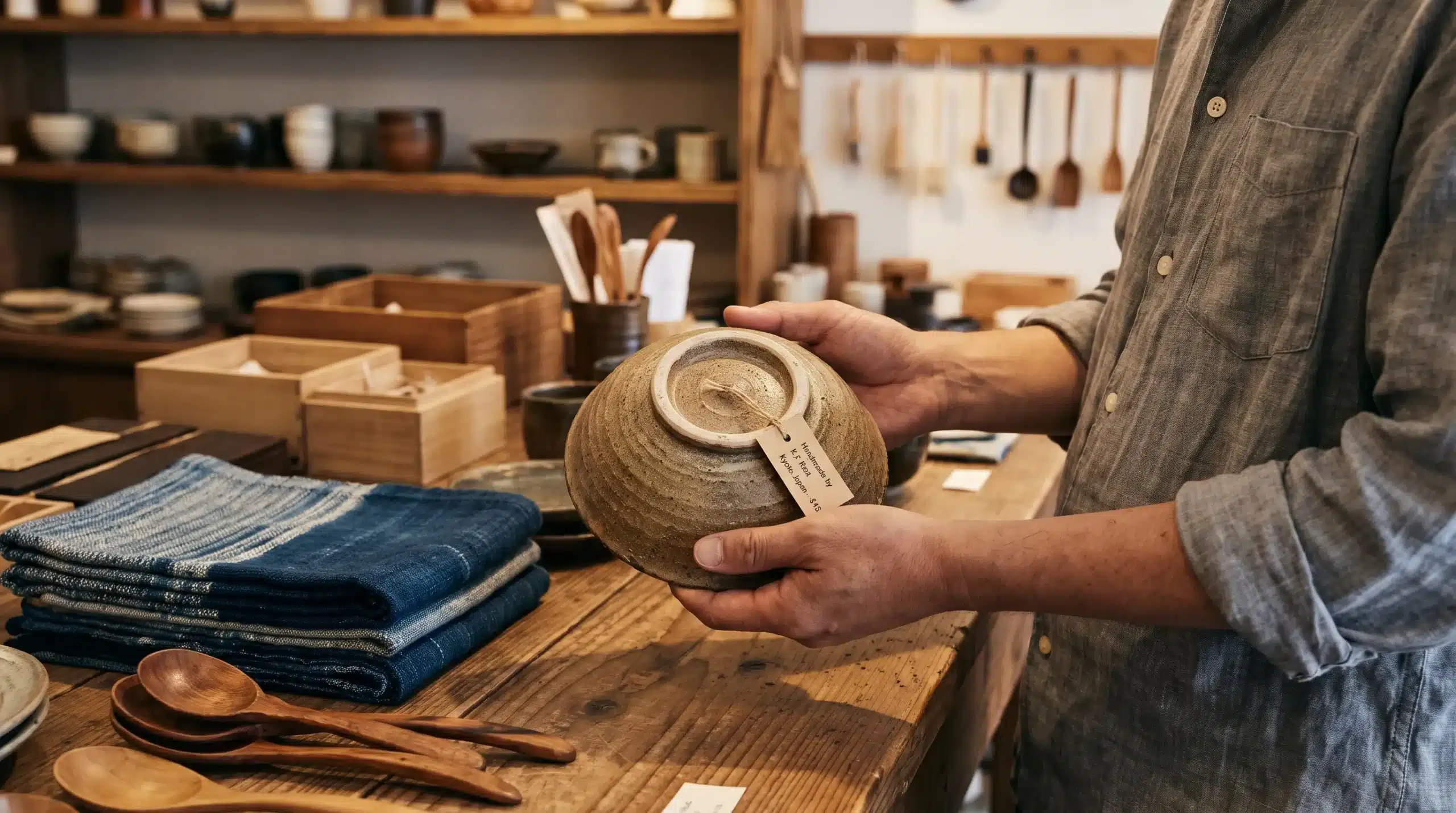
Inspect the parts that receive less attention in a display: the underside, interior, joints, handles and finishing around edges.
| Item | What to inspect | What to clarify |
|---|---|---|
| Ceramics | Rim, foot, handle joins and cracks through the body | Intended use, glaze characteristics and care instructions |
| Wooden utensils | Splinters, splits, joints and surface finish | Wood species, coating and washing method |
| Textiles | Seams, hems, loose threads and consistency of the weave | Fibre content, dye transfer and cleaning requirements |
| Jewellery | Clasps, sharp edges, stone settings and visible joins | Metal composition, plating and repair options |
| Paper goods | Tears, adhesive marks, folds and surface damage | Suitability for writing, display or humid conditions |
Irregularity alone does not prove hand production or quality. Some handmade work is highly consistent. Conversely, uneven decoration or rough finishing may reflect poor workmanship rather than a deliberate aesthetic.
Assess local finds against their intended function. A decorative vessel is not automatically suitable for food, and an attractive wooden spoon may require care that does not suit your household. For ceramics, ask the maker to distinguish intended glaze effects from damage and to explain any restrictions on use.
Ask practical questions before paying
For tableware, confirm food-contact suitability, microwave use, dishwasher use and any restrictions involving hot liquids. These are separate properties. Do not infer them from the item’s appearance or from another product in the same display.
For textiles, ask about fibre composition, washing and possible colour transfer. For jewellery, request a clear description of the metal rather than relying on its colour. If a material matters because of a known sensitivity, obtain a specific answer rather than accepting “probably fine”.
Three short questions can establish the basics:
- Who made this? どなたが作りましたか。
- Where was this made? どこで作られましたか。
- How should I care for it? お手入れ方法を教えてください。
A translation application can help with straightforward exchanges. It is less dependable when discussing technical coatings, specialist materials or ambiguous answers. Ask the seller to write down important details, particularly if the object is a gift.
For local finds that will be difficult to return, confirm the shop’s policy on defects, exchanges and overseas correspondence before payment. Request a receipt and keep the maker’s details. An explanation given verbally at the counter may be difficult to reconstruct after you leave Japan.
Check the shop and workshop before travelling
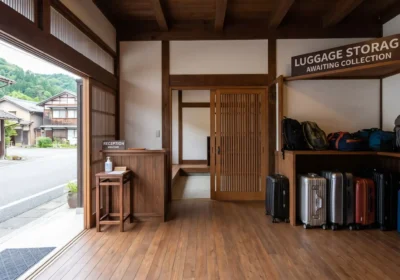
Map listings are useful starting points, but they can confuse a retail shop, a working studio and a private address. Confirm which location welcomes customers and whether visits require an appointment.
Check the maker’s own website or recent notices for operating information, then contact the business if your visit depends on a particular item or person being available. Published opening hours do not guarantee that the maker will be present or that a workshop activity is running.
Reviews can reveal recurring issues with communication or packing. They cannot establish the origin of an individual object. Give more weight to specific descriptions than to general praise.
Access also needs checking. Ask about entrance steps, internal stairs, seating, toilet access and space for a wheelchair or pushchair. For rural workshops, confirm the return journey rather than assuming taxis will be waiting nearby.
Japan Hand’s pottery and kiln visit experiences can help with arranging access and communication with makers. A visit does not guarantee stock availability or that an item will be offered for sale.
If your itinerary also includes Korea, Placenote’s practical place information for Korea provides details such as opening hours, parking and admission there. For Japanese studios, confirm arrangements directly with the business.
With local finds from working studios, checking access in advance avoids travelling to a production address that does not accept visitors.
Plan packing and transport before committing
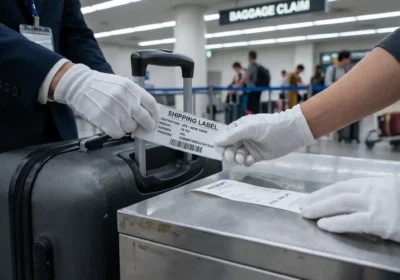
Ask to see how a fragile purchase will be packed before deciding to buy it. A presentation box is not necessarily protective packaging for checked luggage or international delivery.
Handles, projecting decorations and thin rims need particular attention. Ask whether the shop can pack the object for your intended transport method and whether any delivery arrangements include protection against damage. Do not assume that a delivery service accepts every material or compensates every type of loss.
For larger objects, obtain the packed dimensions and weight. Then check the relevant carrier’s current baggage or shipping rules. If shipping internationally, clarify who handles customs documentation and what happens if delivery cannot be completed.
Some destinations restrict particular woods, plant materials or animal-derived materials. Ask for an accurate material description and check the destination authority’s requirements before purchasing. A shop’s willingness to sell an object does not establish that you may import it.
Packing is part of assessing local finds, not an afterthought once payment is complete. If safe transport remains uncertain, leaving the item behind is a reasonable decision.
Recognise when language support adds value
You do not need Japan Hand for a clearly labelled purchase that you can inspect and discuss comfortably yourself. Written product information and a straightforward exchange with the seller may be sufficient.
A helper becomes useful when the decision depends on a Japanese telephone conversation, a maker’s explanation of materials or an appointment that cannot be arranged through an accessible booking system. Support can also help establish practical access requirements before travelling to a workshop.
Japan Hand provides help nationwide, including regional cities, small towns, islands and rural destinations. Helpers speak a range of languages beyond English. State your preferred language, destination and the questions you need answered when making an enquiry.
Language support is most useful for local finds when an unanswered question could change your decision. A helper can clarify what the seller says, but is not automatically a specialist authenticator, conservator or valuer. For a significant purchase requiring expert assessment, seek an appropriately qualified professional before committing.
Frequently asked questions
Does “made in Japan” mean handmade? No. Country of manufacture and production method are different matters. Ask which stages were performed by hand and who carried them out.
Is a maker’s signature enough to establish authenticity? No. Treat it as one piece of information alongside the seller’s explanation, workshop details and documentation. Specialist attribution may require a qualified assessor.
Should handmade ceramics have visible imperfections? Not necessarily. Skilled hand production can produce consistent work. Distinguish intentional surface effects from structural damage, and ask whether the piece is suitable for its intended use.
Can a helper guarantee that an object is genuine? No. A helper can ask questions, translate explanations and help obtain documentation. That does not amount to an expert authentication or a guarantee of the seller’s claims.
What if the seller cannot explain how an item was made? Lack of information does not prove misrepresentation. However, if local production or a particular technique is essential to your purchase, choose something with clearer attribution.
Request help with a maker visit
For local finds involving a maker appointment or detailed production questions, describe your requirements through Japan Hand’s custom experience requests. Use the contact form on the Japan Hand website to provide the destination, preferred language and access needs. Every request receives a quote before anything is agreed, with no obligation.