Planning Travel and Dining in Japan for Older Visitors
Planning Travel and Dining in Japan for Older Visitors
If long station walks, floor seating or uncertain menus are concerns, travel and dining in Japan need more preparation than a list of places to visit. A restaurant may be close to your hotel but upstairs without a lift. A straightforward railway journey may involve a lengthy interchange.
Older visitors have different interests, stamina and support needs. The aim is not to assume limitations, but to establish what works for you before making reservations.
Plan travel and dining around practical needs
Start with your normal daily routine. Consider how far you comfortably walk, how long you stand, which seating you prefer and whether meals need to happen at predictable times. Apply those requirements to accommodation, transport and restaurants together.
Choose accommodation by the route from its entrance to the places you will actually use. Being near a station is less useful if the appropriate lift is on the opposite side of a large complex.
| Planning decision | What to check |
|---|---|
| Hotel location | Walking route, gradients, crossings and access to meals |
| Daily activities | Standing time, available seating and an easy return route |
| Restaurant seating | Chairs and tables, stairs and toilet access |
| Transfer days | Luggage handling, interchange distances and meal timing |
| Rest periods | Somewhere suitable to sit, rather than an assumed café stop |
Leave space between fixed commitments. A slower lunch or an unexpected queue should not put the next reservation at risk. Treat travel and dining as one schedule, especially on days when you change hotels.
Check the complete transport route
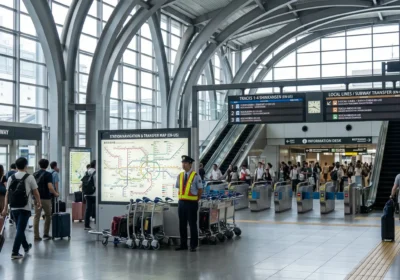
A station marked as accessible does not establish that every entrance, interchange or nearby pavement suits your needs. Check the route from the hotel door to the platform, then from the arrival platform to your destination.
Ask which exit has a lift, whether that lift reaches the required platform and how far you must walk between services. If you use a wheelchair or mobility aid, contact the relevant operator about assistance and equipment requirements before travelling.
Taxis can remove a difficult walking section, but vehicle suitability needs confirmation. A standard vehicle may not accommodate a wheelchair without folding it, and boarding arrangements vary. Do not assume that a driver or helper can provide lifting assistance.
Luggage forwarding can reduce what you carry, provided collection, delivery dates and accommodation acceptance are confirmed. Some shinkansen routes require advance reservations for oversized luggage, so check the operator’s current rules against your bag dimensions.
Our article on travelling through Japan with luggage or mobility needs explains these transfer checks in more detail. Keep travel and dining plans flexible enough to accommodate the actual route rather than the shortest journey shown online.
Choose restaurants by access and seating
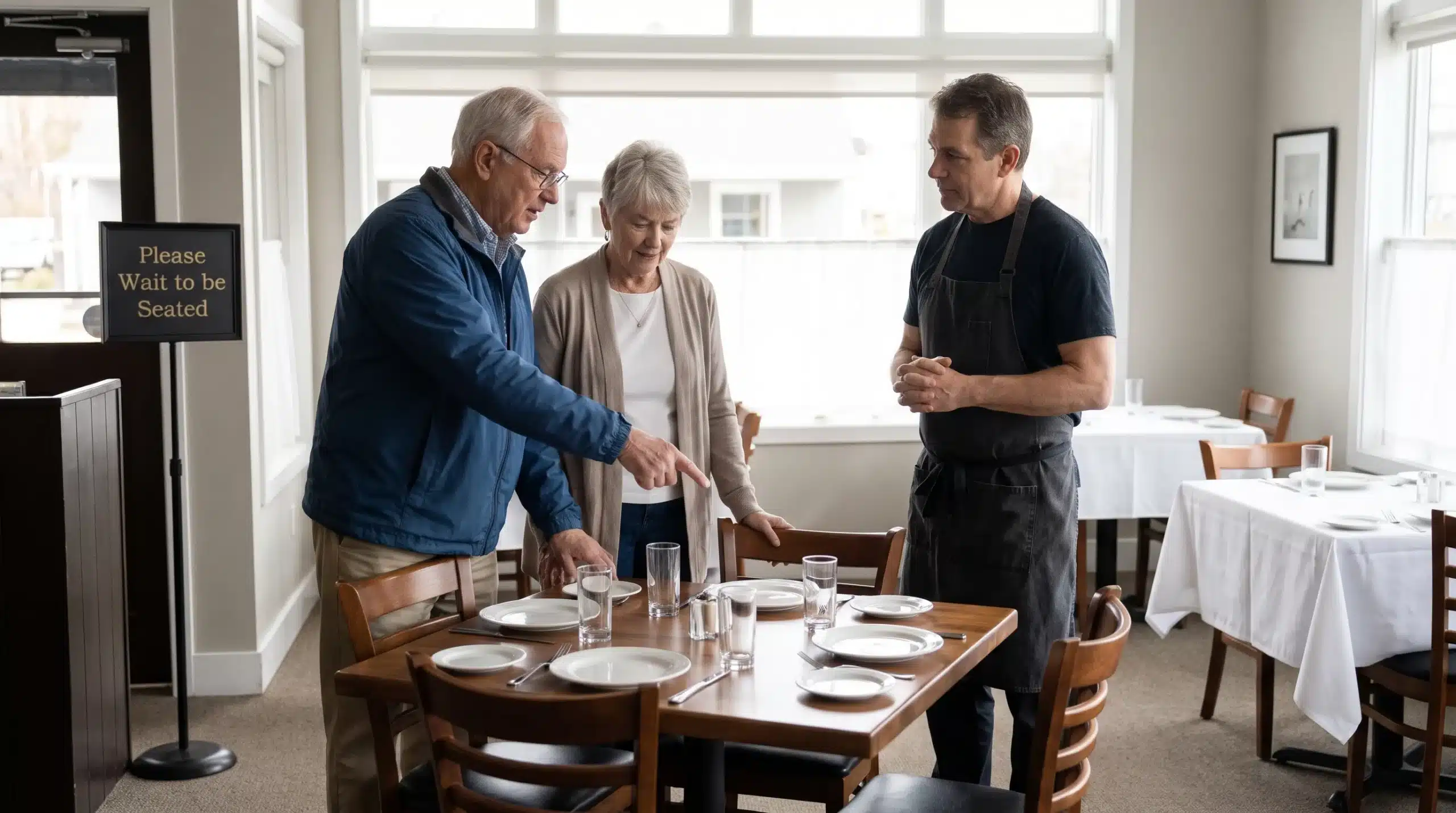
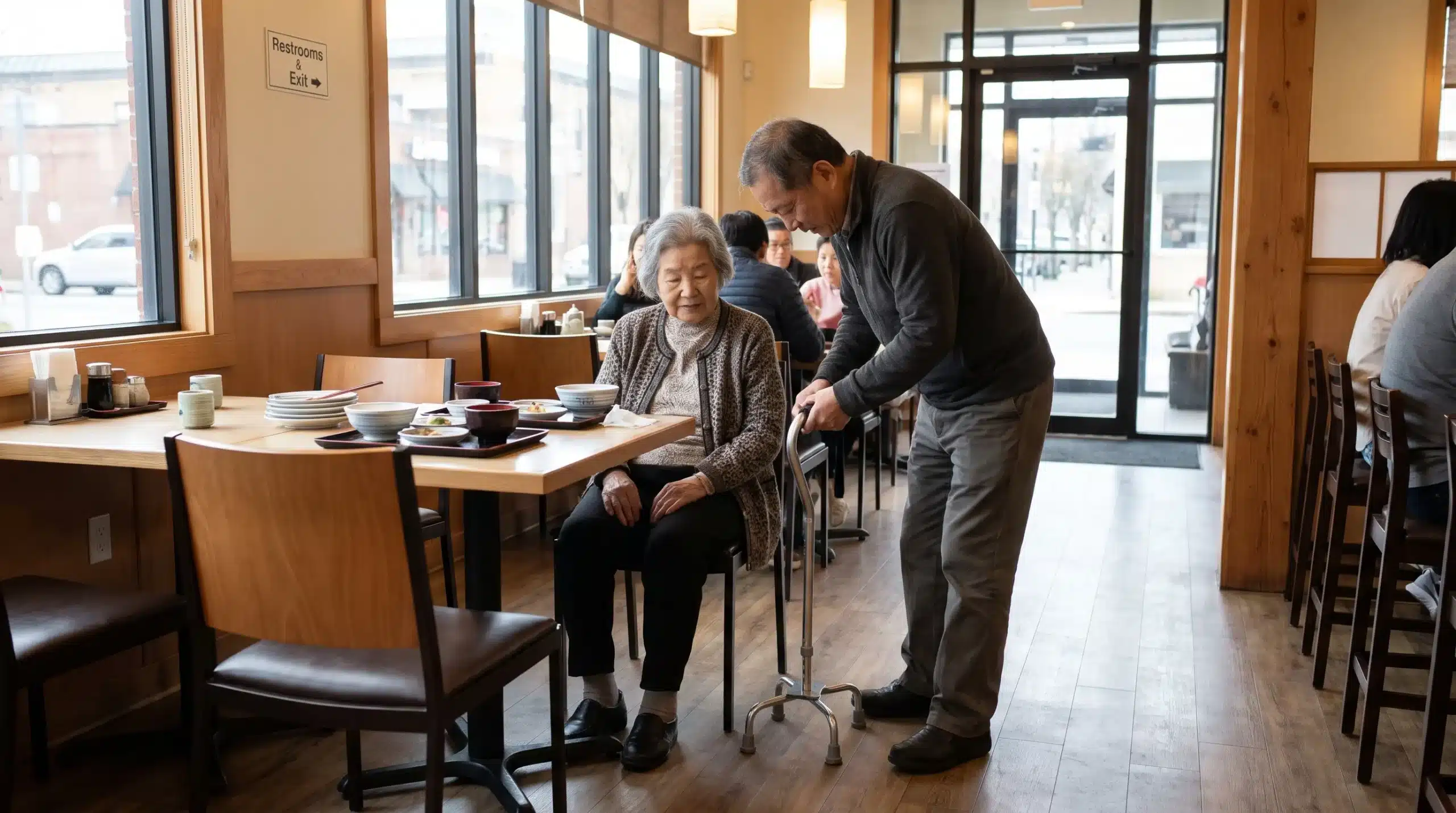
Food photographs rarely show the entrance, staircase or toilet. Before reserving, establish where the dining room is and how you reach it. A ground-floor entrance does not necessarily mean step-free access throughout.
Japanese restaurants use several seating arrangements. Zashiki generally refers to tatami seating, often with low tables. Horigotatsu seating has a recessed space beneath the table, but getting down to and up from the seat may still be difficult. Neither should be treated as equivalent to a conventional chair.
Ask for the arrangement you need rather than simply requesting “comfortable seating”. Useful questions include:
- Are chairs with backs available at a standard-height table?
- Are there steps between the entrance, table and toilet?
- Is shoe removal required, and is there somewhere to sit while doing so?
- Can a wheelchair reach the table, and is there adequate clearance underneath?
- Can the restaurant confirm the expected meal duration?
Counter seating may involve high stools or fixed chairs. A private room may still have floor seating. Photographs help, but direct confirmation is more reliable when a particular feature is essential.
For travel and dining arrangements involving limited standing tolerance, a confirmed reservation is usually more practical than a restaurant that requires everyone to queue. Check how late arrivals are handled and allow a realistic arrival margin.
Confirm dietary requirements before booking
Distinguish between preferences, religious requirements, allergies and clinically advised restrictions. A kitchen needs specific information to decide whether it can accommodate a request.
For allergies, provide the ingredient concerned and ask about stocks, sauces, garnishes and shared preparation equipment. A dish that appears vegetarian may contain fish stock. Soy sauce may contain wheat, while meat-free dishes are not automatically halal.
Translation applications can help explain a request, but they do not establish that a kitchen can prepare the meal safely. Written confirmation should record what the restaurant has agreed, including any limitations. If cross-contact cannot be controlled to the standard you require, choose another restaurant.
Ask about portion size, meal duration and substitutions before booking a fixed menu. If chewing or swallowing difficulties affect eating, obtain advice from a qualified clinician rather than relying on a restaurant or helper to assess suitability.
Reliable travel and dining plans include a fallback meal near the hotel or along the return route. Check opening days and current service arrangements shortly before your visit, particularly outside major cities.
Make regional visits practical
Regional Japan does not need to be excluded from an older visitor’s itinerary. It does require checks that a central-city stay may not: the final transport connection, the availability of taxis and where to eat if the first choice is closed.
For small towns, islands and rural destinations, confirm the return journey before arranging dinner. A restaurant reservation is of little use if the meal finishes after your last practical connection. Weather-related disruption can also affect island transport, so avoid arrangements with no workable alternative.
Accommodation with an evening meal can reduce additional journeys, but confirm dining times, seating and dietary suitability before booking. Do not assume that an inn can change a set menu on arrival.
Japan Hand operates nationwide, including regional airports and destinations beyond Tokyo and Kyoto. When travel and dining depend on telephone enquiries in Japanese, a helper can ask practical questions that an online listing leaves unanswered.
Prepare health information and communication
Keep essential information available without relying entirely on your phone: accommodation details, emergency contacts, insurance information and a record of prescribed medicines. Ask your treating clinician about any health-related preparation relevant to your circumstances, and check official Japanese requirements before bringing medication into the country.
If an existing mental health or memory condition affects daily routines, include the treating clinician in planning. For readers arranging care before leaving New York, Dr. Iospa Psychiatry Consulting provides psychiatric, psychological and neuropsychological services. Confirm arrangements directly, including whether any ongoing care can legally continue while you are abroad.
Communication preparation also matters. Request written reservation details, carry a clearly worded dietary card where needed and tell a helper your preferred language. Japan Hand’s helpers work in a range of languages beyond English, subject to availability for the location and date.
Keep travel and dining confirmations together so that you or a travelling companion can explain the plan without searching through separate messages.
Decide where a helper is useful
You may not need assistance for a direct railway journey, a restaurant that confirms your requirements clearly or a hotel with suitable facilities. Hotel staff, transport operators and the restaurant itself may be able to answer straightforward questions without additional paid support.
A helper becomes useful when several practical requirements overlap: finding the correct station exit, accompanying a transfer, clarifying seating arrangements or communicating with a kitchen in Japanese. Japan Hand provides help booked by time, rather than sightseeing packages.
For support involving an older relative or several family members, elderly and family assistance can be discussed around the actual tasks required. Explain walking tolerance, mobility equipment, luggage and communication needs when making the enquiry.
Do not assume that general assistance includes personal care, lifting, clinical care or specialist equipment. These needs require explicit discussion and may require a qualified provider. A helper cannot guarantee a table or make an unsuitable venue accessible.
Frequently asked questions
Should older visitors avoid Japanese public transport? No. Suitability depends on the route, walking distance, luggage and individual requirements. Check lifts and interchange distances rather than judging a journey only by its duration or number of stops.
Are hotel restaurants always the easiest option? Not necessarily. They can reduce journeys, but seating, access, menus and dietary arrangements still need confirmation. A nearby independent restaurant may suit your requirements better.
Can every restaurant accommodate allergies or mobility needs? No. Some premises have unavoidable steps, fixed seating or kitchens that cannot manage particular restrictions. For travel and dining decisions involving essential requirements, choose another venue if the answer is unclear or unsuitable.
Can a helper guarantee a requested reservation? No. Availability, booking restrictions and the restaurant’s decision remain outside Japan Hand’s control. A helper can make enquiries and explain alternatives, but cannot promise acceptance.
Arrange support around specific requirements
If you need restaurant booking and dining escort support, send your dates, locations, preferred language and practical requirements through the contact form on Japan Hand. State any essential seating, access or dietary conditions. The price depends on the specifics, and every request receives a quote before anything is agreed, with no obligation.