


Meet the Potter
Japanese Pottery Workshop and Kiln Visits
Visit a working Japanese pottery kiln, see how the ceramics are made, talk directly with the potter through a local helper, and buy pieces from the person who made them.
What This Experience Is
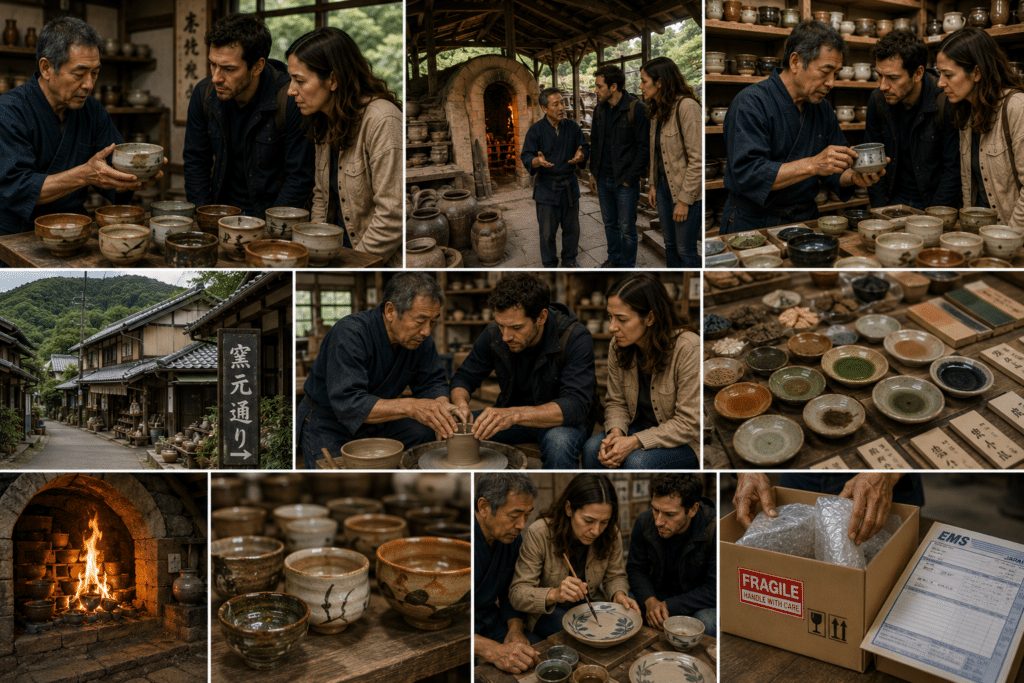
Japan Hand arranges visits to potters and kilns across Japan’s ceramic regions — including Mashiko, Bizen, Arita, Karatsu, Shigaraki, Hagi and smaller pottery centres. Your helper arranges the visit, interprets throughout, and handles the purchase and shipping of anything you buy.
Japanese ceramics are strongly connected to place. Each region developed its own clay, firing methods and aesthetic, and the differences can be substantial.
Bizen is known for unglazed wood-fired ceramics, Arita for fine white porcelain and painted decoration, Shigaraki for rough, heavily textured pieces, and Mashiko for thick, practical and functional pottery.
The pottery towns themselves are full of working kilns, but these are workshops rather than conventional shops. Many have no English, no booking system and no fixed visitor infrastructure, and the kilns can be scattered across a wide area.
Your helper arranges visits to specific potters rather than simply sending you to a pottery town. They interpret conversations about clay, firing and technique and ask the practical questions that matter when you are buying something.
Who This Experience Is For
The Problems We Solve
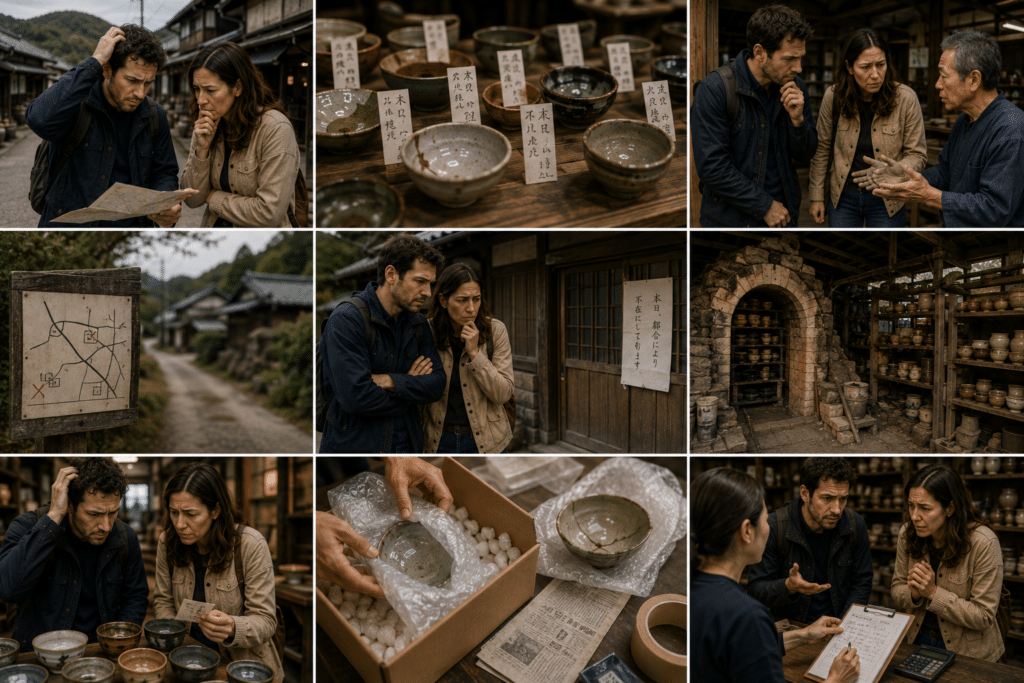
- Kilns are workshops, not shops – They often have no fixed hours, no English information and no booking system.
- Pottery towns are scattered – Kilns can be spread across a wide area, and finding the good ones requires local knowledge.
- Regional styles are the whole point – Their differences mean little without explanation.
- Potters rarely speak English – Technical conversations about clay and firing often require interpretation.
- Ceramics are fragile and heavy – Getting them home safely is the part most visitors get wrong.
- Functional and decorative pieces look similar – Buying the wrong one is easy without asking the right questions.
What Your Helper Does
Your helper first works out which ceramic region makes sense based on where you are staying and what you want to see. They arrange visits to specific potters rather than simply sending you to a general pottery town.
They travel with you where necessary and interpret the conversation about clay, firing, technique and the maker’s work. And if you buy something, they make sure it is properly packed and shipped home.
Reassurance
You do not need to understand Japanese ceramics before you arrive.
Your helper explains the regional differences and interprets the conversation with the potter. If you want to buy something functional, they ask the questions that matter for everyday use.
If you want to try making pottery, they will find a workshop that actually offers hands-on participation rather than assuming every kiln does. And if you buy ceramics, your helper can arrange proper packing and shipping so you do not have to carry fragile pieces through the rest of your journey.
Duration
A pottery-town visit is usually a full day.
A single kiln closer to your accommodation can usually be arranged in 2–3 hours.
Pricing
What you pay depends on the region, how far the workshop is, whether hands-on participation is included, group size and the language you need.
Ceramics you purchase and shipping are charged separately.
Tell us where you are staying, what kind of pottery interests you and whether you want to buy or make something, and we will tell you what is possible and provide a price before anything is agreed, with no obligation.
FAQs
Which pottery town should I visit?
It depends on where you are travelling and what kind of ceramics you like. Tell us your route and preferences and we will match the style to your trip.
Can I try throwing pottery?
At some workshops, yes. We will arrange a workshop that offers it if hands-on throwing is what you want.
Can I decorate pottery?
Yes, where the workshop offers decorating as a hands-on activity.
Can you ship ceramics home?
Yes. Your helper can arrange proper packing and shipping, which is particularly important with fragile ceramics.
Can I buy directly from the potter?
Yes. The experience is designed around visiting potters and buying directly where possible.
Can I commission a set?
Yes. Your helper can interpret the commission conversation and handle the arrangement and shipping.
When are the pottery markets?
Several pottery towns hold markets twice a year, but the dates are often announced in Japanese. Give us your travel dates and we can check whether one coincides with your visit.
Will the potter speak English?
Usually not. Your helper interprets throughout the visit.