Japan Traditions Around Giving and Receiving Gifts
Japan Traditions Around Giving and Receiving Gifts
Advice on Japan traditions can make a small gift feel like a test: what should you bring, how should it be wrapped and must you give something in return? For most visitors, the practical answer is straightforward. Choose something appropriate to the relationship, present it considerately and avoid creating an obligation the recipient did not expect.
Gift-giving customs vary by household, generation, region and occasion. A casual invitation to someone’s home is different from a wedding, a business relationship or a paid activity. The distinctions below matter more than memorising a long list of prohibitions.
What a gift communicates in Japan
A gift can express thanks, acknowledge hospitality or maintain a relationship. Its significance often comes from the occasion and the care taken in choosing it, rather than its size or monetary value.
Presentation matters because it shows consideration for the recipient. That does not mean every gift requires elaborate wrapping or ceremonial language. Among friends, everyday exchanges can be quite informal.
An unnecessarily lavish gift can also be uncomfortable to receive. It may leave someone wondering whether they should reciprocate. For a first visit, a modest, shareable item is usually more suitable than something expensive or highly personal.
Omiyage, temiyage and return gifts
These terms describe different situations, although their everyday use can overlap.
| Term | Usual context | Practical meaning for visitors |
|---|---|---|
| Omiyage | Souvenirs brought back from travel | Often regional food shared with family, friends or colleagues |
| Temiyage | A gift taken when visiting someone | A small acknowledgement of the invitation or hospitality |
| Okaeshi | A return gift | Relevant to certain exchanges and formal occasions, not an automatic response to every present |
| Ochūgen and oseibo | Seasonal gifts within established relationships | Not obligations that ordinary visitors need to adopt |
Understanding Japan traditions around these exchanges helps prevent a common mistake: assuming that every person who assists you should receive a souvenir. Omiyage usually belongs within an existing social or workplace relationship. It is not a general payment for kindness.
You also do not need to bring a separate gift for every member of a household. A shared item may be entirely appropriate, provided it suits the people receiving it.
When no gift is necessary
Hotel staff, restaurant staff and people giving directions do not ordinarily expect personal gifts. A clear thank-you is sufficient. Do not insist if an organisation’s rules prevent someone from accepting something.
For an arranged activity such as an izakaya experience with a local helper, do not assume that gifts for the helper or restaurant are required. If you are marking a particular occasion, ask about suitable arrangements beforehand.
A personal invitation is different. If someone invites you into their home, a small gift is often a considerate gesture, but the host’s own preferences take priority.
Japan traditions: choosing a suitable gift
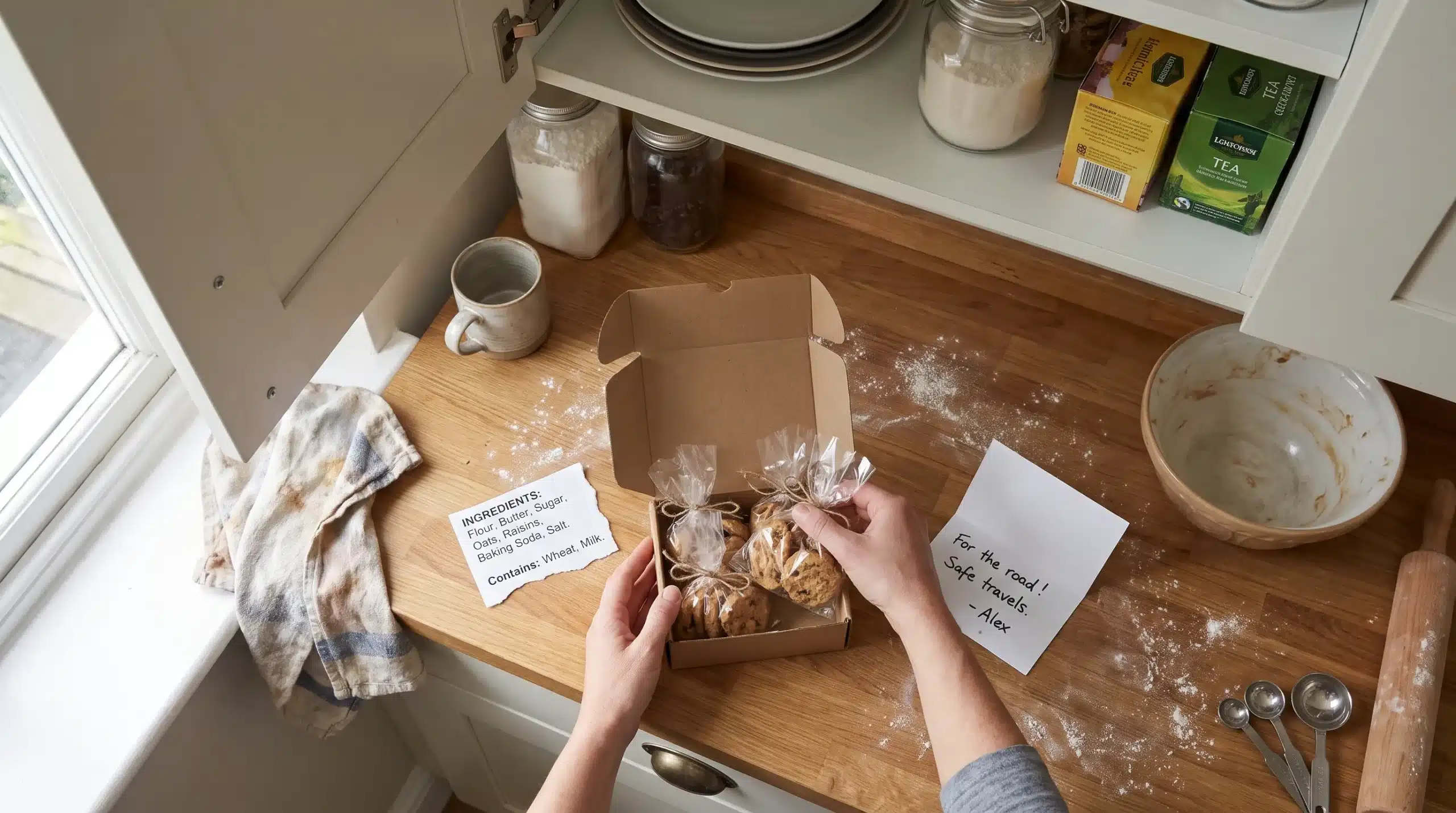
For a home visit, consider something easy to share, store and use. Packaged biscuits, tea or another speciality from your home region can work well when the ingredients suit the household.
A meaningful connection is useful. Explaining that a product comes from your hometown gives the recipient something to discuss without making the exchange overly personal.
Avoid items that create unexpected work. Large flower arrangements need space and care; food requiring immediate refrigeration can complicate an outing. Strong fragrances, clothing and decorative objects depend heavily on personal taste.
For children, ask their parent or guardian before bringing sweets, toys or other presents. Dietary needs, age suitability and household preferences are more useful considerations than a general etiquette rule.
Food, alcohol and dietary requirements
Advice about Japan traditions should never override a recipient’s dietary requirements. Before choosing food, ask about allergies, religious requirements and preferences concerning alcohol or animal-derived ingredients.
For Muslim recipients, do not assume that confectionery or a vegetarian-looking product is halal. Alcohol, gelatin and other ingredients may require checking. Similarly, a product without an obvious allergen in its name may still contain it or carry a cross-contact warning.
Keep the original ingredient label and check the best-before date. Individually wrapped portions can make sharing easier, but they do not establish that a product is suitable for everyone.
If bringing food into Japan, check current customs and quarantine rules before departure. Meat products, plants and fresh produce can be restricted. A familiar gift from home is not automatically permitted through the border.
Weight and portability
Choose something the recipient can comfortably carry home. Small packaging is particularly useful when meeting at a station or during a day out.
The same applies to your own mobility. If back or joint pain limits carrying, ask a qualified clinician about appropriate restrictions before travelling. For readers seeking a provider in New York, Move Well MD offers musculoskeletal care. A light gift or delivery arrangement can avoid unnecessary lifting.
Wrapping without overcomplicating the exchange
Neat wrapping is generally more useful than elaborate decoration. A shop’s standard gift wrapping is often sufficient, and staff can advise if you explain the occasion.
Formal Japanese wrapping may include noshi, a decorative element associated with certain celebratory gifts, and mizuhiki, decorative cords whose colours and knots carry meaning. These are not interchangeable across celebrations, condolences and other occasions. Do not select a formal wrapper simply because it looks attractive.
For an ordinary home visit, ask for suitable everyday gift wrapping. If using a reusable cloth, or furoshiki, make clear whether the cloth is part of the present or something you intend to take home.
Keep an ordinary price receipt separate unless the recipient needs it for an exchange. Do not remove ingredient labels, handling instructions or expiry information. The aim is to make the gift pleasant to receive without making it harder to use.
Handing the gift over
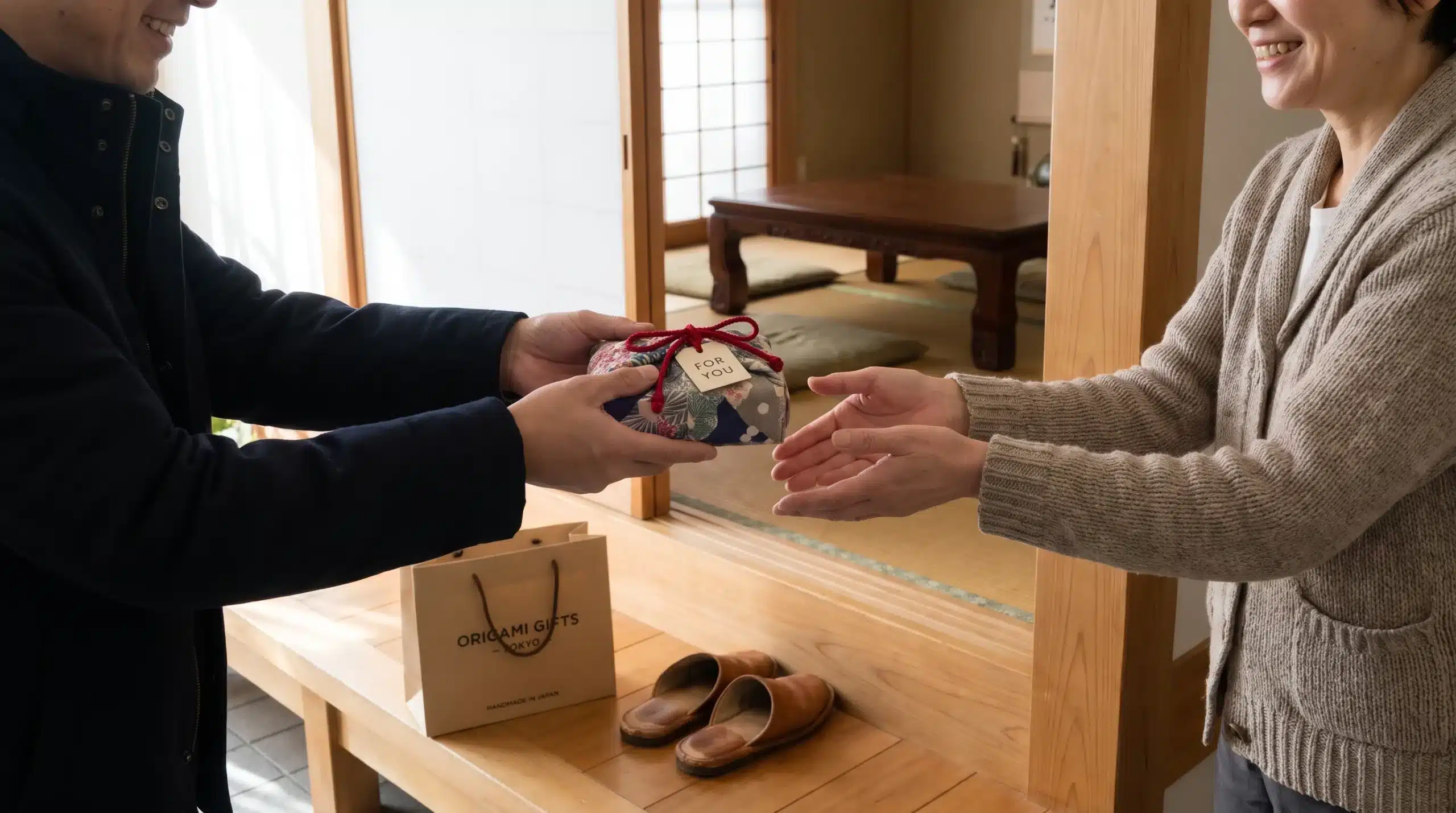
When following Japan traditions around gift-giving, a calm, considerate exchange matters more than performing a ceremony. Offer the gift with both hands where practical, with the front facing the recipient. A slight bow is appropriate, but there is no need for an exaggerated gesture.
A simple explanation is enough: “Thank you for inviting me. This is a speciality from my hometown.” You do not need to describe your gift as inferior or memorise a self-deprecating Japanese phrase.
Remove the gift from its outer shopping bag when practical. If the recipient needs the bag to carry it, offer that too. There is no reason to make this awkward in a crowded space or for someone with limited mobility.
If the recipient hesitates or declines, do not turn the exchange into a contest of repeated insistence. They may have a genuine reason not to accept it.
Receiving a gift respectfully
Accept with both hands where comfortable and thank the giver. If you cannot do so because of a mobility limitation, carrying a child or another practical constraint, a clear acknowledgement is sufficient.
Do not assume that opening a gift immediately is always rude. Some people prefer to wait; others want to explain what they have chosen and see your response. Follow their lead or ask, “May I open it now?”
You do not normally need to produce an immediate return gift for a casual present. A sincere thank-you, followed by a short message later if appropriate, can be enough. Formal exchanges may involve different expectations.
If you cannot eat or use the item, you need not give a detailed explanation at the moment of receiving it. However, clarify dietary restrictions before anyone serves food. Politeness does not require eating something unsafe or contrary to your religious requirements.
For a substantial or formal gift, ask someone familiar with the relationship before deciding how to respond.
Seasonal gifts, ceremonies and regional differences
Japan traditions also include ochūgen, associated with summer, and oseibo, associated with the end of the year. These gifts may acknowledge an ongoing relationship or support received. Their timing and observance vary, and many people do not participate in every seasonal exchange.
Visitors are not expected to begin these customs simply because they are in Japan at the relevant time. Sending a formal seasonal gift can imply a continuing relationship, so it is worth understanding the context first.
Weddings, funerals, births and other family occasions need separate advice. Cash may be customary for certain events, using purpose-specific envelopes and presentation conventions. Do not improvise with a decorative envelope intended for a different occasion.
Similarly, symbolic associations involving numbers, colours or flowers should not become universal prohibitions. Some combinations are avoided in formal settings, but context matters. A retailer or florist who knows the occasion can give more useful advice than a generic list of taboos.
Practices differ between households in major cities, regional towns, islands and rural communities. Age alone does not reliably predict how formal someone will be.
Frequently asked questions
Are Japan traditions around gifts the same in every region? No. Seasonal timing, ceremonial practices and household expectations can differ. For an ordinary visit, ask the host or someone familiar with the relationship rather than trying to infer the rules from location alone.
Should I bring a gift from my own country? It can be a thoughtful choice, particularly if it has a connection to your hometown. Check import restrictions, ingredients and portability before choosing it. A gift bought in Japan is also acceptable.
Is money an appropriate thank-you gift? Not usually for casual hospitality or routine assistance. Cash has specific roles in some formal occasions, but it is not a universal substitute for a small present.
Must I give something of equal value in return? Not for every casual gift. Formal return-gift customs can involve established expectations, but immediately matching a present may make an informal exchange feel transactional. Ask for context if the gift is substantial or ceremonial.
Help choosing and communicating
Most everyday gift exchanges do not require paid help. If you need Japanese-language shopping support or want to explore regional crafts and food through a custom experience, Japan Hand can assess your request. Helpers operate nationwide, including small towns, islands and rural destinations, with languages beyond English available. Describe the recipient, occasion and location through the contact form on Japan Hand. Every request receives a quote before anything is agreed, with no obligation.